

fungal bioinocculant (Muradov et al.) Khan and Fu (2020) have suggested that algae
are important for energy security and recommended biotechnological approaches for
improved production of biofuel precursors such as fatty acids and engineering of
hydrogenases for biofuel generation.
7.6.1 Nutrients
Nutrient limitation is commonly the limiting issue for growth as new adaptation
ways are adapted by algae. Polyose as a carbon supply for gas production was
investigated by Lo et al. (2008) and Lo et al. (2009). Under nutrient limitation,
photosynthetic activity is diminished causing photodamage to PSII. Lin and Lay
(2004) observed that iron plays a very important role in protein activity for hydrogen
evolution. Sharma and Arya (2017) have suggested that nutrients play a significant
role for the commercial production of microalgae biomass. Juneja et al. (2013)
showed that the basic requirements of various microalgae are carbon dioxide,
phosphorus, and carbon. Devi and Mohan (2012) discovered that the nutrients affect
the buildup of carbohydrates and lipids in microalgae. Nutrient deprivation causes
photoinhibition in algae. Kong et al. (2010) suggested cultivating C. reinhardtii in
industrial and household wastewater. However, due to lower concentration of
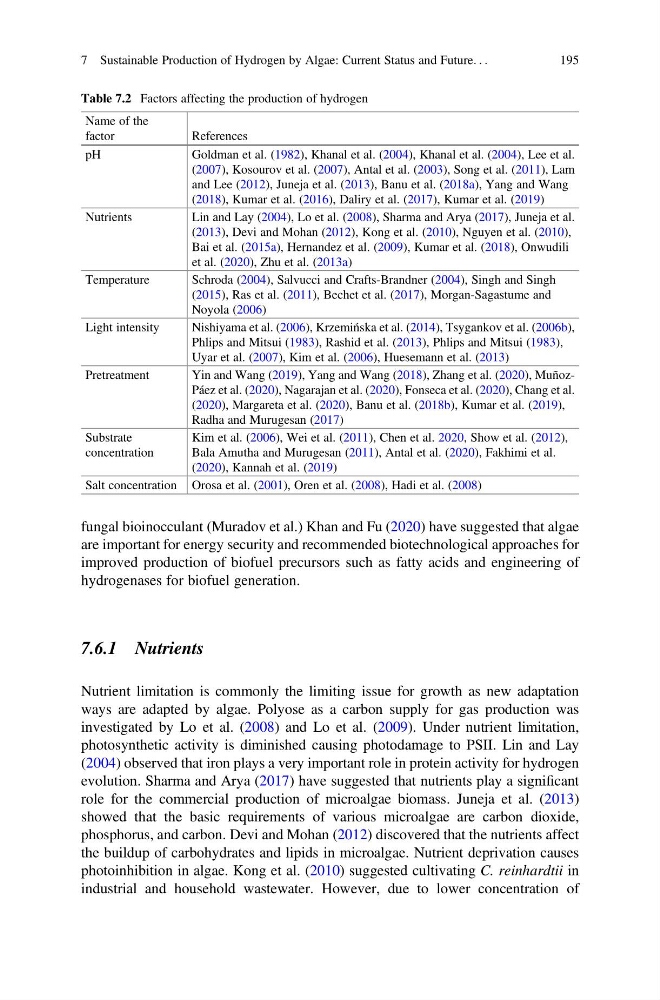
Table 7.2 Factors affecting the production of hydrogen
Name of the
factor
References
pH
Goldman et al. (1982), Khanal et al. (2004), Khanal et al. (2004), Lee et al.
(2007), Kosourov et al. (2007), Antal et al. (2003), Song et al. (2011), Lam
and Lee (2012), Juneja et al. (2013), Banu et al. (2018a), Yang and Wang
(2018), Kumar et al. (2016), Daliry et al. (2017), Kumar et al. (2019)
Nutrients
Lin and Lay (2004), Lo et al. (2008), Sharma and Arya (2017), Juneja et al.
(2013), Devi and Mohan (2012), Kong et al. (2010), Nguyen et al. (2010),
Bai et al. (2015a), Hernandez et al. (2009), Kumar et al. (2018), Onwudili
et al. (2020), Zhu et al. (2013a)
Temperature
Schroda (2004), Salvucci and Crafts-Brandner (2004), Singh and Singh
(2015), Ras et al. (2011), Bechet et al. (2017), Morgan-Sagastume and
Noyola (2006)
Light intensity
Nishiyama et al. (2006), Krzemińska et al. (2014), Tsygankov et al. (2006b),
Phlips and Mitsui (1983), Rashid et al. (2013), Phlips and Mitsui (1983),
Uyar et al. (2007), Kim et al. (2006), Huesemann et al. (2013)
Pretreatment
Yin and Wang (2019), Yang and Wang (2018), Zhang et al. (2020), MuñozPáez et al. (2020), Nagarajan et al. (2020), Fonseca et al. (2020), Chang et al.
(2020), Margareta et al. (2020), Banu et al. (2018b), Kumar et al. (2019),
Radha and Murugesan (2017)
Substrate
concentration
Kim et al. (2006), Wei et al. (2011), Chen et al. 2020, Show et al. (2012),
Bala Amutha and Murugesan (2011), Antal et al. (2020), Fakhimi et al.
(2020), Kannah et al. (2019)
Salt concentration Orosa et al. (2001), Oren et al. (2008), Hadi et al. (2008)
7 Sustainable Production of Hydrogen by Algae: Current Status and Future. . .
195
are important for energy security and recommended biotechnological approaches for
improved production of biofuel precursors such as fatty acids and engineering of
hydrogenases for biofuel generation.
7.6.1 Nutrients
Nutrient limitation is commonly the limiting issue for growth as new adaptation
ways are adapted by algae. Polyose as a carbon supply for gas production was
investigated by Lo et al. (2008) and Lo et al. (2009). Under nutrient limitation,
photosynthetic activity is diminished causing photodamage to PSII. Lin and Lay
(2004) observed that iron plays a very important role in protein activity for hydrogen
evolution. Sharma and Arya (2017) have suggested that nutrients play a significant
role for the commercial production of microalgae biomass. Juneja et al. (2013)
showed that the basic requirements of various microalgae are carbon dioxide,
phosphorus, and carbon. Devi and Mohan (2012) discovered that the nutrients affect
the buildup of carbohydrates and lipids in microalgae. Nutrient deprivation causes
photoinhibition in algae. Kong et al. (2010) suggested cultivating C. reinhardtii in
industrial and household wastewater. However, due to lower concentration of
Table 7.2 Factors affecting the production of hydrogen
Name of the
factor
References
pH
Goldman et al. (1982), Khanal et al. (2004), Khanal et al. (2004), Lee et al.
(2007), Kosourov et al. (2007), Antal et al. (2003), Song et al. (2011), Lam
and Lee (2012), Juneja et al. (2013), Banu et al. (2018a), Yang and Wang
(2018), Kumar et al. (2016), Daliry et al. (2017), Kumar et al. (2019)
Nutrients
Lin and Lay (2004), Lo et al. (2008), Sharma and Arya (2017), Juneja et al.
(2013), Devi and Mohan (2012), Kong et al. (2010), Nguyen et al. (2010),
Bai et al. (2015a), Hernandez et al. (2009), Kumar et al. (2018), Onwudili
et al. (2020), Zhu et al. (2013a)
Temperature
Schroda (2004), Salvucci and Crafts-Brandner (2004), Singh and Singh
(2015), Ras et al. (2011), Bechet et al. (2017), Morgan-Sagastume and
Noyola (2006)
Light intensity
Nishiyama et al. (2006), Krzemińska et al. (2014), Tsygankov et al. (2006b),
Phlips and Mitsui (1983), Rashid et al. (2013), Phlips and Mitsui (1983),
Uyar et al. (2007), Kim et al. (2006), Huesemann et al. (2013)
Pretreatment
Yin and Wang (2019), Yang and Wang (2018), Zhang et al. (2020), MuñozPáez et al. (2020), Nagarajan et al. (2020), Fonseca et al. (2020), Chang et al.
(2020), Margareta et al. (2020), Banu et al. (2018b), Kumar et al. (2019),
Radha and Murugesan (2017)
Substrate
concentration
Kim et al. (2006), Wei et al. (2011), Chen et al. 2020, Show et al. (2012),
Bala Amutha and Murugesan (2011), Antal et al. (2020), Fakhimi et al.
(2020), Kannah et al. (2019)
Salt concentration Orosa et al. (2001), Oren et al. (2008), Hadi et al. (2008)
7 Sustainable Production of Hydrogen by Algae: Current Status and Future. . .
195