

factors affecting hydrogen production are given in Table 7.2. Different kinds of
immobilization are shown in Table 7.3.
Milledge et al. (2018b) reported that phenolic compounds are responsible for
inhibition of anaerobic digestion. Large energy inputs are required for disrupting
algal biomass to be developed (Prajapati et al. 2016). The most important factor
which influences the production process would be that of harvesting algal biomass
(Pienkos and Darzins 2009). The use of chemical flocculants can make the
harvesting process economical compared to process like centrifugation (Pienkos
and Darzins 2009). Some bacteria associated with diatoms lead to their aggregation,
e.g., Thalassiosira weissflogii (Gärdes et al. 2011). Bacterium HW001 isolated from
Permian groundwater was found to aggregate Nannochloropsis oceanica IMET1
(Wang et al. 2014). Bioflocculants from the bacterial culture supernatants (Manheim
and Nelson 2013; Ndikubwimana et al. 2016) were found to be useful in of algal cell
aggregation. Many other filamentous fungi have also been reported to be efficient
bioflocculants (Wrede et al. 2014). Aspergillus fumigatus was found to be a good
4H +
4H +
• 2H 2 0 PhotophosphorylaƟon
FeFeHydrogenases
O 2
H 2
• 2H 2 0 OxidaƟve phosporyalƟon 2NADH
STARCH
C
H
L
O
R
O
P
L
A
S
T
M
I
T
O
C
H
O
N
D
R
I
A
2H 2 O
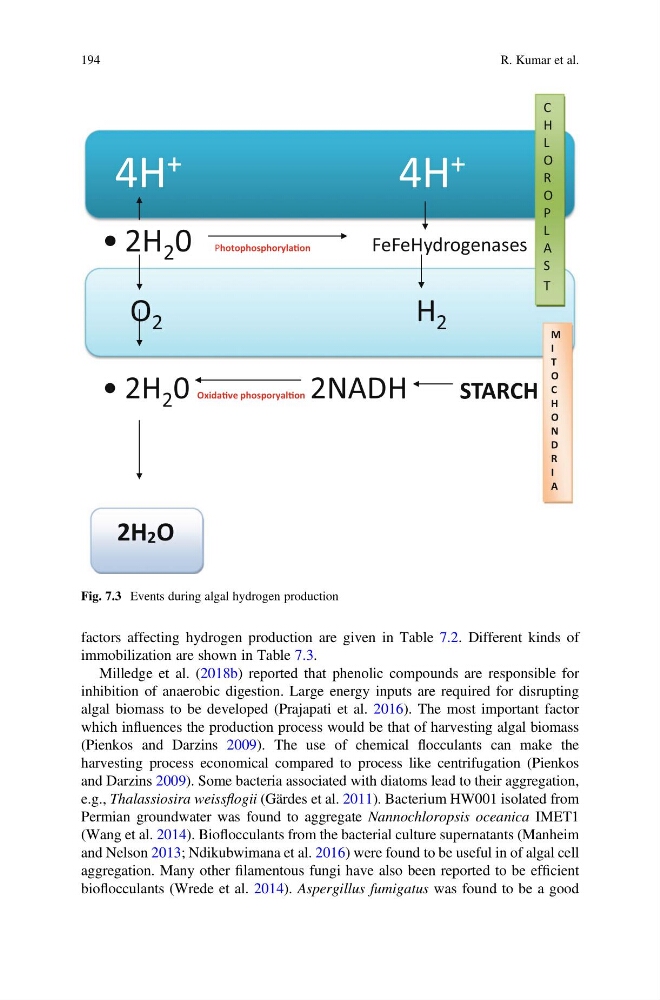
Fig. 7.3 Events during algal hydrogen production
194
R. Kumar et al.
immobilization are shown in Table 7.3.
Milledge et al. (2018b) reported that phenolic compounds are responsible for
inhibition of anaerobic digestion. Large energy inputs are required for disrupting
algal biomass to be developed (Prajapati et al. 2016). The most important factor
which influences the production process would be that of harvesting algal biomass
(Pienkos and Darzins 2009). The use of chemical flocculants can make the
harvesting process economical compared to process like centrifugation (Pienkos
and Darzins 2009). Some bacteria associated with diatoms lead to their aggregation,
e.g., Thalassiosira weissflogii (Gärdes et al. 2011). Bacterium HW001 isolated from
Permian groundwater was found to aggregate Nannochloropsis oceanica IMET1
(Wang et al. 2014). Bioflocculants from the bacterial culture supernatants (Manheim
and Nelson 2013; Ndikubwimana et al. 2016) were found to be useful in of algal cell
aggregation. Many other filamentous fungi have also been reported to be efficient
bioflocculants (Wrede et al. 2014). Aspergillus fumigatus was found to be a good
4H +
4H +
• 2H 2 0 PhotophosphorylaƟon
FeFeHydrogenases
O 2
H 2
• 2H 2 0 OxidaƟve phosporyalƟon 2NADH
STARCH
C
H
L
O
R
O
P
L
A
S
T
M
I
T
O
C
H
O
N
D
R
I
A
2H 2 O
Fig. 7.3 Events during algal hydrogen production
194
R. Kumar et al.