

These inhibitory compounds result in the damage of microbes by the reduction of
their biological and enzymatic actions, protein inhibition, RNA inhibition, and DNA
breakdown (Zha et al. 2014). Synthesis of these inhibitory compounds and their
resulting toxic effects shows a negative impact on the hydrolysis rate by enzymes,
this is negative inhibition of bioethanol fermentation (Malav et al. 2017).
Hydroxymethyl furfural is not much inhibitory to microbes as compared to
furfural, but it has the ability to prolong the lag phase and inhibit cell growth. It
stays for a longer time than furfural because it is converted at a faster rate, i.e., four
times that of hydroxymethyl furfural, resulting in the prolonged microbial action
(Liu and Blaschek 2010).
5.4 Furfural
The formation of furfural occurs from pentose sugars, e.g., xylose. There is an array
of catalysts responsible for xylose dehydration into furfural. An important factor for
enhancement of selectivity to furfural is Bronsted acid. Lewis acids are also seen to
have a positive effect in this process as it speeds up the conversion of xylose into
xylulose, which can then be further dehydrated into furfural at a faster rate
O
HO
HO
OH
OH
OH
Isomerisation
O
OH
HO
OH
HO
OH
O
H
HO
O
HMF
Fru
Dehydration
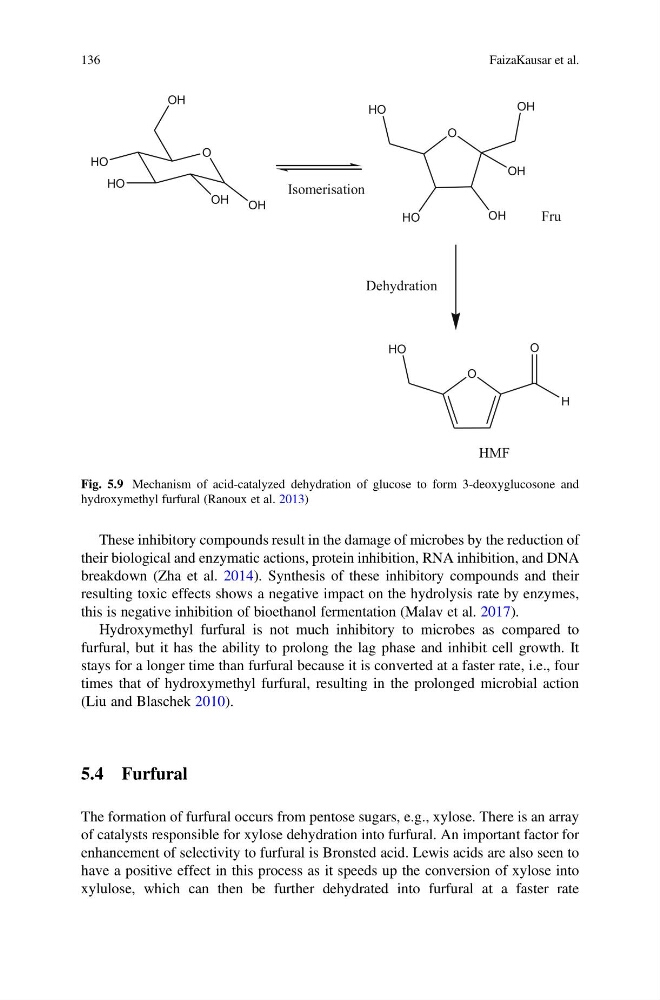
Fig. 5.9 Mechanism of acid-catalyzed dehydration of glucose to form 3-deoxyglucosone and
hydroxymethyl furfural (Ranoux et al. 2013)
136
FaizaKausar et al.
their biological and enzymatic actions, protein inhibition, RNA inhibition, and DNA
breakdown (Zha et al. 2014). Synthesis of these inhibitory compounds and their
resulting toxic effects shows a negative impact on the hydrolysis rate by enzymes,
this is negative inhibition of bioethanol fermentation (Malav et al. 2017).
Hydroxymethyl furfural is not much inhibitory to microbes as compared to
furfural, but it has the ability to prolong the lag phase and inhibit cell growth. It
stays for a longer time than furfural because it is converted at a faster rate, i.e., four
times that of hydroxymethyl furfural, resulting in the prolonged microbial action
(Liu and Blaschek 2010).
5.4 Furfural
The formation of furfural occurs from pentose sugars, e.g., xylose. There is an array
of catalysts responsible for xylose dehydration into furfural. An important factor for
enhancement of selectivity to furfural is Bronsted acid. Lewis acids are also seen to
have a positive effect in this process as it speeds up the conversion of xylose into
xylulose, which can then be further dehydrated into furfural at a faster rate
O
HO
HO
OH
OH
OH
Isomerisation
O
OH
HO
OH
HO
OH
O
H
HO
O
HMF
Fru
Dehydration
Fig. 5.9 Mechanism of acid-catalyzed dehydration of glucose to form 3-deoxyglucosone and
hydroxymethyl furfural (Ranoux et al. 2013)
136
FaizaKausar et al.