

The xenobiotics effects on WRF, particularly biomass and secretion of LMEs, are
least understood. However, by the treatment of xenobiotics such as PAHs,
chlorophenols like pentachlorophenol (PCP) and synthetic dyes with WRF
(Anthracophyllum discolor) secrete these LEs extracellularly and mainly MnP was
identified under the treatment of these xenobiotics (Tortella et al. 2008; Elgueta and
Diez 2010; Rubilar et al. 2011; Acevedo et al. 2011; Elgueta et al. 2012). According
to the studies of Coelho-Moreira et al. (2013) at the end of 10-day cultivation,
herbicide concentrations (Diuron) up to level 80 μmol/L (18.6 μg/mL) influence the
growth of Phanerochaete chrysosporium when evaluated with the fungal growth
obtained without herbicide treatments. An increased concentration of diuron at
100 μmol/L (23.2 μg/mL) P. chrysosporium shows highly reduced biomass productions (Coelho-Moreira et al. 2013). The pesticide diuron enhanced only LiP the
activity of P. chrysosporium whereas MnP production was lowered in the same
culture under the influence of diuron (Coelho-Moreira et al. 2013). Similarly,
Coelho-Moreira et al. (2013) observed that with/without diuron treatments, LAC
was not identified under any conditions at any point in experimental studies.
Exposure of different types of xenobiotics—PAHs, polychlorinated phenols (DCP,
TCP, PCP), chlorinated guaiacol, pesticides, chlorinated biphenyls; stable
polymers,2,4-dichloroaniline, dioxins, nitrates, and dyes to certain WRF had an
influence on the secretion of LMEs (Tortella et al. 2008; Torres et al. 2016; Kaur
et al. 2016; Lazim and Hadibarata 2016; Shanthi Kumari et al. 2019; Peter et al.
2019). A variety of environmental pollutants (PAHs, pesticides, dyes, PCP) can be
efficiently oxidized/degraded in vitro by both WRF and its LMEs. Several recent
reports have well documented on the bioremediation of pollutants by the ligninolytic
enzymatic aspects as well as the involvement of WRF (Rabinovich et al. 2004;
Tortella et al. 2005; Anastasi et al. 2013; Ghosal et al. 2016; Tripathi and Dixit
2016). The unspecific existence of WRF enzymes has been identified as key factors
in their capability to oxidize certain aromatic intricate polymers with lignin polymer
like chemical structures (Tišma et al. 2010; Mendonça Maciel et al. 2010).
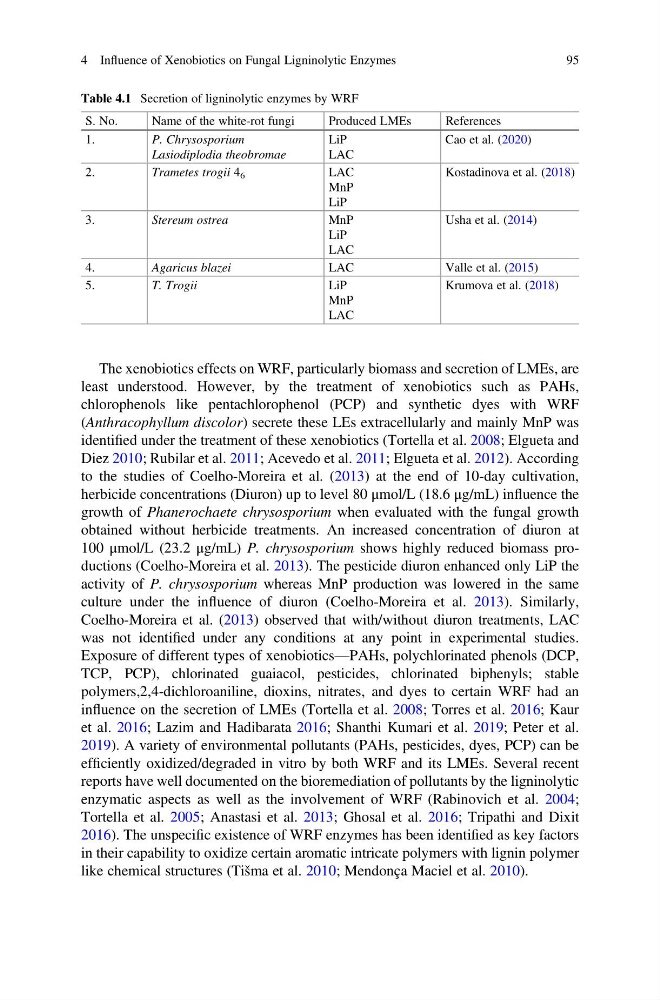
Table 4.1 Secretion of ligninolytic enzymes by WRF
S. No.
Name of the white-rot fungi
Produced LMEs
References
1.
P. Chrysosporium
Lasiodiplodia theobromae
LiP
LAC
Cao et al. (2020)
2.
Trametes trogii 4 6
LAC
MnP
LiP
Kostadinova et al. (2018)
3.
Stereum ostrea
MnP
LiP
LAC
Usha et al. (2014)
4.
Agaricus blazei
LAC
Valle et al. (2015)
5.
T. Trogii
LiP
MnP
LAC
Krumova et al. (2018)
4 Influence of Xenobiotics on Fungal Ligninolytic Enzymes
95
least understood. However, by the treatment of xenobiotics such as PAHs,
chlorophenols like pentachlorophenol (PCP) and synthetic dyes with WRF
(Anthracophyllum discolor) secrete these LEs extracellularly and mainly MnP was
identified under the treatment of these xenobiotics (Tortella et al. 2008; Elgueta and
Diez 2010; Rubilar et al. 2011; Acevedo et al. 2011; Elgueta et al. 2012). According
to the studies of Coelho-Moreira et al. (2013) at the end of 10-day cultivation,
herbicide concentrations (Diuron) up to level 80 μmol/L (18.6 μg/mL) influence the
growth of Phanerochaete chrysosporium when evaluated with the fungal growth
obtained without herbicide treatments. An increased concentration of diuron at
100 μmol/L (23.2 μg/mL) P. chrysosporium shows highly reduced biomass productions (Coelho-Moreira et al. 2013). The pesticide diuron enhanced only LiP the
activity of P. chrysosporium whereas MnP production was lowered in the same
culture under the influence of diuron (Coelho-Moreira et al. 2013). Similarly,
Coelho-Moreira et al. (2013) observed that with/without diuron treatments, LAC
was not identified under any conditions at any point in experimental studies.
Exposure of different types of xenobiotics—PAHs, polychlorinated phenols (DCP,
TCP, PCP), chlorinated guaiacol, pesticides, chlorinated biphenyls; stable
polymers,2,4-dichloroaniline, dioxins, nitrates, and dyes to certain WRF had an
influence on the secretion of LMEs (Tortella et al. 2008; Torres et al. 2016; Kaur
et al. 2016; Lazim and Hadibarata 2016; Shanthi Kumari et al. 2019; Peter et al.
2019). A variety of environmental pollutants (PAHs, pesticides, dyes, PCP) can be
efficiently oxidized/degraded in vitro by both WRF and its LMEs. Several recent
reports have well documented on the bioremediation of pollutants by the ligninolytic
enzymatic aspects as well as the involvement of WRF (Rabinovich et al. 2004;
Tortella et al. 2005; Anastasi et al. 2013; Ghosal et al. 2016; Tripathi and Dixit
2016). The unspecific existence of WRF enzymes has been identified as key factors
in their capability to oxidize certain aromatic intricate polymers with lignin polymer
like chemical structures (Tišma et al. 2010; Mendonça Maciel et al. 2010).
Table 4.1 Secretion of ligninolytic enzymes by WRF
S. No.
Name of the white-rot fungi
Produced LMEs
References
1.
P. Chrysosporium
Lasiodiplodia theobromae
LiP
LAC
Cao et al. (2020)
2.
Trametes trogii 4 6
LAC
MnP
LiP
Kostadinova et al. (2018)
3.
Stereum ostrea
MnP
LiP
LAC
Usha et al. (2014)
4.
Agaricus blazei
LAC
Valle et al. (2015)
5.
T. Trogii
LiP
MnP
LAC
Krumova et al. (2018)
4 Influence of Xenobiotics on Fungal Ligninolytic Enzymes
95