

frequently used wavelength for datacom transmission in multimode waveguide
systems, cannot be assigned with confidence.
13.3.2.4 Absorption Loss for PDMS Core and Cladding due
to Molecular Vibrations
Estimations of the absorption loss in amorphous acrylic-based polymers have been
carried out by several authors [2–4], providing detailed procedures for such calculations. However, their empirical equations were deduced for acrylic polymers,
using additionally the assumption of same shape of the absorption bands. Thus, it
was our intention to derive an optical loss equation that is applicable to
siloxane-based materials by considering integrated band intensities.
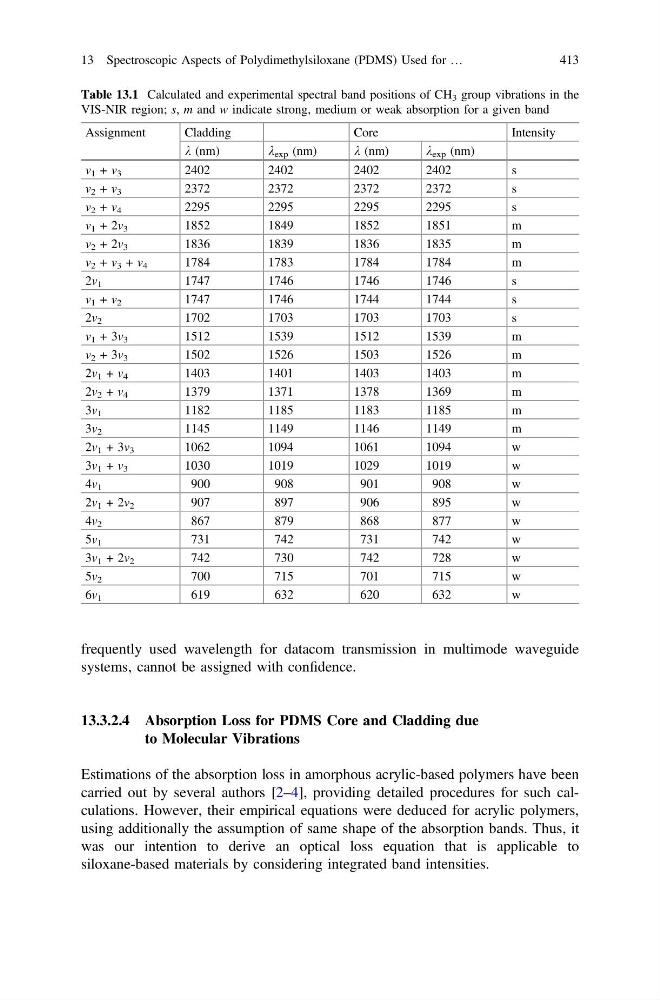
Table 13.1 Calculated and experimental spectral band positions of CH 3 group vibrations in the
VIS-NIR region; s, m and w indicate strong, medium or weak absorption for a given band
Assignment
Cladding
Core
Intensity
k (nm)
k exp (nm)
k (nm)
k exp (nm)
v 1 + v 3
2402
2402
2402
2402
s
v 2 + v 3
2372
2372
2372
2372
s
v 2 + v 4
2295
2295
2295
2295
s
v 1 + 2v 3
1852
1849
1852
1851
m
v 2 + 2v 3
1836
1839
1836
1835
m
v 2 + v 3 + v 4
1784
1783
1784
1784
m
2v 1
1747
1746
1746
1746
s
v 1 + v 2
1747
1746
1744
1744
s
2v 2
1702
1703
1703
1703
s
v 1 + 3v 3
1512
1539
1512
1539
m
v 2 + 3v 3
1502
1526
1503
1526
m
2v 1 + v 4
1403
1401
1403
1403
m
2v 2 + v 4
1379
1371
1378
1369
m
3v 1
1182
1185
1183
1185
m
3v 2
1145
1149
1146
1149
m
2v 1 + 3v 3
1062
1094
1061
1094
w
3v 1 + v 3
1030
1019
1029
1019
w
4v 1
900
908
901
908
w
2v 1 + 2v 2
907
897
906
895
w
4v 2
867
879
868
877
w
5v 1
731
742
731
742
w
3v 1 + 2v 2
742
730
742
728
w
5v 2
700
715
701
715
w
6v 1
619
632
620
632
w
13 Spectroscopic Aspects of Polydimethylsiloxane (PDMS) Used for …
413
systems, cannot be assigned with confidence.
13.3.2.4 Absorption Loss for PDMS Core and Cladding due
to Molecular Vibrations
Estimations of the absorption loss in amorphous acrylic-based polymers have been
carried out by several authors [2–4], providing detailed procedures for such calculations. However, their empirical equations were deduced for acrylic polymers,
using additionally the assumption of same shape of the absorption bands. Thus, it
was our intention to derive an optical loss equation that is applicable to
siloxane-based materials by considering integrated band intensities.
Table 13.1 Calculated and experimental spectral band positions of CH 3 group vibrations in the
VIS-NIR region; s, m and w indicate strong, medium or weak absorption for a given band
Assignment
Cladding
Core
Intensity
k (nm)
k exp (nm)
k (nm)
k exp (nm)
v 1 + v 3
2402
2402
2402
2402
s
v 2 + v 3
2372
2372
2372
2372
s
v 2 + v 4
2295
2295
2295
2295
s
v 1 + 2v 3
1852
1849
1852
1851
m
v 2 + 2v 3
1836
1839
1836
1835
m
v 2 + v 3 + v 4
1784
1783
1784
1784
m
2v 1
1747
1746
1746
1746
s
v 1 + v 2
1747
1746
1744
1744
s
2v 2
1702
1703
1703
1703
s
v 1 + 3v 3
1512
1539
1512
1539
m
v 2 + 3v 3
1502
1526
1503
1526
m
2v 1 + v 4
1403
1401
1403
1403
m
2v 2 + v 4
1379
1371
1378
1369
m
3v 1
1182
1185
1183
1185
m
3v 2
1145
1149
1146
1149
m
2v 1 + 3v 3
1062
1094
1061
1094
w
3v 1 + v 3
1030
1019
1029
1019
w
4v 1
900
908
901
908
w
2v 1 + 2v 2
907
897
906
895
w
4v 2
867
879
868
877
w
5v 1
731
742
731
742
w
3v 1 + 2v 2
742
730
742
728
w
5v 2
700
715
701
715
w
6v 1
619
632
620
632
w
13 Spectroscopic Aspects of Polydimethylsiloxane (PDMS) Used for …
413