

Mushroom Nanobiotechnology: Concepts, Developments and Potentials
263
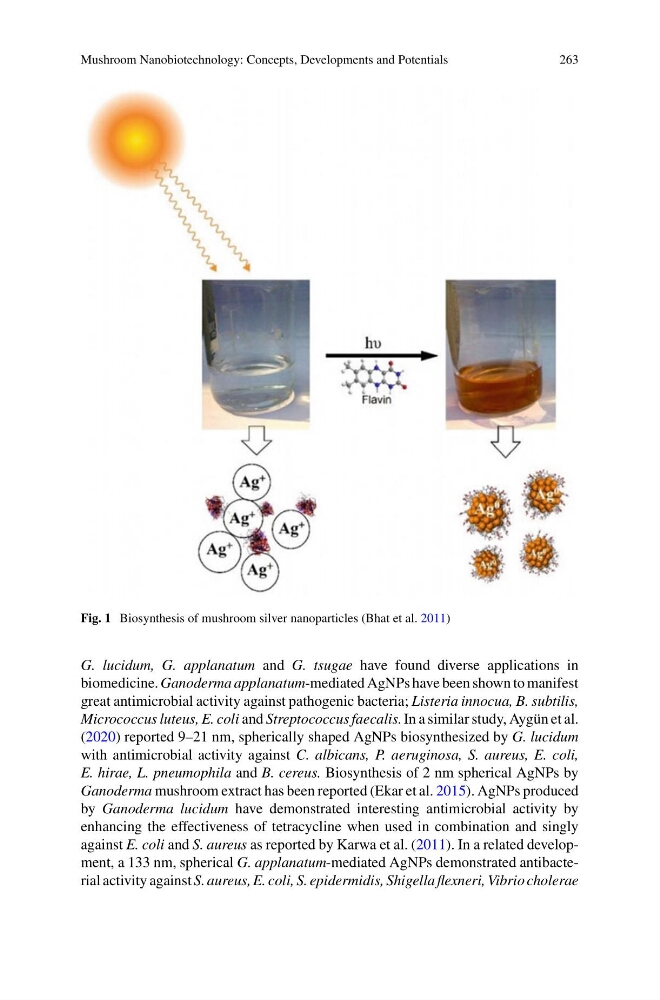
Fig. 1 Biosynthesis of mushroom silver nanoparticles (Bhat et al. 2011)
G. lucidum, G. applanatum and G. tsugae have found diverse applications in
biomedicine. Ganoderma applanatum-mediated AgNPs have been shown to manifest
great antimicrobial activity against pathogenic bacteria; Listeria innocua, B. subtilis,
Micrococcus luteus, E. coli and Streptococcus faecalis. In a similar study, Aygün et al.
(2020) reported 9–21 nm, spherically shaped AgNPs biosynthesized by G. lucidum
with antimicrobial activity against C. albicans, P. aeruginosa, S. aureus, E. coli,
E. hirae, L. pneumophila and B. cereus. Biosynthesis of 2 nm spherical AgNPs by
Ganoderma mushroom extract has been reported (Ekar et al. 2015). AgNPs produced
by Ganoderma lucidum have demonstrated interesting antimicrobial activity by
enhancing the effectiveness of tetracycline when used in combination and singly
against E. coli and S. aureus as reported by Karwa et al. (2011). In a related development, a 133 nm, spherical G. applanatum-mediated AgNPs demonstrated antibacterial activity against S. aureus, E. coli, S. epidermidis, Shigella flexneri, Vibrio cholerae
263
Fig. 1 Biosynthesis of mushroom silver nanoparticles (Bhat et al. 2011)
G. lucidum, G. applanatum and G. tsugae have found diverse applications in
biomedicine. Ganoderma applanatum-mediated AgNPs have been shown to manifest
great antimicrobial activity against pathogenic bacteria; Listeria innocua, B. subtilis,
Micrococcus luteus, E. coli and Streptococcus faecalis. In a similar study, Aygün et al.
(2020) reported 9–21 nm, spherically shaped AgNPs biosynthesized by G. lucidum
with antimicrobial activity against C. albicans, P. aeruginosa, S. aureus, E. coli,
E. hirae, L. pneumophila and B. cereus. Biosynthesis of 2 nm spherical AgNPs by
Ganoderma mushroom extract has been reported (Ekar et al. 2015). AgNPs produced
by Ganoderma lucidum have demonstrated interesting antimicrobial activity by
enhancing the effectiveness of tetracycline when used in combination and singly
against E. coli and S. aureus as reported by Karwa et al. (2011). In a related development, a 133 nm, spherical G. applanatum-mediated AgNPs demonstrated antibacterial activity against S. aureus, E. coli, S. epidermidis, Shigella flexneri, Vibrio cholerae