

16
Table 2. Unfortunately, battery shelf-life and manufactured reliability have hindered
the success of companies marketing products based on zinc compounds with calcium hydroxide. A different attempt at this same strategy used zinc-aluminumbismuth hydrotalcite, as reported by Wang et al. [57] and Zhang et al. [62]. They
hypothesized that hydrotalcite’s layered structure can electrochemically store zinc
ions. Zhang et al. [62] report 380 mAh g
−1
of hydrotalcite for 800 cycles in 6 M
KOH saturated with ZnO. Unfortunately, Wang et al. and Zhang et al. do not report
electrode porosity, thickness of electrodes, electrode mass per cm
2
, cell geometry, or
volume of electrolyte used. They also do not include their dissolved ZnO in their
claim of 380 mAh g
−1
. The reproducibility of this Zn-Al-Bi hydrotalcite material
was tested in our laboratory, and our XRD results (Fig. 13) strongly suggest the
Zn-Al-Bi hydrotalcite converts immediately to Zn and ZnO during the first cycle
(hydrotalcite is known to dissolve in KOH, see [76]). Therefore, all evidence suggests that Wang et al. [57] and Zhang et al. [62] were simply cycling Zn metal to
Zn OH
4
2
in a large volume of ZnO-saturated electrolyte (the volume of which
they did not disclose), via reaction Eq. (7). As with Higashi et al. [72], their papers
[57, 62, 77–79] serve as a reminder to the academic community to require full
reporting of all important details in peer-reviewed literature and fidelity to practical
considerations in engineering-focused publications.
Corrosion is the other major challenge for zinc anodes. Zinc metal is thermodynamically unstable when in contact with water, and the kinetics of the corrosion
become fast when strong alkaline solutions are used. The choice of metal current
collector also has an effect [80]. McLarnon and Cairns [35] list the many organic
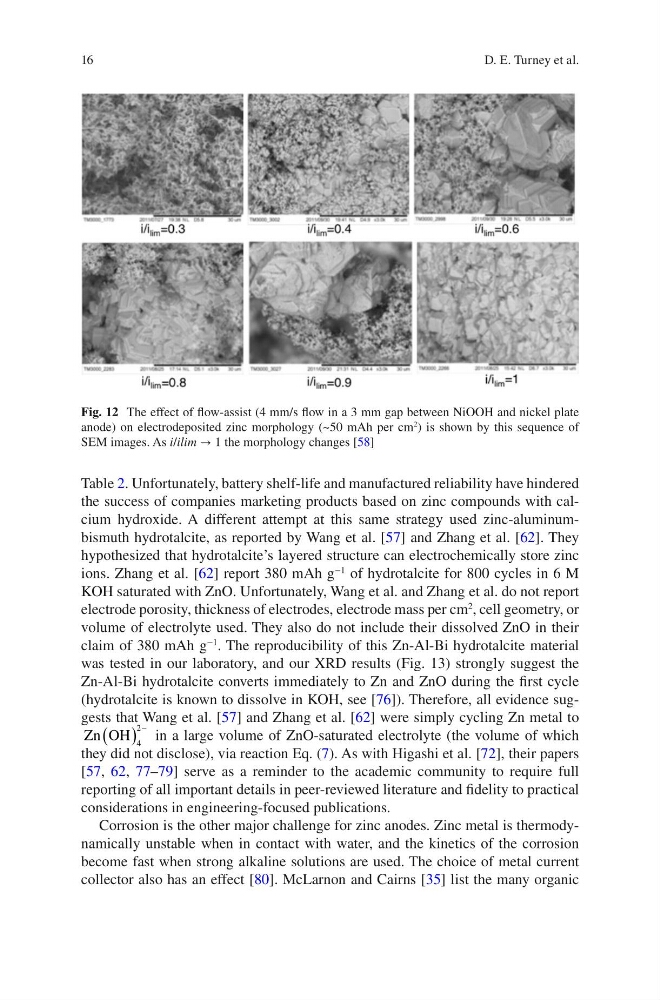
Fig. 12 The effect of flow-assist (4 mm/s flow in a 3 mm gap between NiOOH and nickel plate
anode) on electrodeposited zinc morphology (~50 mAh per cm
2
) is shown by this sequence of
SEM images. As i/ilim → 1 the morphology changes [58]
D. E. Turney et al.
Table 2. Unfortunately, battery shelf-life and manufactured reliability have hindered
the success of companies marketing products based on zinc compounds with calcium hydroxide. A different attempt at this same strategy used zinc-aluminumbismuth hydrotalcite, as reported by Wang et al. [57] and Zhang et al. [62]. They
hypothesized that hydrotalcite’s layered structure can electrochemically store zinc
ions. Zhang et al. [62] report 380 mAh g
−1
of hydrotalcite for 800 cycles in 6 M
KOH saturated with ZnO. Unfortunately, Wang et al. and Zhang et al. do not report
electrode porosity, thickness of electrodes, electrode mass per cm
2
, cell geometry, or
volume of electrolyte used. They also do not include their dissolved ZnO in their
claim of 380 mAh g
−1
. The reproducibility of this Zn-Al-Bi hydrotalcite material
was tested in our laboratory, and our XRD results (Fig. 13) strongly suggest the
Zn-Al-Bi hydrotalcite converts immediately to Zn and ZnO during the first cycle
(hydrotalcite is known to dissolve in KOH, see [76]). Therefore, all evidence suggests that Wang et al. [57] and Zhang et al. [62] were simply cycling Zn metal to
Zn OH
4
2
in a large volume of ZnO-saturated electrolyte (the volume of which
they did not disclose), via reaction Eq. (7). As with Higashi et al. [72], their papers
[57, 62, 77–79] serve as a reminder to the academic community to require full
reporting of all important details in peer-reviewed literature and fidelity to practical
considerations in engineering-focused publications.
Corrosion is the other major challenge for zinc anodes. Zinc metal is thermodynamically unstable when in contact with water, and the kinetics of the corrosion
become fast when strong alkaline solutions are used. The choice of metal current
collector also has an effect [80]. McLarnon and Cairns [35] list the many organic
Fig. 12 The effect of flow-assist (4 mm/s flow in a 3 mm gap between NiOOH and nickel plate
anode) on electrodeposited zinc morphology (~50 mAh per cm
2
) is shown by this sequence of
SEM images. As i/ilim → 1 the morphology changes [58]
D. E. Turney et al.