

et al. 2014; Ge et al. 2019). Photocatalysts were used in two forms of powder and
film within degradation reactions with some advantages and disadvantages for each
of them.
10.2.1 Bi2compounds
BiÀcompounds considered as bold visible light-active photocatalysts and have
recently drawn rapidly great attention from photocatalyst researchers. Bi
3+
shows remarkable stability in the different compounds such as Bi 2 S 3 (Jin and He
2017), Bi 2 WO 6 (Chen et al. 2010), BiFeO 3 (Ponraj et al. 2017), BiVO 4 (Yin et al.
2010b), Bi 4 Ti 3 O 12 (Buscaglia et al. 2011), BiPO 4 (Li et al. 2011), Bi 2 O 2 CO 3 (Huang
et al. 2015b), and BiOX (X ¼ Cl, Br, I) (Zhang et al. 2008) highly noticed owing to
the respected tight band gap, high stability, cost-effective, and environment friendly.
Almost all of them have layered structure and sheet like from the view of shape.
Although Bi
5+
Àcompounds, such as KBiO 3 and NaBiO 3, can also be activated by
visible light, Bi
5+
Àcompounds are less considered due to the instability of Bi
5+ ions.
In Bi
3+ compounds, hybridization of O 2p and Bi 6s orbitals leads to move valence
bands to upward states which favor for photocatalytic applications. It can be
highlighted that high mobility predicted for photo-induced charge carriers on the
BiÀcompounds surface due to dispersion of 6s orbitals of bismuth. On the other
hand, BiÀcompounds have band gaps <3.0 eV that indicate the high activity in
visible region. BiÀphotocatalysts have interesting capabilities within the environmental issues for removing the organic pollutants such of azo dyes (Zhang et al.
2007; Qin et al. 2012), redox treatments of toxic gases such as NO and CO 2 (Ai et al.
2011a; Jin and He 2017), photoactivated water splitting for H 2 and O 2 evolution
reaction. A diverse scientific studies about photocatalytic performance of
No ·OH or ·O 2
–
E (vs. RHE)
Unstable
No ·O 2
–
–3
–2
–1
+1
+2
+3
+4
(pH = 7)
Strong oxidation abilities for
pollutant degradation and formation of ·OH
Without hole oxidation abilities
for formation of ·OH
OH – /·OH(2.28 V)
H 2 O/O 2 (0.82 V)
O 2 /·O 2
– (–0.33 V)
2H + /H 2 (–0.41 v)
SiC
Cu 2 O
CdS
Toxic
TaON
Ta 3 N 5
C 3 N 4
ZnO
TiO 2 (A)
SrTiO 3
SnO 2
WO 3
Fe 3 O 4
BiVO 4 SrBiO 3 (R)
0
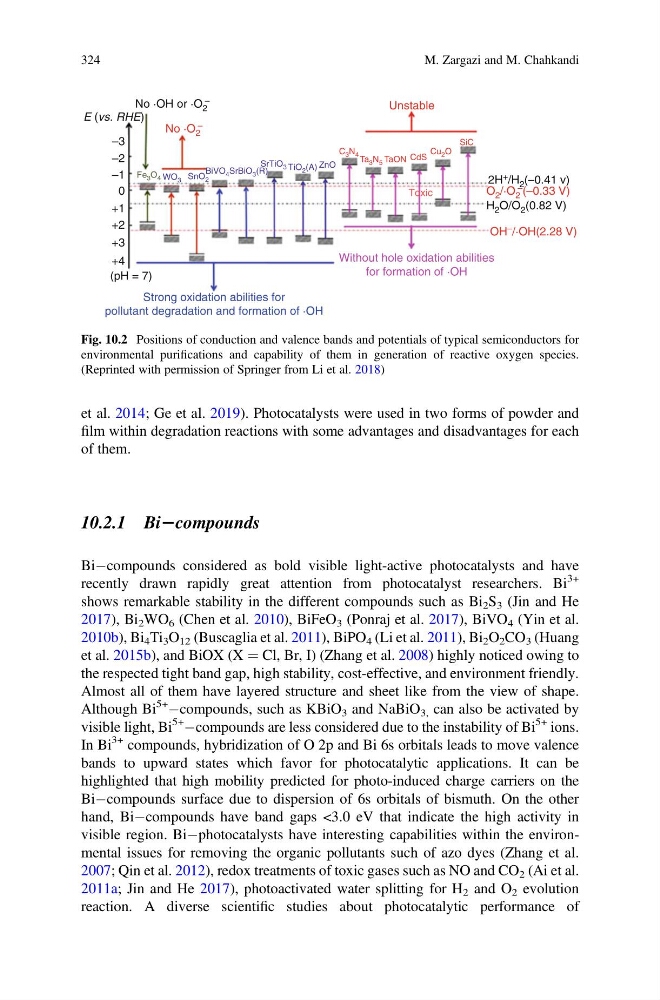
Fig. 10.2 Positions of conduction and valence bands and potentials of typical semiconductors for
environmental purifications and capability of them in generation of reactive oxygen species.
(Reprinted with permission of Springer from Li et al. 2018)
324
M. Zargazi and M. Chahkandi
film within degradation reactions with some advantages and disadvantages for each
of them.
10.2.1 Bi2compounds
BiÀcompounds considered as bold visible light-active photocatalysts and have
recently drawn rapidly great attention from photocatalyst researchers. Bi
3+
shows remarkable stability in the different compounds such as Bi 2 S 3 (Jin and He
2017), Bi 2 WO 6 (Chen et al. 2010), BiFeO 3 (Ponraj et al. 2017), BiVO 4 (Yin et al.
2010b), Bi 4 Ti 3 O 12 (Buscaglia et al. 2011), BiPO 4 (Li et al. 2011), Bi 2 O 2 CO 3 (Huang
et al. 2015b), and BiOX (X ¼ Cl, Br, I) (Zhang et al. 2008) highly noticed owing to
the respected tight band gap, high stability, cost-effective, and environment friendly.
Almost all of them have layered structure and sheet like from the view of shape.
Although Bi
5+
Àcompounds, such as KBiO 3 and NaBiO 3, can also be activated by
visible light, Bi
5+
Àcompounds are less considered due to the instability of Bi
5+ ions.
In Bi
3+ compounds, hybridization of O 2p and Bi 6s orbitals leads to move valence
bands to upward states which favor for photocatalytic applications. It can be
highlighted that high mobility predicted for photo-induced charge carriers on the
BiÀcompounds surface due to dispersion of 6s orbitals of bismuth. On the other
hand, BiÀcompounds have band gaps <3.0 eV that indicate the high activity in
visible region. BiÀphotocatalysts have interesting capabilities within the environmental issues for removing the organic pollutants such of azo dyes (Zhang et al.
2007; Qin et al. 2012), redox treatments of toxic gases such as NO and CO 2 (Ai et al.
2011a; Jin and He 2017), photoactivated water splitting for H 2 and O 2 evolution
reaction. A diverse scientific studies about photocatalytic performance of
No ·OH or ·O 2
–
E (vs. RHE)
Unstable
No ·O 2
–
–3
–2
–1
+1
+2
+3
+4
(pH = 7)
Strong oxidation abilities for
pollutant degradation and formation of ·OH
Without hole oxidation abilities
for formation of ·OH
OH – /·OH(2.28 V)
H 2 O/O 2 (0.82 V)
O 2 /·O 2
– (–0.33 V)
2H + /H 2 (–0.41 v)
SiC
Cu 2 O
CdS
Toxic
TaON
Ta 3 N 5
C 3 N 4
ZnO
TiO 2 (A)
SrTiO 3
SnO 2
WO 3
Fe 3 O 4
BiVO 4 SrBiO 3 (R)
0
Fig. 10.2 Positions of conduction and valence bands and potentials of typical semiconductors for
environmental purifications and capability of them in generation of reactive oxygen species.
(Reprinted with permission of Springer from Li et al. 2018)
324
M. Zargazi and M. Chahkandi