

9.3.5 Photocatalytic Compounds Kind
Numerous photocatalysts have prepared and examined the activity toward environmental purification. Many of them show high performance under UV irradiation.
Finally, there have been continual tries to development and improvement of visible
light photocatalytic efficiency. The related efforts necessitate more studies of physicochemical properties of powerful photocatalysts.
TiO 2 as one of known powerful photocatalyst can be modified to achieve higher
than promising results of photocatalytic activity. The sophistication include loading
of TiO 2 with carbon, fullerene, graphite, activated carbon, different forms of grapheme oxide, nanosheets, single-walled carbon nanotubes, multiple-walled carbon
nanotube, and so on (Wu et al. 2010; Cong et al. 2011; Meng and Oh 2012;
Mohammadi and Sabbaghi 2014; Rong et al. 2015). However, some alternative
modifications have been attended on the incorporation of metallic and nonmetallic
elements (such as S, I, N, La, and Fe) in related structure (Li et al. 2011; Collazzo
et al. 2012; Niu et al. 2013). Loaded TiO 2 over MWCNT using a modified solÀgel
technique was shown better activity of TiO 2 /MCNT composite within
photodegradation of Reactive Black 5 dye in comparison with function of single
TiO 2 (Hamid et al. 2014). Except modifications of titania, the photocatalysts can be
widely classified as oxides, oxyhalides, and sulfides of metals and non-metals. In
addition, their combinations and composite compounds have been investigated on
different substrates. Actually, the catalytic performances of modified titania compounds for contaminant photodegradation for irradiation of UV-visible-solar light
were examined. Table 9.6 was subdivided with numerous recent reported
photocatalysts having high efficient performance.
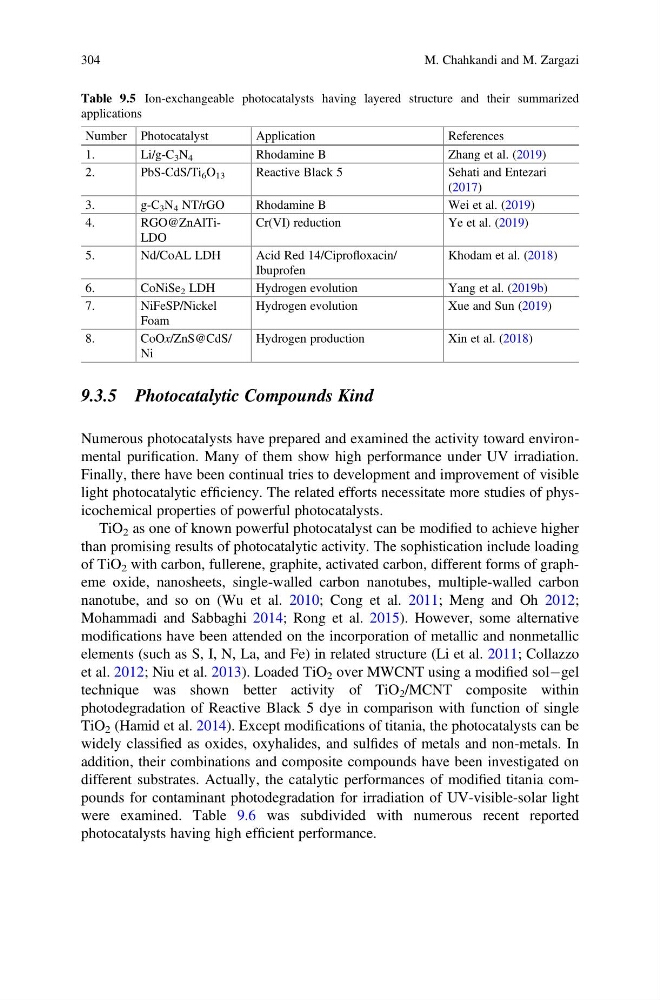
Table 9.5 Ion-exchangeable photocatalysts having layered structure and their summarized
applications
Number Photocatalyst
Application
References
1.
Li/g-C 3 N 4
Rhodamine B
Zhang et al. (2019)
2.
PbS-CdS/Ti 6 O 13
Reactive Black 5
Sehati and Entezari
(2017)
3.
g-C 3 N 4 NT/rGO
Rhodamine B
Wei et al. (2019)
4.
RGO@ZnAlTiLDO
Cr(VI) reduction
Ye et al. (2019)
5.
Nd/CoAL LDH
Acid Red 14/Ciprofloxacin/
Ibuprofen
Khodam et al. (2018)
6.
CoNiSe 2 LDH
Hydrogen evolution
Yang et al. (2019b)
7.
NiFeSP/Nickel
Foam
Hydrogen evolution
Xue and Sun (2019)
8.
CoOx/ZnS@CdS/
Ni
Hydrogen production
Xin et al. (2018)
304
M. Chahkandi and M. Zargazi
Numerous photocatalysts have prepared and examined the activity toward environmental purification. Many of them show high performance under UV irradiation.
Finally, there have been continual tries to development and improvement of visible
light photocatalytic efficiency. The related efforts necessitate more studies of physicochemical properties of powerful photocatalysts.
TiO 2 as one of known powerful photocatalyst can be modified to achieve higher
than promising results of photocatalytic activity. The sophistication include loading
of TiO 2 with carbon, fullerene, graphite, activated carbon, different forms of grapheme oxide, nanosheets, single-walled carbon nanotubes, multiple-walled carbon
nanotube, and so on (Wu et al. 2010; Cong et al. 2011; Meng and Oh 2012;
Mohammadi and Sabbaghi 2014; Rong et al. 2015). However, some alternative
modifications have been attended on the incorporation of metallic and nonmetallic
elements (such as S, I, N, La, and Fe) in related structure (Li et al. 2011; Collazzo
et al. 2012; Niu et al. 2013). Loaded TiO 2 over MWCNT using a modified solÀgel
technique was shown better activity of TiO 2 /MCNT composite within
photodegradation of Reactive Black 5 dye in comparison with function of single
TiO 2 (Hamid et al. 2014). Except modifications of titania, the photocatalysts can be
widely classified as oxides, oxyhalides, and sulfides of metals and non-metals. In
addition, their combinations and composite compounds have been investigated on
different substrates. Actually, the catalytic performances of modified titania compounds for contaminant photodegradation for irradiation of UV-visible-solar light
were examined. Table 9.6 was subdivided with numerous recent reported
photocatalysts having high efficient performance.
Table 9.5 Ion-exchangeable photocatalysts having layered structure and their summarized
applications
Number Photocatalyst
Application
References
1.
Li/g-C 3 N 4
Rhodamine B
Zhang et al. (2019)
2.
PbS-CdS/Ti 6 O 13
Reactive Black 5
Sehati and Entezari
(2017)
3.
g-C 3 N 4 NT/rGO
Rhodamine B
Wei et al. (2019)
4.
RGO@ZnAlTiLDO
Cr(VI) reduction
Ye et al. (2019)
5.
Nd/CoAL LDH
Acid Red 14/Ciprofloxacin/
Ibuprofen
Khodam et al. (2018)
6.
CoNiSe 2 LDH
Hydrogen evolution
Yang et al. (2019b)
7.
NiFeSP/Nickel
Foam
Hydrogen evolution
Xue and Sun (2019)
8.
CoOx/ZnS@CdS/
Ni
Hydrogen production
Xin et al. (2018)
304
M. Chahkandi and M. Zargazi