

TiO 2 ! 3:2 eV
ð
Þþhv < 387 nm
ð
Þ!h
þ
VB þ e
À
CB
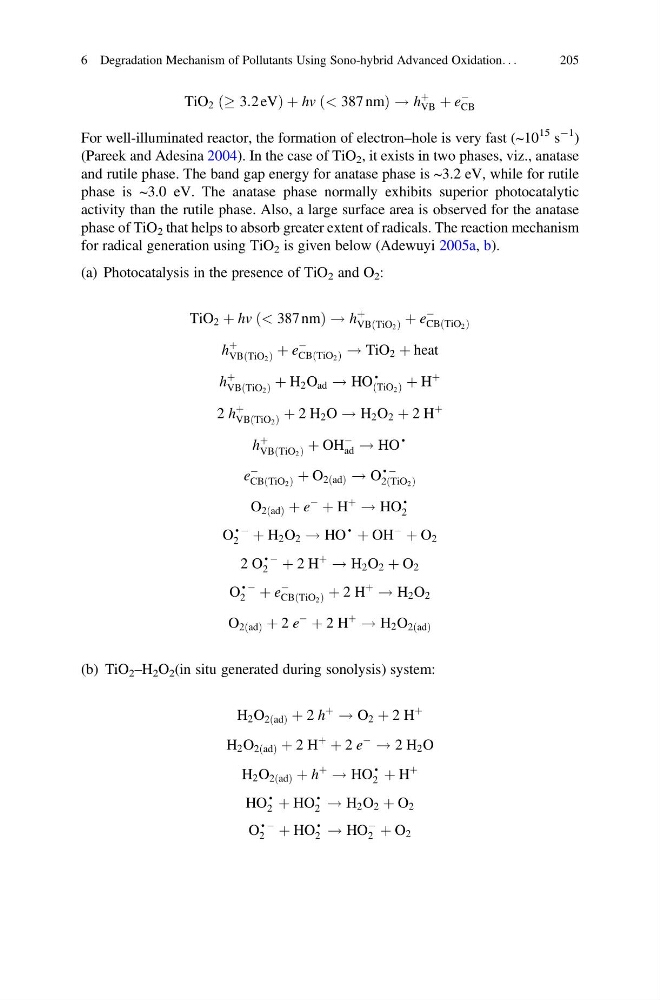
For well-illuminated reactor, the formation of electron–hole is very fast (~10
15 s
À1 )
(Pareek and Adesina 2004). In the case of TiO 2 , it exists in two phases, viz., anatase
and rutile phase. The band gap energy for anatase phase is ~3.2 eV, while for rutile
phase is ~3.0 eV. The anatase phase normally exhibits superior photocatalytic
activity than the rutile phase. Also, a large surface area is observed for the anatase
phase of TiO 2 that helps to absorb greater extent of radicals. The reaction mechanism
for radical generation using TiO 2 is given below (Adewuyi 2005a, b).
(a) Photocatalysis in the presence of TiO 2 and O 2 :
TiO 2 þ hv < 387 nm
ð
Þ!h
þ
VB TiO 2
ð
Þ þ e
À
CB TiO 2
ð
Þ
h
þ
VB TiO 2
ð
Þ þ e
À
CB TiO 2
ð
Þ ! TiO 2 þ heat
h
þ
VB TiO 2
ð
Þ þ H 2 O ad ! HO
•
TiO 2
ð
Þ þ H
þ
2 h
þ
VB TiO 2
ð
Þ þ 2 H 2 O ! H 2 O 2 þ 2 H
þ
h
þ
VB TiO 2
ð
Þ þ OH
À
ad ! HO
•
e
À
CB TiO 2
ð
Þ þ O 2 ad
ð Þ ! O
• À
2 TiO 2
ð
Þ
O 2 ad
ð Þ þ e
À
þ H
þ
! HO
•
2
O
• À
2 þ H 2 O 2 ! HO
•
þ OH
À
þ O 2
2 O
• À
2 þ 2 H
þ
! H 2 O 2 þ O 2
O
• À
2 þ e
À
CB TiO 2
ð
Þ þ 2 H
þ
! H 2 O 2
O 2 ad
ð Þ þ 2 e
À
þ 2 H
þ
! H 2 O 2 ad
ð Þ
(b) TiO 2 –H 2 O 2 (in situ generated during sonolysis) system:
H 2 O 2 ad
ð Þ þ 2 h
þ
! O 2 þ 2 H
þ
H 2 O 2 ad
ð Þ þ 2 H
þ
þ 2 e
À
! 2 H 2 O
H 2 O 2 ad
ð Þ þ h
þ
! HO
•
2 þ H
þ
HO
•
2 þ HO
•
2 ! H 2 O 2 þ O 2
O
• À
2 þ HO
•
2 ! HO
À
2 þ O 2
6 Degradation Mechanism of Pollutants Using Sono-hybrid Advanced Oxidation. . .
205
ð
Þþhv < 387 nm
ð
Þ!h
þ
VB þ e
À
CB
For well-illuminated reactor, the formation of electron–hole is very fast (~10
15 s
À1 )
(Pareek and Adesina 2004). In the case of TiO 2 , it exists in two phases, viz., anatase
and rutile phase. The band gap energy for anatase phase is ~3.2 eV, while for rutile
phase is ~3.0 eV. The anatase phase normally exhibits superior photocatalytic
activity than the rutile phase. Also, a large surface area is observed for the anatase
phase of TiO 2 that helps to absorb greater extent of radicals. The reaction mechanism
for radical generation using TiO 2 is given below (Adewuyi 2005a, b).
(a) Photocatalysis in the presence of TiO 2 and O 2 :
TiO 2 þ hv < 387 nm
ð
Þ!h
þ
VB TiO 2
ð
Þ þ e
À
CB TiO 2
ð
Þ
h
þ
VB TiO 2
ð
Þ þ e
À
CB TiO 2
ð
Þ ! TiO 2 þ heat
h
þ
VB TiO 2
ð
Þ þ H 2 O ad ! HO
•
TiO 2
ð
Þ þ H
þ
2 h
þ
VB TiO 2
ð
Þ þ 2 H 2 O ! H 2 O 2 þ 2 H
þ
h
þ
VB TiO 2
ð
Þ þ OH
À
ad ! HO
•
e
À
CB TiO 2
ð
Þ þ O 2 ad
ð Þ ! O
• À
2 TiO 2
ð
Þ
O 2 ad
ð Þ þ e
À
þ H
þ
! HO
•
2
O
• À
2 þ H 2 O 2 ! HO
•
þ OH
À
þ O 2
2 O
• À
2 þ 2 H
þ
! H 2 O 2 þ O 2
O
• À
2 þ e
À
CB TiO 2
ð
Þ þ 2 H
þ
! H 2 O 2
O 2 ad
ð Þ þ 2 e
À
þ 2 H
þ
! H 2 O 2 ad
ð Þ
(b) TiO 2 –H 2 O 2 (in situ generated during sonolysis) system:
H 2 O 2 ad
ð Þ þ 2 h
þ
! O 2 þ 2 H
þ
H 2 O 2 ad
ð Þ þ 2 H
þ
þ 2 e
À
! 2 H 2 O
H 2 O 2 ad
ð Þ þ h
þ
! HO
•
2 þ H
þ
HO
•
2 þ HO
•
2 ! H 2 O 2 þ O 2
O
• À
2 þ HO
•
2 ! HO
À
2 þ O 2
6 Degradation Mechanism of Pollutants Using Sono-hybrid Advanced Oxidation. . .
205