

variables such as UV light intensity, reactant constituent, the presence of scavenger
species, pH, temperature, and type of organic target pollutants.
Photo-Fenton Process
H 2 O 2 is usually used as oxidizing agents because of its environmentally benign
and uncomplicated characters. Various metal ions and their oxidative forms, such as
Fe
2+ , Fe
3+ , Cu
+
, Cu
2+ , Ti
3+ , Ti
4+ , Cr
2+ , and Cr
3+ , can be used as a catalyst in H 2 O 2 -
based processes. Notwithstanding, Fe
2+ and Fe
3+ are most frequently used, because
other metal ions are toxic and relatively unavailable. Fenton is one of several
processes that can enhance the oxidative potential of H 2 O 2 which can be used for
the degradation of organic compounds. Fenton uses Fe
2+ [ferrous ions or iron (II)] as
a catalyst under acidic conditions according to Eqs. (1.4)–(1.9) (Ameta et al. 2018a).
Fe
2þ
þ H 2 O 2 ! Fe
3þ
þ HO
À
þ HO
•
ð1:4Þ
HO
•
þ H 2 O 2 ! HO
•
2 þ H 2 O
ð1:5Þ
Fe
2þ
þ
• OH ! Fe
3þ
þ OH
À
ð1:6Þ
Fe
3þ
þ HO
•
2 ! Fe
2þ
þ O 2 þ H
þ
ð1:7Þ
HO
•
þ HO
•
! H 2 O 2
ð1:8Þ
Organic compounds þ HO
•
! Degraded products
ð1:9Þ
In Fenton reactions, hydroxyl radicals (HO
•
) and hydroxide anions (HO
À ), the
oxidizing and extremely powerful species, can be generated to discharge one
electron from an electron-rich organic substrates or any other species present in
the medium to form hydroxide anions. HO
• produced from the reactions can also
attack and degrade a wide range of organic compounds. The efficiency of Fenton
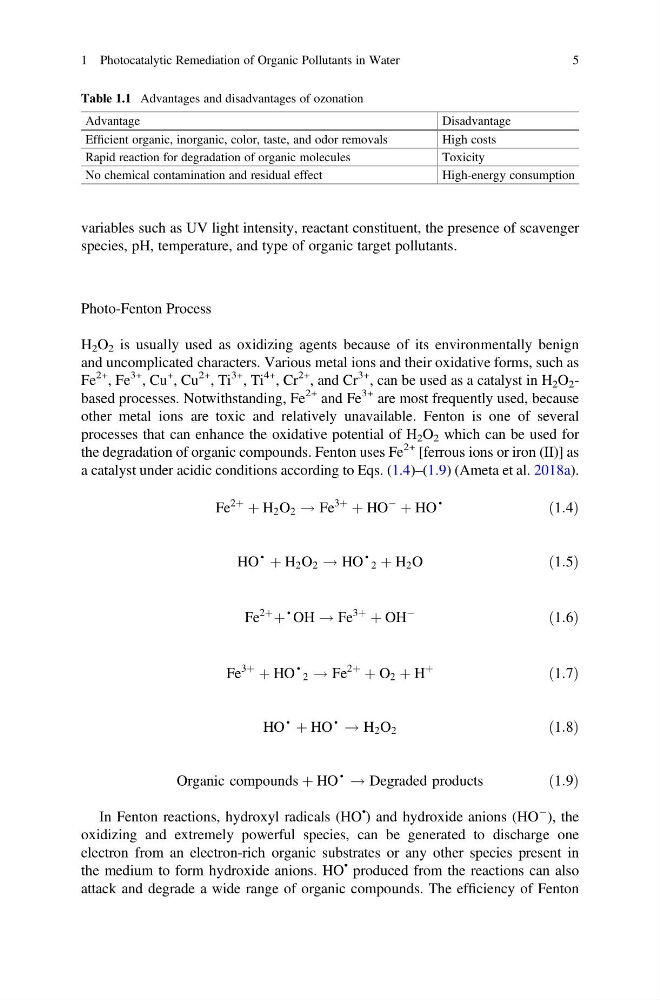
Table 1.1 Advantages and disadvantages of ozonation
Advantage
Disadvantage
Efficient organic, inorganic, color, taste, and odor removals
High costs
Rapid reaction for degradation of organic molecules
Toxicity
No chemical contamination and residual effect
High-energy consumption
1 Photocatalytic Remediation of Organic Pollutants in Water
5
species, pH, temperature, and type of organic target pollutants.
Photo-Fenton Process
H 2 O 2 is usually used as oxidizing agents because of its environmentally benign
and uncomplicated characters. Various metal ions and their oxidative forms, such as
Fe
2+ , Fe
3+ , Cu
+
, Cu
2+ , Ti
3+ , Ti
4+ , Cr
2+ , and Cr
3+ , can be used as a catalyst in H 2 O 2 -
based processes. Notwithstanding, Fe
2+ and Fe
3+ are most frequently used, because
other metal ions are toxic and relatively unavailable. Fenton is one of several
processes that can enhance the oxidative potential of H 2 O 2 which can be used for
the degradation of organic compounds. Fenton uses Fe
2+ [ferrous ions or iron (II)] as
a catalyst under acidic conditions according to Eqs. (1.4)–(1.9) (Ameta et al. 2018a).
Fe
2þ
þ H 2 O 2 ! Fe
3þ
þ HO
À
þ HO
•
ð1:4Þ
HO
•
þ H 2 O 2 ! HO
•
2 þ H 2 O
ð1:5Þ
Fe
2þ
þ
• OH ! Fe
3þ
þ OH
À
ð1:6Þ
Fe
3þ
þ HO
•
2 ! Fe
2þ
þ O 2 þ H
þ
ð1:7Þ
HO
•
þ HO
•
! H 2 O 2
ð1:8Þ
Organic compounds þ HO
•
! Degraded products
ð1:9Þ
In Fenton reactions, hydroxyl radicals (HO
•
) and hydroxide anions (HO
À ), the
oxidizing and extremely powerful species, can be generated to discharge one
electron from an electron-rich organic substrates or any other species present in
the medium to form hydroxide anions. HO
• produced from the reactions can also
attack and degrade a wide range of organic compounds. The efficiency of Fenton
Table 1.1 Advantages and disadvantages of ozonation
Advantage
Disadvantage
Efficient organic, inorganic, color, taste, and odor removals
High costs
Rapid reaction for degradation of organic molecules
Toxicity
No chemical contamination and residual effect
High-energy consumption
1 Photocatalytic Remediation of Organic Pollutants in Water
5