

20
H. Baleta et al.
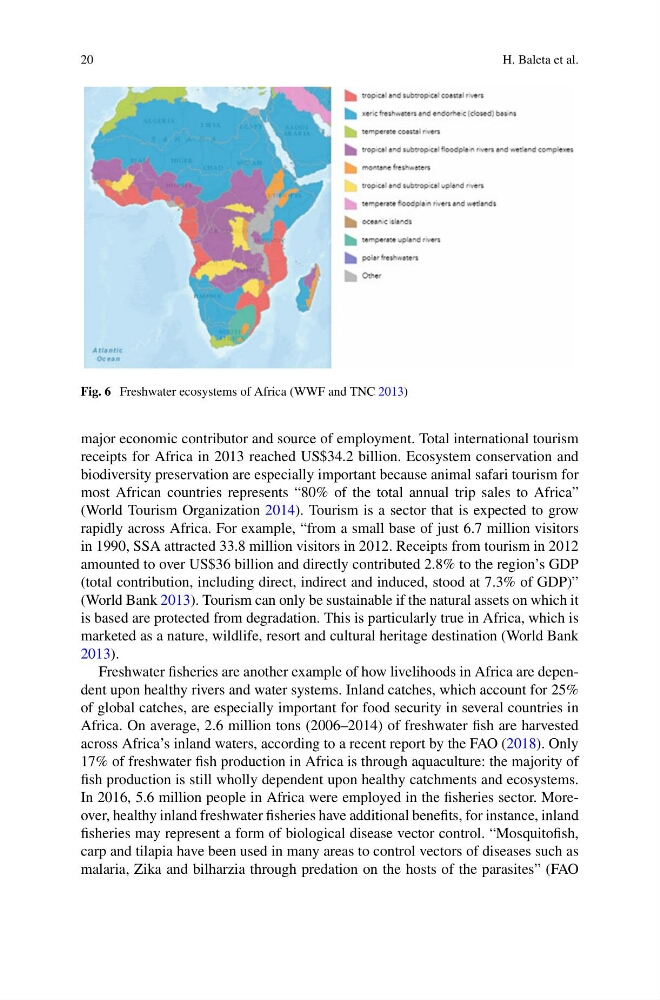
Fig. 6 Freshwater ecosystems of Africa (WWF and TNC 2013)
major economic contributor and source of employment. Total international tourism
receipts for Africa in 2013 reached US$34.2 billion. Ecosystem conservation and
biodiversity preservation are especially important because animal safari tourism for
most African countries represents “80% of the total annual trip sales to Africa”
(World Tourism Organization 2014). Tourism is a sector that is expected to grow
rapidly across Africa. For example, “from a small base of just 6.7 million visitors
in 1990, SSA attracted 33.8 million visitors in 2012. Receipts from tourism in 2012
amounted to over US$36 billion and directly contributed 2.8% to the region’s GDP
(total contribution, including direct, indirect and induced, stood at 7.3% of GDP)”
(World Bank 2013). Tourism can only be sustainable if the natural assets on which it
is based are protected from degradation. This is particularly true in Africa, which is
marketed as a nature, wildlife, resort and cultural heritage destination (World Bank
2013).
Freshwater fisheries are another example of how livelihoods in Africa are dependent upon healthy rivers and water systems. Inland catches, which account for 25%
of global catches, are especially important for food security in several countries in
Africa. On average, 2.6 million tons (2006–2014) of freshwater fish are harvested
across Africa’s inland waters, according to a recent report by the FAO (2018). Only
17% of freshwater fish production in Africa is through aquaculture: the majority of
fish production is still wholly dependent upon healthy catchments and ecosystems.
In 2016, 5.6 million people in Africa were employed in the fisheries sector. Moreover, healthy inland freshwater fisheries have additional benefits, for instance, inland
fisheries may represent a form of biological disease vector control. “Mosquitofish,
carp and tilapia have been used in many areas to control vectors of diseases such as
malaria, Zika and bilharzia through predation on the hosts of the parasites” (FAO
H. Baleta et al.
Fig. 6 Freshwater ecosystems of Africa (WWF and TNC 2013)
major economic contributor and source of employment. Total international tourism
receipts for Africa in 2013 reached US$34.2 billion. Ecosystem conservation and
biodiversity preservation are especially important because animal safari tourism for
most African countries represents “80% of the total annual trip sales to Africa”
(World Tourism Organization 2014). Tourism is a sector that is expected to grow
rapidly across Africa. For example, “from a small base of just 6.7 million visitors
in 1990, SSA attracted 33.8 million visitors in 2012. Receipts from tourism in 2012
amounted to over US$36 billion and directly contributed 2.8% to the region’s GDP
(total contribution, including direct, indirect and induced, stood at 7.3% of GDP)”
(World Bank 2013). Tourism can only be sustainable if the natural assets on which it
is based are protected from degradation. This is particularly true in Africa, which is
marketed as a nature, wildlife, resort and cultural heritage destination (World Bank
2013).
Freshwater fisheries are another example of how livelihoods in Africa are dependent upon healthy rivers and water systems. Inland catches, which account for 25%
of global catches, are especially important for food security in several countries in
Africa. On average, 2.6 million tons (2006–2014) of freshwater fish are harvested
across Africa’s inland waters, according to a recent report by the FAO (2018). Only
17% of freshwater fish production in Africa is through aquaculture: the majority of
fish production is still wholly dependent upon healthy catchments and ecosystems.
In 2016, 5.6 million people in Africa were employed in the fisheries sector. Moreover, healthy inland freshwater fisheries have additional benefits, for instance, inland
fisheries may represent a form of biological disease vector control. “Mosquitofish,
carp and tilapia have been used in many areas to control vectors of diseases such as
malaria, Zika and bilharzia through predation on the hosts of the parasites” (FAO