

18 Developing a Framework for the Water-Energy …
417
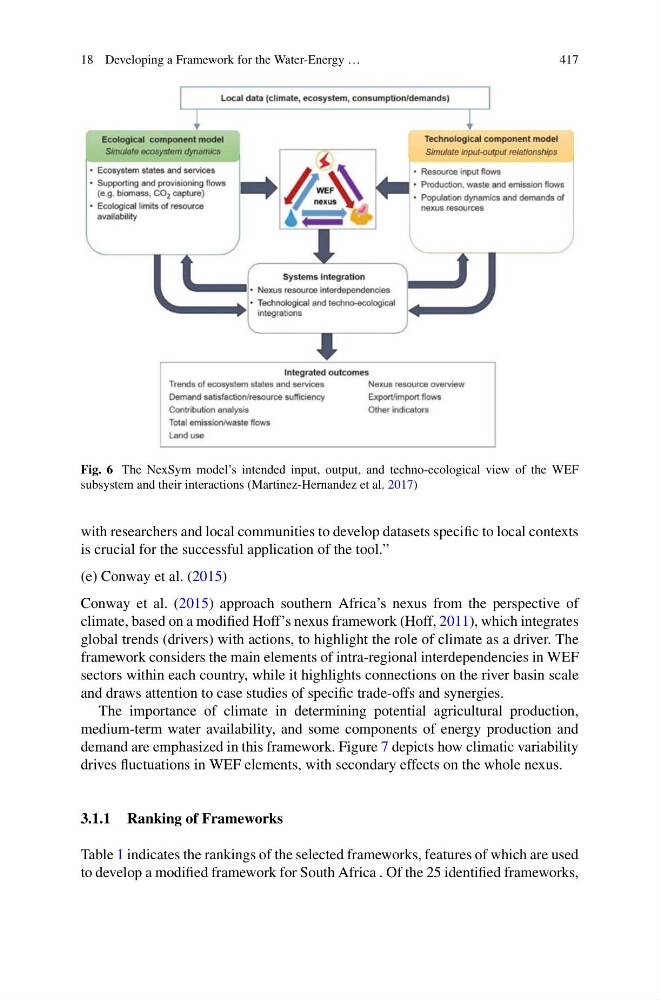
Fig. 6 The NexSym model’s intended input, output, and techno-ecological view of the WEF
subsystem and their interactions (Martinez-Hernandez et al. 2017)
with researchers and local communities to develop datasets specific to local contexts
is crucial for the successful application of the tool.”
(e) Conway et al. (2015)
Conway et al. (2015) approach southern Africa’s nexus from the perspective of
climate, based on a modified Hoff’s nexus framework (Hoff, 2011), which integrates
global trends (drivers) with actions, to highlight the role of climate as a driver. The
framework considers the main elements of intra-regional interdependencies in WEF
sectors within each country, while it highlights connections on the river basin scale
and draws attention to case studies of specific trade-offs and synergies.
The importance of climate in determining potential agricultural production,
medium-term water availability, and some components of energy production and
demand are emphasized in this framework. Figure 7 depicts how climatic variability
drives fluctuations in WEF elements, with secondary effects on the whole nexus.
3.1.1 Ranking of Frameworks
Table 1 indicates the rankings of the selected frameworks, features of which are used
to develop a modified framework for South Africa . Of the 25 identified frameworks,
417
Fig. 6 The NexSym model’s intended input, output, and techno-ecological view of the WEF
subsystem and their interactions (Martinez-Hernandez et al. 2017)
with researchers and local communities to develop datasets specific to local contexts
is crucial for the successful application of the tool.”
(e) Conway et al. (2015)
Conway et al. (2015) approach southern Africa’s nexus from the perspective of
climate, based on a modified Hoff’s nexus framework (Hoff, 2011), which integrates
global trends (drivers) with actions, to highlight the role of climate as a driver. The
framework considers the main elements of intra-regional interdependencies in WEF
sectors within each country, while it highlights connections on the river basin scale
and draws attention to case studies of specific trade-offs and synergies.
The importance of climate in determining potential agricultural production,
medium-term water availability, and some components of energy production and
demand are emphasized in this framework. Figure 7 depicts how climatic variability
drives fluctuations in WEF elements, with secondary effects on the whole nexus.
3.1.1 Ranking of Frameworks
Table 1 indicates the rankings of the selected frameworks, features of which are used
to develop a modified framework for South Africa . Of the 25 identified frameworks,