

416
T. Mabhaudhi et al.
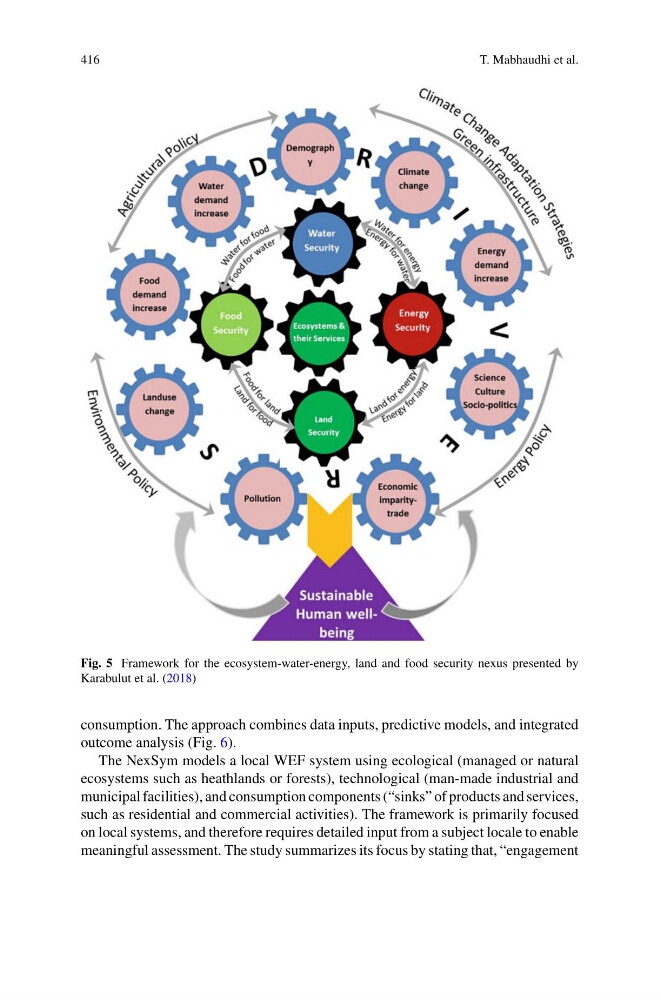
Fig. 5 Framework for the ecosystem-water-energy, land and food security nexus presented by
Karabulut et al. (2018)
consumption. The approach combines data inputs, predictive models, and integrated
outcome analysis (Fig. 6).
The NexSym models a local WEF system using ecological (managed or natural
ecosystems such as heathlands or forests), technological (man-made industrial and
municipal facilities), and consumption components (“sinks” of products and services,
such as residential and commercial activities). The framework is primarily focused
on local systems, and therefore requires detailed input from a subject locale to enable
meaningful assessment. The study summarizes its focus by stating that, “engagement
T. Mabhaudhi et al.
Fig. 5 Framework for the ecosystem-water-energy, land and food security nexus presented by
Karabulut et al. (2018)
consumption. The approach combines data inputs, predictive models, and integrated
outcome analysis (Fig. 6).
The NexSym models a local WEF system using ecological (managed or natural
ecosystems such as heathlands or forests), technological (man-made industrial and
municipal facilities), and consumption components (“sinks” of products and services,
such as residential and commercial activities). The framework is primarily focused
on local systems, and therefore requires detailed input from a subject locale to enable
meaningful assessment. The study summarizes its focus by stating that, “engagement