

18 Developing a Framework for the Water-Energy …
415
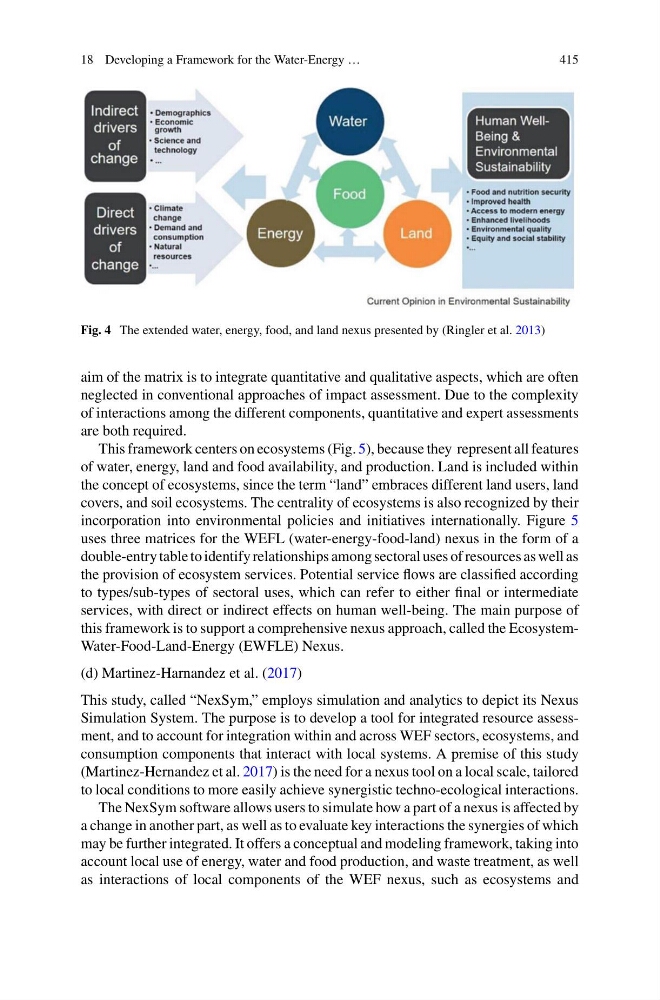
Fig. 4 The extended water, energy, food, and land nexus presented by (Ringler et al. 2013)
aim of the matrix is to integrate quantitative and qualitative aspects, which are often
neglected in conventional approaches of impact assessment. Due to the complexity
of interactions among the different components, quantitative and expert assessments
are both required.
This framework centers on ecosystems (Fig. 5), because they represent all features
of water, energy, land and food availability, and production. Land is included within
the concept of ecosystems, since the term “land” embraces different land users, land
covers, and soil ecosystems. The centrality of ecosystems is also recognized by their
incorporation into environmental policies and initiatives internationally. Figure 5
uses three matrices for the WEFL (water-energy-food-land) nexus in the form of a
double-entry table to identify relationships among sectoral uses of resources as well as
the provision of ecosystem services. Potential service flows are classified according
to types/sub-types of sectoral uses, which can refer to either final or intermediate
services, with direct or indirect effects on human well-being. The main purpose of
this framework is to support a comprehensive nexus approach, called the EcosystemWater-Food-Land-Energy (EWFLE) Nexus.
(d) Martinez-Harnandez et al. (2017)
This study, called “NexSym,” employs simulation and analytics to depict its Nexus
Simulation System. The purpose is to develop a tool for integrated resource assessment, and to account for integration within and across WEF sectors, ecosystems, and
consumption components that interact with local systems. A premise of this study
(Martinez-Hernandez et al. 2017) is the need for a nexus tool on a local scale, tailored
to local conditions to more easily achieve synergistic techno-ecological interactions.
The NexSym software allows users to simulate how a part of a nexus is affected by
a change in another part, as well as to evaluate key interactions the synergies of which
may be further integrated. It offers a conceptual and modeling framework, taking into
account local use of energy, water and food production, and waste treatment, as well
as interactions of local components of the WEF nexus, such as ecosystems and
415
Fig. 4 The extended water, energy, food, and land nexus presented by (Ringler et al. 2013)
aim of the matrix is to integrate quantitative and qualitative aspects, which are often
neglected in conventional approaches of impact assessment. Due to the complexity
of interactions among the different components, quantitative and expert assessments
are both required.
This framework centers on ecosystems (Fig. 5), because they represent all features
of water, energy, land and food availability, and production. Land is included within
the concept of ecosystems, since the term “land” embraces different land users, land
covers, and soil ecosystems. The centrality of ecosystems is also recognized by their
incorporation into environmental policies and initiatives internationally. Figure 5
uses three matrices for the WEFL (water-energy-food-land) nexus in the form of a
double-entry table to identify relationships among sectoral uses of resources as well as
the provision of ecosystem services. Potential service flows are classified according
to types/sub-types of sectoral uses, which can refer to either final or intermediate
services, with direct or indirect effects on human well-being. The main purpose of
this framework is to support a comprehensive nexus approach, called the EcosystemWater-Food-Land-Energy (EWFLE) Nexus.
(d) Martinez-Harnandez et al. (2017)
This study, called “NexSym,” employs simulation and analytics to depict its Nexus
Simulation System. The purpose is to develop a tool for integrated resource assessment, and to account for integration within and across WEF sectors, ecosystems, and
consumption components that interact with local systems. A premise of this study
(Martinez-Hernandez et al. 2017) is the need for a nexus tool on a local scale, tailored
to local conditions to more easily achieve synergistic techno-ecological interactions.
The NexSym software allows users to simulate how a part of a nexus is affected by
a change in another part, as well as to evaluate key interactions the synergies of which
may be further integrated. It offers a conceptual and modeling framework, taking into
account local use of energy, water and food production, and waste treatment, as well
as interactions of local components of the WEF nexus, such as ecosystems and