

16 Potential Transboundary Impacts of the Grand Ethiopian …
365
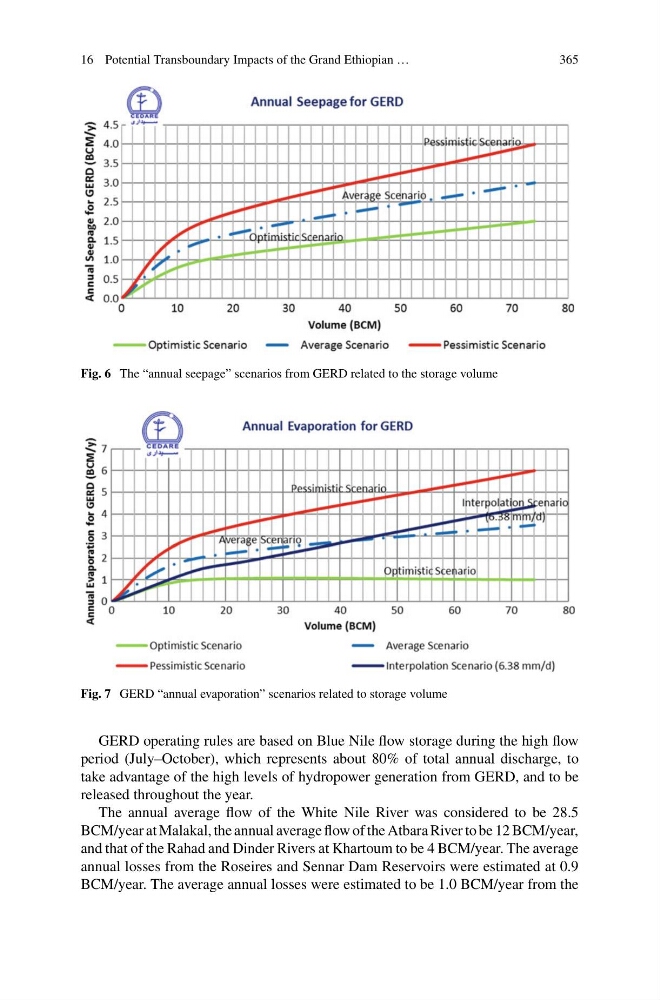
Fig. 6 The “annual seepage” scenarios from GERD related to the storage volume
Fig. 7 GERD “annual evaporation” scenarios related to storage volume
GERD operating rules are based on Blue Nile flow storage during the high flow
period (July–October), which represents about 80% of total annual discharge, to
take advantage of the high levels of hydropower generation from GERD, and to be
released throughout the year.
The annual average flow of the White Nile River was considered to be 28.5
BCM/year at Malakal, the annual average flow of the Atbara River to be 12 BCM/year,
and that of the Rahad and Dinder Rivers at Khartoum to be 4 BCM/year. The average
annual losses from the Roseires and Sennar Dam Reservoirs were estimated at 0.9
BCM/year. The average annual losses were estimated to be 1.0 BCM/year from the
365
Fig. 6 The “annual seepage” scenarios from GERD related to the storage volume
Fig. 7 GERD “annual evaporation” scenarios related to storage volume
GERD operating rules are based on Blue Nile flow storage during the high flow
period (July–October), which represents about 80% of total annual discharge, to
take advantage of the high levels of hydropower generation from GERD, and to be
released throughout the year.
The annual average flow of the White Nile River was considered to be 28.5
BCM/year at Malakal, the annual average flow of the Atbara River to be 12 BCM/year,
and that of the Rahad and Dinder Rivers at Khartoum to be 4 BCM/year. The average
annual losses from the Roseires and Sennar Dam Reservoirs were estimated at 0.9
BCM/year. The average annual losses were estimated to be 1.0 BCM/year from the