

8 Cumulative Impacts of Climate Change Variability …
189
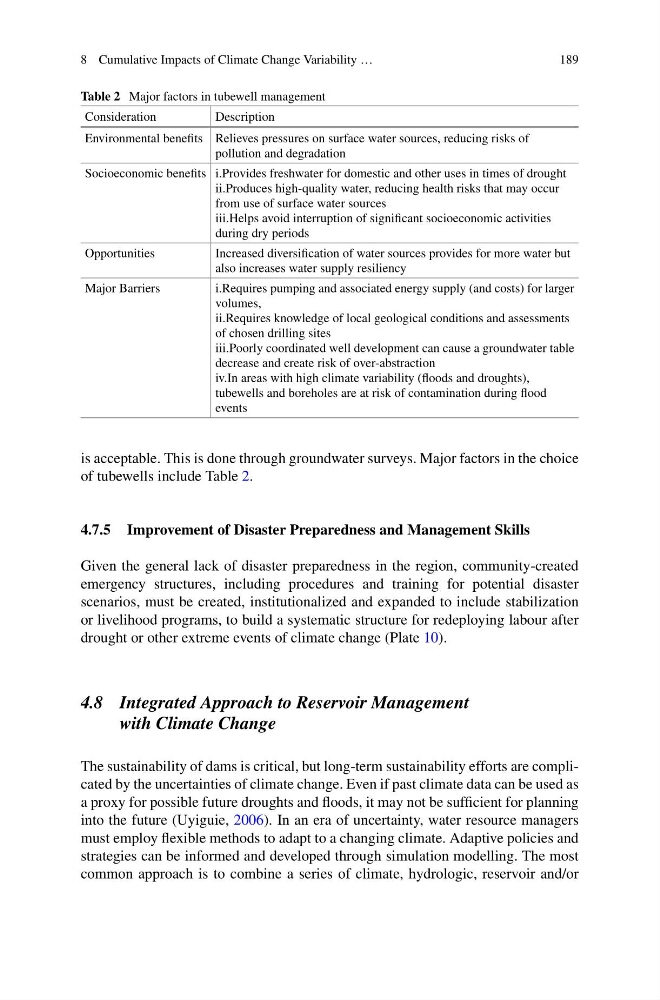
Table 2 Major factors in tubewell management
Consideration
Description
Environmental benefits Relieves pressures on surface water sources, reducing risks of
pollution and degradation
Socioeconomic benefits i.Provides freshwater for domestic and other uses in times of drought
ii.Produces high-quality water, reducing health risks that may occur
from use of surface water sources
iii.Helps avoid interruption of significant socioeconomic activities
during dry periods
Opportunities
Increased diversification of water sources provides for more water but
also increases water supply resiliency
Major Barriers
i.Requires pumping and associated energy supply (and costs) for larger
volumes,
ii.Requires knowledge of local geological conditions and assessments
of chosen drilling sites
iii.Poorly coordinated well development can cause a groundwater table
decrease and create risk of over-abstraction
iv.In areas with high climate variability (floods and droughts),
tubewells and boreholes are at risk of contamination during flood
events
is acceptable. This is done through groundwater surveys. Major factors in the choice
of tubewells include Table 2.
4.7.5 Improvement of Disaster Preparedness and Management Skills
Given the general lack of disaster preparedness in the region, community-created
emergency structures, including procedures and training for potential disaster
scenarios, must be created, institutionalized and expanded to include stabilization
or livelihood programs, to build a systematic structure for redeploying labour after
drought or other extreme events of climate change (Plate 10).
4.8 Integrated Approach to Reservoir Management
with Climate Change
The sustainability of dams is critical, but long-term sustainability efforts are complicated by the uncertainties of climate change. Even if past climate data can be used as
a proxy for possible future droughts and floods, it may not be sufficient for planning
into the future (Uyiguie, 2006). In an era of uncertainty, water resource managers
must employ flexible methods to adapt to a changing climate. Adaptive policies and
strategies can be informed and developed through simulation modelling. The most
common approach is to combine a series of climate, hydrologic, reservoir and/or
189
Table 2 Major factors in tubewell management
Consideration
Description
Environmental benefits Relieves pressures on surface water sources, reducing risks of
pollution and degradation
Socioeconomic benefits i.Provides freshwater for domestic and other uses in times of drought
ii.Produces high-quality water, reducing health risks that may occur
from use of surface water sources
iii.Helps avoid interruption of significant socioeconomic activities
during dry periods
Opportunities
Increased diversification of water sources provides for more water but
also increases water supply resiliency
Major Barriers
i.Requires pumping and associated energy supply (and costs) for larger
volumes,
ii.Requires knowledge of local geological conditions and assessments
of chosen drilling sites
iii.Poorly coordinated well development can cause a groundwater table
decrease and create risk of over-abstraction
iv.In areas with high climate variability (floods and droughts),
tubewells and boreholes are at risk of contamination during flood
events
is acceptable. This is done through groundwater surveys. Major factors in the choice
of tubewells include Table 2.
4.7.5 Improvement of Disaster Preparedness and Management Skills
Given the general lack of disaster preparedness in the region, community-created
emergency structures, including procedures and training for potential disaster
scenarios, must be created, institutionalized and expanded to include stabilization
or livelihood programs, to build a systematic structure for redeploying labour after
drought or other extreme events of climate change (Plate 10).
4.8 Integrated Approach to Reservoir Management
with Climate Change
The sustainability of dams is critical, but long-term sustainability efforts are complicated by the uncertainties of climate change. Even if past climate data can be used as
a proxy for possible future droughts and floods, it may not be sufficient for planning
into the future (Uyiguie, 2006). In an era of uncertainty, water resource managers
must employ flexible methods to adapt to a changing climate. Adaptive policies and
strategies can be informed and developed through simulation modelling. The most
common approach is to combine a series of climate, hydrologic, reservoir and/or