

190
M. O. Eduvie and I. F. Oseke
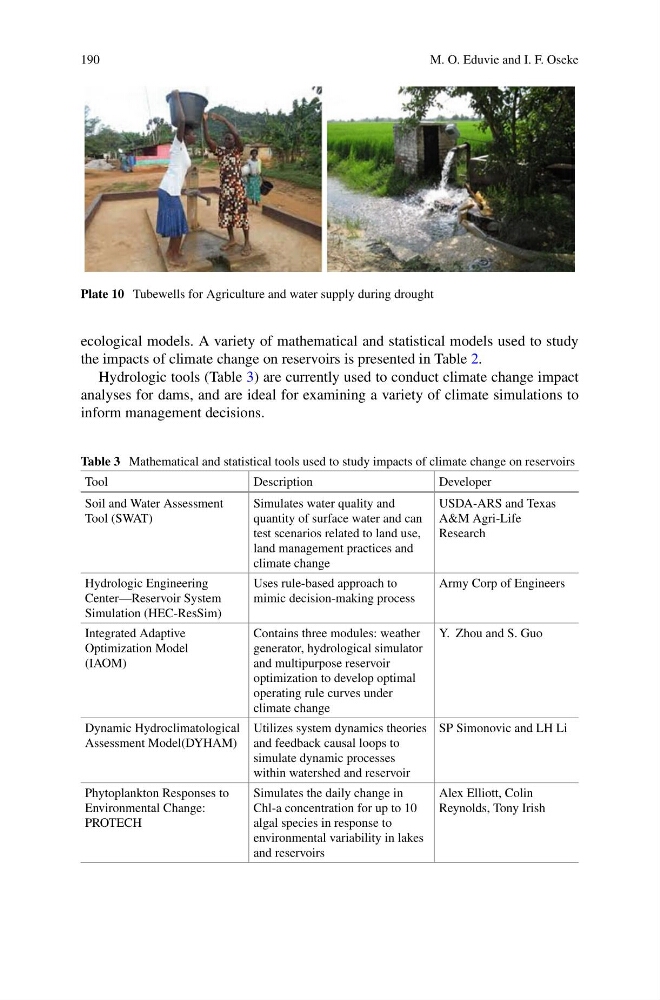
Plate 10 Tubewells for Agriculture and water supply during drought
ecological models. A variety of mathematical and statistical models used to study
the impacts of climate change on reservoirs is presented in Table 2.
Hydrologic tools (Table 3) are currently used to conduct climate change impact
analyses for dams, and are ideal for examining a variety of climate simulations to
inform management decisions.
Table 3 Mathematical and statistical tools used to study impacts of climate change on reservoirs
Tool
Description
Developer
Soil and Water Assessment
Tool (SWAT)
Simulates water quality and
quantity of surface water and can
test scenarios related to land use,
land management practices and
climate change
USDA-ARS and Texas
A&M Agri-Life
Research
Hydrologic Engineering
Center—Reservoir System
Simulation (HEC-ResSim)
Uses rule-based approach to
mimic decision-making process
Army Corp of Engineers
Integrated Adaptive
Optimization Model
(IAOM)
Contains three modules: weather
generator, hydrological simulator
and multipurpose reservoir
optimization to develop optimal
operating rule curves under
climate change
Y. Zhou and S. Guo
Dynamic Hydroclimatological
Assessment Model(DYHAM)
Utilizes system dynamics theories
and feedback causal loops to
simulate dynamic processes
within watershed and reservoir
SP Simonovic and LH Li
Phytoplankton Responses to
Environmental Change:
PROTECH
Simulates the daily change in
Chl-a concentration for up to 10
algal species in response to
environmental variability in lakes
and reservoirs
Alex Elliott, Colin
Reynolds, Tony Irish
M. O. Eduvie and I. F. Oseke
Plate 10 Tubewells for Agriculture and water supply during drought
ecological models. A variety of mathematical and statistical models used to study
the impacts of climate change on reservoirs is presented in Table 2.
Hydrologic tools (Table 3) are currently used to conduct climate change impact
analyses for dams, and are ideal for examining a variety of climate simulations to
inform management decisions.
Table 3 Mathematical and statistical tools used to study impacts of climate change on reservoirs
Tool
Description
Developer
Soil and Water Assessment
Tool (SWAT)
Simulates water quality and
quantity of surface water and can
test scenarios related to land use,
land management practices and
climate change
USDA-ARS and Texas
A&M Agri-Life
Research
Hydrologic Engineering
Center—Reservoir System
Simulation (HEC-ResSim)
Uses rule-based approach to
mimic decision-making process
Army Corp of Engineers
Integrated Adaptive
Optimization Model
(IAOM)
Contains three modules: weather
generator, hydrological simulator
and multipurpose reservoir
optimization to develop optimal
operating rule curves under
climate change
Y. Zhou and S. Guo
Dynamic Hydroclimatological
Assessment Model(DYHAM)
Utilizes system dynamics theories
and feedback causal loops to
simulate dynamic processes
within watershed and reservoir
SP Simonovic and LH Li
Phytoplankton Responses to
Environmental Change:
PROTECH
Simulates the daily change in
Chl-a concentration for up to 10
algal species in response to
environmental variability in lakes
and reservoirs
Alex Elliott, Colin
Reynolds, Tony Irish