

17 Conducting Polymers as Cost Effective Counter Electrode …
363
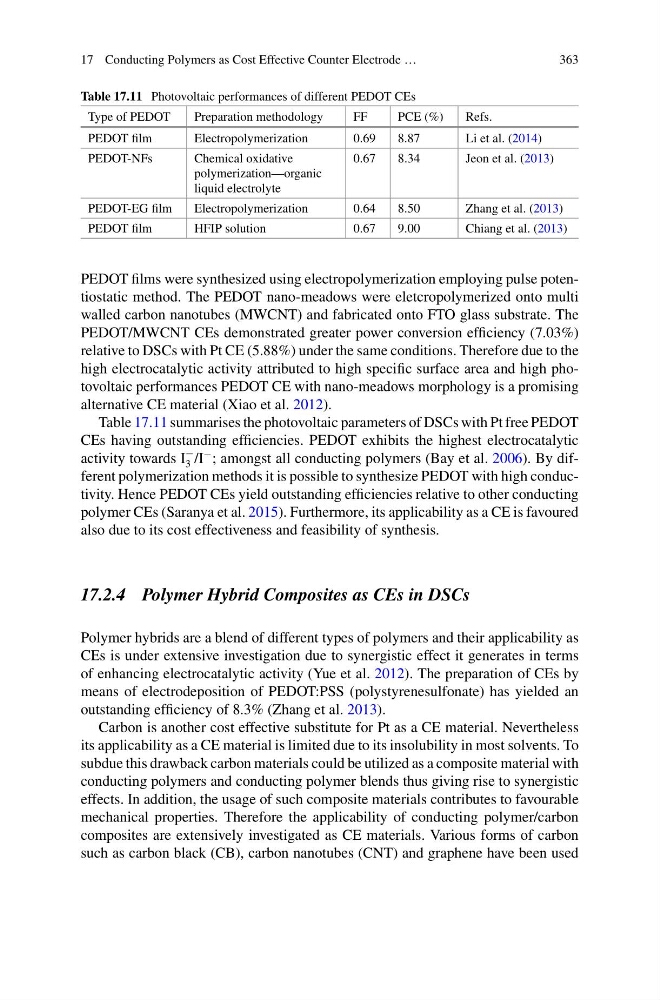
Table 17.11 Photovoltaic performances of different PEDOT CEs
Type of PEDOT
Preparation methodology
FF
PCE (%)
Refs.
PEDOT film
Electropolymerization
0.69
8.87
Li et al. (2014)
PEDOT-NFs
Chemical oxidative
polymerization—organic
liquid electrolyte
0.67
8.34
Jeon et al. (2013)
PEDOT-EG film
Electropolymerization
0.64
8.50
Zhang et al. (2013)
PEDOT film
HFIP solution
0.67
9.00
Chiang et al. (2013)
PEDOT films were synthesized using electropolymerization employing pulse potentiostatic method. The PEDOT nano-meadows were eletcropolymerized onto multi
walled carbon nanotubes (MWCNT) and fabricated onto FTO glass substrate. The
PEDOT/MWCNT CEs demonstrated greater power conversion efficiency (7.03%)
relative to DSCs with Pt CE (5.88%) under the same conditions. Therefore due to the
high electrocatalytic activity attributed to high specific surface area and high photovoltaic performances PEDOT CE with nano-meadows morphology is a promising
alternative CE material (Xiao et al. 2012).
Table 17.11 summarises the photovoltaic parameters of DSCs with Pt free PEDOT
CEs having outstanding efficiencies. PEDOT exhibits the highest electrocatalytic
activity towards I
−
3 /I
− ; amongst all conducting polymers (Bay et al. 2006). By different polymerization methods it is possible to synthesize PEDOT with high conductivity. Hence PEDOT CEs yield outstanding efficiencies relative to other conducting
polymer CEs (Saranya et al. 2015). Furthermore, its applicability as a CE is favoured
also due to its cost effectiveness and feasibility of synthesis.
17.2.4 Polymer Hybrid Composites as CEs in DSCs
Polymer hybrids are a blend of different types of polymers and their applicability as
CEs is under extensive investigation due to synergistic effect it generates in terms
of enhancing electrocatalytic activity (Yue et al. 2012). The preparation of CEs by
means of electrodeposition of PEDOT:PSS (polystyrenesulfonate) has yielded an
outstanding efficiency of 8.3% (Zhang et al. 2013).
Carbon is another cost effective substitute for Pt as a CE material. Nevertheless
its applicability as a CE material is limited due to its insolubility in most solvents. To
subdue this drawback carbon materials could be utilized as a composite material with
conducting polymers and conducting polymer blends thus giving rise to synergistic
effects. In addition, the usage of such composite materials contributes to favourable
mechanical properties. Therefore the applicability of conducting polymer/carbon
composites are extensively investigated as CE materials. Various forms of carbon
such as carbon black (CB), carbon nanotubes (CNT) and graphene have been used
363
Table 17.11 Photovoltaic performances of different PEDOT CEs
Type of PEDOT
Preparation methodology
FF
PCE (%)
Refs.
PEDOT film
Electropolymerization
0.69
8.87
Li et al. (2014)
PEDOT-NFs
Chemical oxidative
polymerization—organic
liquid electrolyte
0.67
8.34
Jeon et al. (2013)
PEDOT-EG film
Electropolymerization
0.64
8.50
Zhang et al. (2013)
PEDOT film
HFIP solution
0.67
9.00
Chiang et al. (2013)
PEDOT films were synthesized using electropolymerization employing pulse potentiostatic method. The PEDOT nano-meadows were eletcropolymerized onto multi
walled carbon nanotubes (MWCNT) and fabricated onto FTO glass substrate. The
PEDOT/MWCNT CEs demonstrated greater power conversion efficiency (7.03%)
relative to DSCs with Pt CE (5.88%) under the same conditions. Therefore due to the
high electrocatalytic activity attributed to high specific surface area and high photovoltaic performances PEDOT CE with nano-meadows morphology is a promising
alternative CE material (Xiao et al. 2012).
Table 17.11 summarises the photovoltaic parameters of DSCs with Pt free PEDOT
CEs having outstanding efficiencies. PEDOT exhibits the highest electrocatalytic
activity towards I
−
3 /I
− ; amongst all conducting polymers (Bay et al. 2006). By different polymerization methods it is possible to synthesize PEDOT with high conductivity. Hence PEDOT CEs yield outstanding efficiencies relative to other conducting
polymer CEs (Saranya et al. 2015). Furthermore, its applicability as a CE is favoured
also due to its cost effectiveness and feasibility of synthesis.
17.2.4 Polymer Hybrid Composites as CEs in DSCs
Polymer hybrids are a blend of different types of polymers and their applicability as
CEs is under extensive investigation due to synergistic effect it generates in terms
of enhancing electrocatalytic activity (Yue et al. 2012). The preparation of CEs by
means of electrodeposition of PEDOT:PSS (polystyrenesulfonate) has yielded an
outstanding efficiency of 8.3% (Zhang et al. 2013).
Carbon is another cost effective substitute for Pt as a CE material. Nevertheless
its applicability as a CE material is limited due to its insolubility in most solvents. To
subdue this drawback carbon materials could be utilized as a composite material with
conducting polymers and conducting polymer blends thus giving rise to synergistic
effects. In addition, the usage of such composite materials contributes to favourable
mechanical properties. Therefore the applicability of conducting polymer/carbon
composites are extensively investigated as CE materials. Various forms of carbon
such as carbon black (CB), carbon nanotubes (CNT) and graphene have been used