

362
S. S. B. Gunasekera et al.
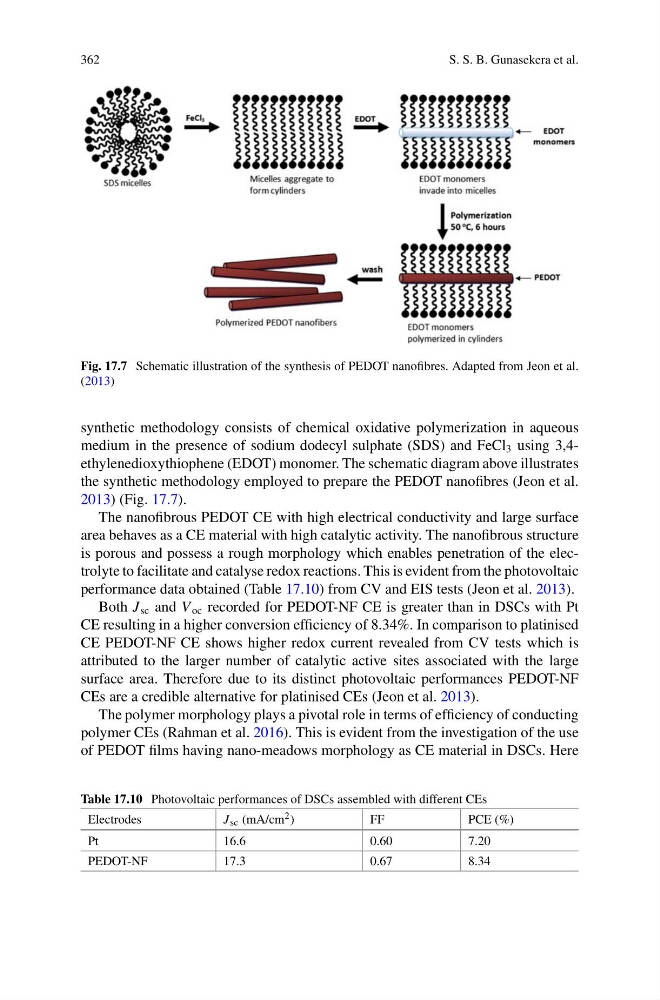
Fig. 17.7 Schematic illustration of the synthesis of PEDOT nanofibres. Adapted from Jeon et al.
(2013)
synthetic methodology consists of chemical oxidative polymerization in aqueous
medium in the presence of sodium dodecyl sulphate (SDS) and FeCl 3 using 3,4ethylenedioxythiophene (EDOT) monomer. The schematic diagram above illustrates
the synthetic methodology employed to prepare the PEDOT nanofibres (Jeon et al.
2013) (Fig. 17.7).
The nanofibrous PEDOT CE with high electrical conductivity and large surface
area behaves as a CE material with high catalytic activity. The nanofibrous structure
is porous and possess a rough morphology which enables penetration of the electrolyte to facilitate and catalyse redox reactions. This is evident from the photovoltaic
performance data obtained (Table 17.10) from CV and EIS tests (Jeon et al. 2013).
Both J sc and V oc recorded for PEDOT-NF CE is greater than in DSCs with Pt
CE resulting in a higher conversion efficiency of 8.34%. In comparison to platinised
CE PEDOT-NF CE shows higher redox current revealed from CV tests which is
attributed to the larger number of catalytic active sites associated with the large
surface area. Therefore due to its distinct photovoltaic performances PEDOT-NF
CEs are a credible alternative for platinised CEs (Jeon et al. 2013).
The polymer morphology plays a pivotal role in terms of efficiency of conducting
polymer CEs (Rahman et al. 2016). This is evident from the investigation of the use
of PEDOT films having nano-meadows morphology as CE material in DSCs. Here
Table 17.10 Photovoltaic performances of DSCs assembled with different CEs
Electrodes
J sc (mA/cm 2 )
FF
PCE (%)
Pt
16.6
0.60
7.20
PEDOT-NF
17.3
0.67
8.34
S. S. B. Gunasekera et al.
Fig. 17.7 Schematic illustration of the synthesis of PEDOT nanofibres. Adapted from Jeon et al.
(2013)
synthetic methodology consists of chemical oxidative polymerization in aqueous
medium in the presence of sodium dodecyl sulphate (SDS) and FeCl 3 using 3,4ethylenedioxythiophene (EDOT) monomer. The schematic diagram above illustrates
the synthetic methodology employed to prepare the PEDOT nanofibres (Jeon et al.
2013) (Fig. 17.7).
The nanofibrous PEDOT CE with high electrical conductivity and large surface
area behaves as a CE material with high catalytic activity. The nanofibrous structure
is porous and possess a rough morphology which enables penetration of the electrolyte to facilitate and catalyse redox reactions. This is evident from the photovoltaic
performance data obtained (Table 17.10) from CV and EIS tests (Jeon et al. 2013).
Both J sc and V oc recorded for PEDOT-NF CE is greater than in DSCs with Pt
CE resulting in a higher conversion efficiency of 8.34%. In comparison to platinised
CE PEDOT-NF CE shows higher redox current revealed from CV tests which is
attributed to the larger number of catalytic active sites associated with the large
surface area. Therefore due to its distinct photovoltaic performances PEDOT-NF
CEs are a credible alternative for platinised CEs (Jeon et al. 2013).
The polymer morphology plays a pivotal role in terms of efficiency of conducting
polymer CEs (Rahman et al. 2016). This is evident from the investigation of the use
of PEDOT films having nano-meadows morphology as CE material in DSCs. Here
Table 17.10 Photovoltaic performances of DSCs assembled with different CEs
Electrodes
J sc (mA/cm 2 )
FF
PCE (%)
Pt
16.6
0.60
7.20
PEDOT-NF
17.3
0.67
8.34