

16 p-Type Dye Sensitized Solar Cells …
319
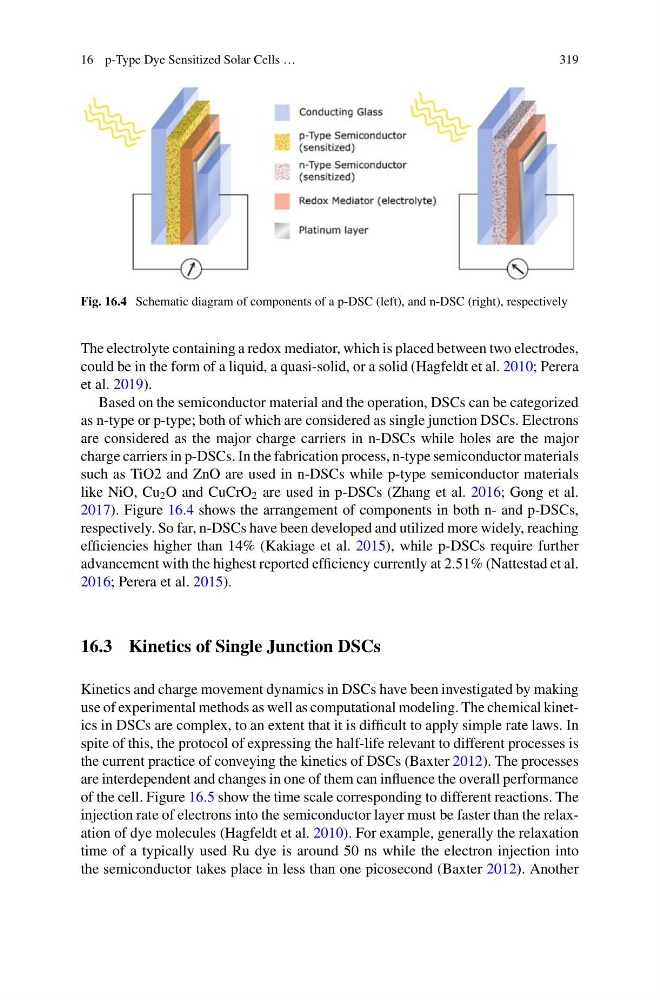
Fig. 16.4 Schematic diagram of components of a p-DSC (left), and n-DSC (right), respectively
The electrolyte containing a redox mediator, which is placed between two electrodes,
could be in the form of a liquid, a quasi-solid, or a solid (Hagfeldt et al. 2010; Perera
et al. 2019).
Based on the semiconductor material and the operation, DSCs can be categorized
as n-type or p-type; both of which are considered as single junction DSCs. Electrons
are considered as the major charge carriers in n-DSCs while holes are the major
charge carriers in p-DSCs. In the fabrication process, n-type semiconductor materials
such as TiO2 and ZnO are used in n-DSCs while p-type semiconductor materials
like NiO, Cu 2 O and CuCrO 2 are used in p-DSCs (Zhang et al. 2016; Gong et al.
2017). Figure 16.4 shows the arrangement of components in both n- and p-DSCs,
respectively. So far, n-DSCs have been developed and utilized more widely, reaching
efficiencies higher than 14% (Kakiage et al. 2015), while p-DSCs require further
advancement with the highest reported efficiency currently at 2.51% (Nattestad et al.
2016; Perera et al. 2015).
16.3 Kinetics of Single Junction DSCs
Kinetics and charge movement dynamics in DSCs have been investigated by making
use of experimental methods as well as computational modeling. The chemical kinetics in DSCs are complex, to an extent that it is difficult to apply simple rate laws. In
spite of this, the protocol of expressing the half-life relevant to different processes is
the current practice of conveying the kinetics of DSCs (Baxter 2012). The processes
are interdependent and changes in one of them can influence the overall performance
of the cell. Figure 16.5 show the time scale corresponding to different reactions. The
injection rate of electrons into the semiconductor layer must be faster than the relaxation of dye molecules (Hagfeldt et al. 2010). For example, generally the relaxation
time of a typically used Ru dye is around 50 ns while the electron injection into
the semiconductor takes place in less than one picosecond (Baxter 2012). Another
319
Fig. 16.4 Schematic diagram of components of a p-DSC (left), and n-DSC (right), respectively
The electrolyte containing a redox mediator, which is placed between two electrodes,
could be in the form of a liquid, a quasi-solid, or a solid (Hagfeldt et al. 2010; Perera
et al. 2019).
Based on the semiconductor material and the operation, DSCs can be categorized
as n-type or p-type; both of which are considered as single junction DSCs. Electrons
are considered as the major charge carriers in n-DSCs while holes are the major
charge carriers in p-DSCs. In the fabrication process, n-type semiconductor materials
such as TiO2 and ZnO are used in n-DSCs while p-type semiconductor materials
like NiO, Cu 2 O and CuCrO 2 are used in p-DSCs (Zhang et al. 2016; Gong et al.
2017). Figure 16.4 shows the arrangement of components in both n- and p-DSCs,
respectively. So far, n-DSCs have been developed and utilized more widely, reaching
efficiencies higher than 14% (Kakiage et al. 2015), while p-DSCs require further
advancement with the highest reported efficiency currently at 2.51% (Nattestad et al.
2016; Perera et al. 2015).
16.3 Kinetics of Single Junction DSCs
Kinetics and charge movement dynamics in DSCs have been investigated by making
use of experimental methods as well as computational modeling. The chemical kinetics in DSCs are complex, to an extent that it is difficult to apply simple rate laws. In
spite of this, the protocol of expressing the half-life relevant to different processes is
the current practice of conveying the kinetics of DSCs (Baxter 2012). The processes
are interdependent and changes in one of them can influence the overall performance
of the cell. Figure 16.5 show the time scale corresponding to different reactions. The
injection rate of electrons into the semiconductor layer must be faster than the relaxation of dye molecules (Hagfeldt et al. 2010). For example, generally the relaxation
time of a typically used Ru dye is around 50 ns while the electron injection into
the semiconductor takes place in less than one picosecond (Baxter 2012). Another