

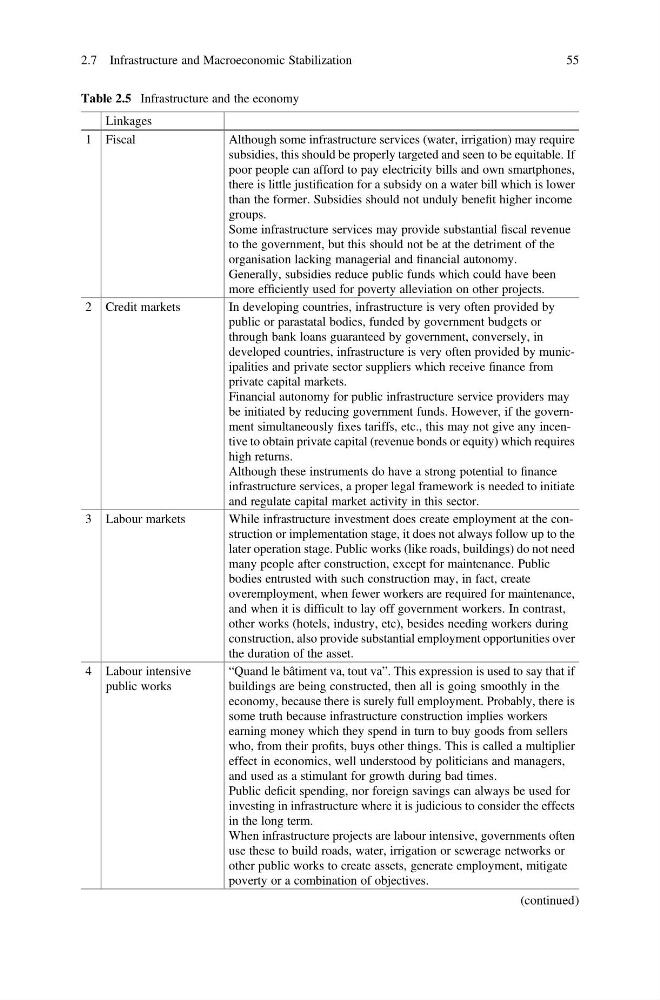
Table 2.5 Infrastructure and the economy
Linkages
1 Fiscal
Although some infrastructure services (water, irrigation) may require
subsidies, this should be properly targeted and seen to be equitable. If
poor people can afford to pay electricity bills and own smartphones,
there is little justification for a subsidy on a water bill which is lower
than the former. Subsidies should not unduly benefit higher income
groups.
Some infrastructure services may provide substantial fiscal revenue
to the government, but this should not be at the detriment of the
organisation lacking managerial and financial autonomy.
Generally, subsidies reduce public funds which could have been
more efficiently used for poverty alleviation on other projects.
2 Credit markets
In developing countries, infrastructure is very often provided by
public or parastatal bodies, funded by government budgets or
through bank loans guaranteed by government, conversely, in
developed countries, infrastructure is very often provided by municipalities and private sector suppliers which receive finance from
private capital markets.
Financial autonomy for public infrastructure service providers may
be initiated by reducing government funds. However, if the government simultaneously fixes tariffs, etc., this may not give any incentive to obtain private capital (revenue bonds or equity) which requires
high returns.
Although these instruments do have a strong potential to finance
infrastructure services, a proper legal framework is needed to initiate
and regulate capital market activity in this sector.
3 Labour markets
While infrastructure investment does create employment at the construction or implementation stage, it does not always follow up to the
later operation stage. Public works (like roads, buildings) do not need
many people after construction, except for maintenance. Public
bodies entrusted with such construction may, in fact, create
overemployment, when fewer workers are required for maintenance,
and when it is difficult to lay off government workers. In contrast,
other works (hotels, industry, etc), besides needing workers during
construction, also provide substantial employment opportunities over
the duration of the asset.
4 Labour intensive
public works
“Quand le bâtiment va, tout va”. This expression is used to say that if
buildings are being constructed, then all is going smoothly in the
economy, because there is surely full employment. Probably, there is
some truth because infrastructure construction implies workers
earning money which they spend in turn to buy goods from sellers
who, from their profits, buys other things. This is called a multiplier
effect in economics, well understood by politicians and managers,
and used as a stimulant for growth during bad times.
Public deficit spending, nor foreign savings can always be used for
investing in infrastructure where it is judicious to consider the effects
in the long term.
When infrastructure projects are labour intensive, governments often
use these to build roads, water, irrigation or sewerage networks or
other public works to create assets, generate employment, mitigate
poverty or a combination of objectives.
(continued)
2.7 Infrastructure and Macroeconomic Stabilization
55
Linkages
1 Fiscal
Although some infrastructure services (water, irrigation) may require
subsidies, this should be properly targeted and seen to be equitable. If
poor people can afford to pay electricity bills and own smartphones,
there is little justification for a subsidy on a water bill which is lower
than the former. Subsidies should not unduly benefit higher income
groups.
Some infrastructure services may provide substantial fiscal revenue
to the government, but this should not be at the detriment of the
organisation lacking managerial and financial autonomy.
Generally, subsidies reduce public funds which could have been
more efficiently used for poverty alleviation on other projects.
2 Credit markets
In developing countries, infrastructure is very often provided by
public or parastatal bodies, funded by government budgets or
through bank loans guaranteed by government, conversely, in
developed countries, infrastructure is very often provided by municipalities and private sector suppliers which receive finance from
private capital markets.
Financial autonomy for public infrastructure service providers may
be initiated by reducing government funds. However, if the government simultaneously fixes tariffs, etc., this may not give any incentive to obtain private capital (revenue bonds or equity) which requires
high returns.
Although these instruments do have a strong potential to finance
infrastructure services, a proper legal framework is needed to initiate
and regulate capital market activity in this sector.
3 Labour markets
While infrastructure investment does create employment at the construction or implementation stage, it does not always follow up to the
later operation stage. Public works (like roads, buildings) do not need
many people after construction, except for maintenance. Public
bodies entrusted with such construction may, in fact, create
overemployment, when fewer workers are required for maintenance,
and when it is difficult to lay off government workers. In contrast,
other works (hotels, industry, etc), besides needing workers during
construction, also provide substantial employment opportunities over
the duration of the asset.
4 Labour intensive
public works
“Quand le bâtiment va, tout va”. This expression is used to say that if
buildings are being constructed, then all is going smoothly in the
economy, because there is surely full employment. Probably, there is
some truth because infrastructure construction implies workers
earning money which they spend in turn to buy goods from sellers
who, from their profits, buys other things. This is called a multiplier
effect in economics, well understood by politicians and managers,
and used as a stimulant for growth during bad times.
Public deficit spending, nor foreign savings can always be used for
investing in infrastructure where it is judicious to consider the effects
in the long term.
When infrastructure projects are labour intensive, governments often
use these to build roads, water, irrigation or sewerage networks or
other public works to create assets, generate employment, mitigate
poverty or a combination of objectives.
(continued)
2.7 Infrastructure and Macroeconomic Stabilization
55