

(a) social welfare becomes a maximum if, the person, valuing it most, is allowed to
consume a rivalrous good,
(b) the market mechanism generally represents the most efficient way for rationing
rivalrous goods, and
(c) in the allocation of resources required to produce rivalrous goods, the market
mechanism generally represents the most efficient means to do so.
When producers of rivalrous goods, have basic property rights, they obtain
exclusive control over the goods they are producing. This facilitates markets,
because it is then possible for the producers to transfer their (rivalrous) goods to
consumers who are willing to buy at the market price.
Consider a simple example: When there is only one apple on a table in front of
several persons, who should eat it? If the goal is to maximize the joint welfare, most
likely, because only one person can eat it, the apple should go to the person who
thinks the highest value of it. Surely determining who values it most cannot be based
on mere personal assertions. Perhaps a bid should be proposed to confirm who is
willing to offer the most for the apple. That would provide a reliable indicator of the
persons’ valuations (although it would also depend on the apparent consumer’s
ability to pay). Will it be necessary to procure another apple for the person who
didn’t get the one on the table? This, in fact, depends on the costs of doing so
(supply) and how badly the person wants an apple (demand).
Essentially, the example illustrates the three principles in action. Given the
rivalrous nature of the apple, it must be allotted to one person exclusively. This
allocation would be optimal if the person, who values the apple the most, obtains
it. Appropriately, the market mechanism allocates goods based on price, which
serves two purposes efficiently: (1) what people are willing to pay for the apple
provides reliable information on which to base an initial allocation decision (i.e.,
who gets the apple) (2) as well as the future allocation decision (i.e., whether to
invest resources in getting another apple).
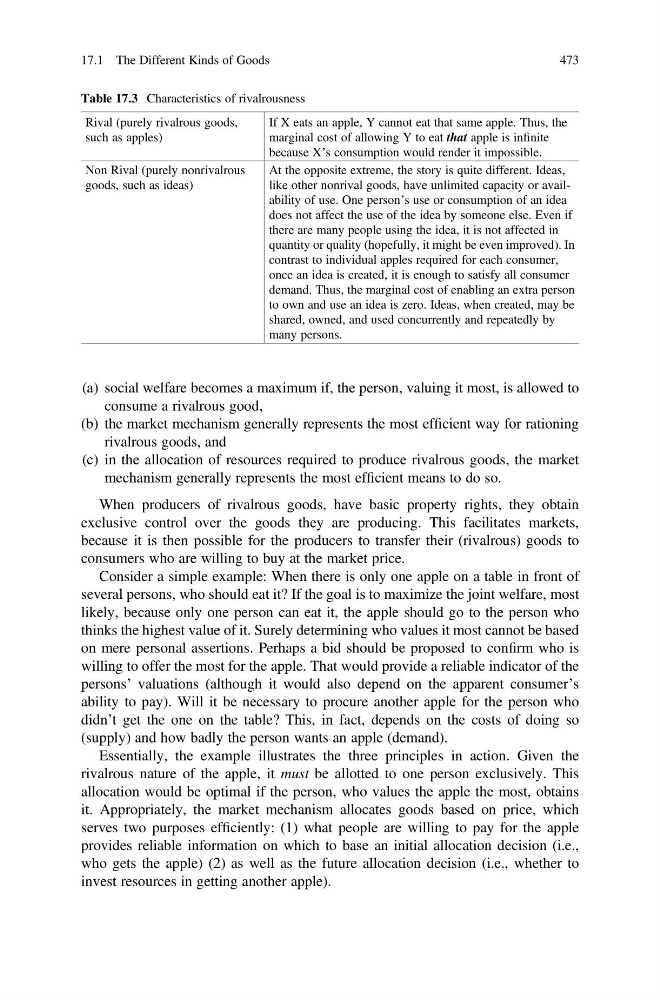
Table 17.3 Characteristics of rivalrousness
Rival (purely rivalrous goods,
such as apples)
If X eats an apple, Y cannot eat that same apple. Thus, the
marginal cost of allowing Y to eat that apple is infinite
because X’s consumption would render it impossible.
Non Rival (purely nonrivalrous
goods, such as ideas)
At the opposite extreme, the story is quite different. Ideas,
like other nonrival goods, have unlimited capacity or availability of use. One person’s use or consumption of an idea
does not affect the use of the idea by someone else. Even if
there are many people using the idea, it is not affected in
quantity or quality (hopefully, it might be even improved). In
contrast to individual apples required for each consumer,
once an idea is created, it is enough to satisfy all consumer
demand. Thus, the marginal cost of enabling an extra person
to own and use an idea is zero. Ideas, when created, may be
shared, owned, and used concurrently and repeatedly by
many persons.
17.1 The Different Kinds of Goods
473
consume a rivalrous good,
(b) the market mechanism generally represents the most efficient way for rationing
rivalrous goods, and
(c) in the allocation of resources required to produce rivalrous goods, the market
mechanism generally represents the most efficient means to do so.
When producers of rivalrous goods, have basic property rights, they obtain
exclusive control over the goods they are producing. This facilitates markets,
because it is then possible for the producers to transfer their (rivalrous) goods to
consumers who are willing to buy at the market price.
Consider a simple example: When there is only one apple on a table in front of
several persons, who should eat it? If the goal is to maximize the joint welfare, most
likely, because only one person can eat it, the apple should go to the person who
thinks the highest value of it. Surely determining who values it most cannot be based
on mere personal assertions. Perhaps a bid should be proposed to confirm who is
willing to offer the most for the apple. That would provide a reliable indicator of the
persons’ valuations (although it would also depend on the apparent consumer’s
ability to pay). Will it be necessary to procure another apple for the person who
didn’t get the one on the table? This, in fact, depends on the costs of doing so
(supply) and how badly the person wants an apple (demand).
Essentially, the example illustrates the three principles in action. Given the
rivalrous nature of the apple, it must be allotted to one person exclusively. This
allocation would be optimal if the person, who values the apple the most, obtains
it. Appropriately, the market mechanism allocates goods based on price, which
serves two purposes efficiently: (1) what people are willing to pay for the apple
provides reliable information on which to base an initial allocation decision (i.e.,
who gets the apple) (2) as well as the future allocation decision (i.e., whether to
invest resources in getting another apple).
Table 17.3 Characteristics of rivalrousness
Rival (purely rivalrous goods,
such as apples)
If X eats an apple, Y cannot eat that same apple. Thus, the
marginal cost of allowing Y to eat that apple is infinite
because X’s consumption would render it impossible.
Non Rival (purely nonrivalrous
goods, such as ideas)
At the opposite extreme, the story is quite different. Ideas,
like other nonrival goods, have unlimited capacity or availability of use. One person’s use or consumption of an idea
does not affect the use of the idea by someone else. Even if
there are many people using the idea, it is not affected in
quantity or quality (hopefully, it might be even improved). In
contrast to individual apples required for each consumer,
once an idea is created, it is enough to satisfy all consumer
demand. Thus, the marginal cost of enabling an extra person
to own and use an idea is zero. Ideas, when created, may be
shared, owned, and used concurrently and repeatedly by
many persons.
17.1 The Different Kinds of Goods
473