

(1) better and stronger materials, now available and used, have increased the useful
life of the structures and buildings. How many cathedrals built since the medieval times have fallen down?
(2) why would any infrastructure owner, demolish his structure after 50 years, if it
can still be maintained for providing the services required? A good example is
the Eiffel Tower, built in 1889, for the Universal Paris Exhibition. It was
expected to be dismantled in 1909 (after 20 years of operation). For various
reasons, it was not demolished, and is still being regularly maintained.
(3) it might be difficult to choose another site in the future. A road surface may have
a lifetime of 20 years, but there is, after 20 years, rarely the possibility of
enlarging the road, if both sides have been built up and no provision was
made for possible enlargement.
(4) for other facilities, dam site, water treatment, etc., enlargement is only possible if
space provision was made at the initial stages of planning/construction.
(5) in large countries, an altogether new site or route may be chosen because of
space availability (in France, the TGV follow routes which are completely
POPULATION
LAND USE
AGRICULTURE
ECONOMY
WELFARE SERVICES
POLLUTION
METHODOLOGY
INDUSTRY
TOURISM
COMMERCIAL SERVICES
WELFARE SERVICES
TRANSPORT
GREENSPACE
OCEAN
Sugar
Vegetables
Water
Sewerage
Soild Waste
Energy
Telecommunications
Data Collection
Mass Balance/Experiments
Limits and Consraints
Models for analysis and policy
decision
Surveys with public
Long Term planning
Note: Arrow represent main net flows.
Fishing
Factories
Hotels
Ecotourism
Financial/offshore
Shops
Markets
Housing
Schools
Hospitals
Administration
Roads
Parking space
Ports
Airports
Forests
Gardens
Fishing
Tourism
Offices
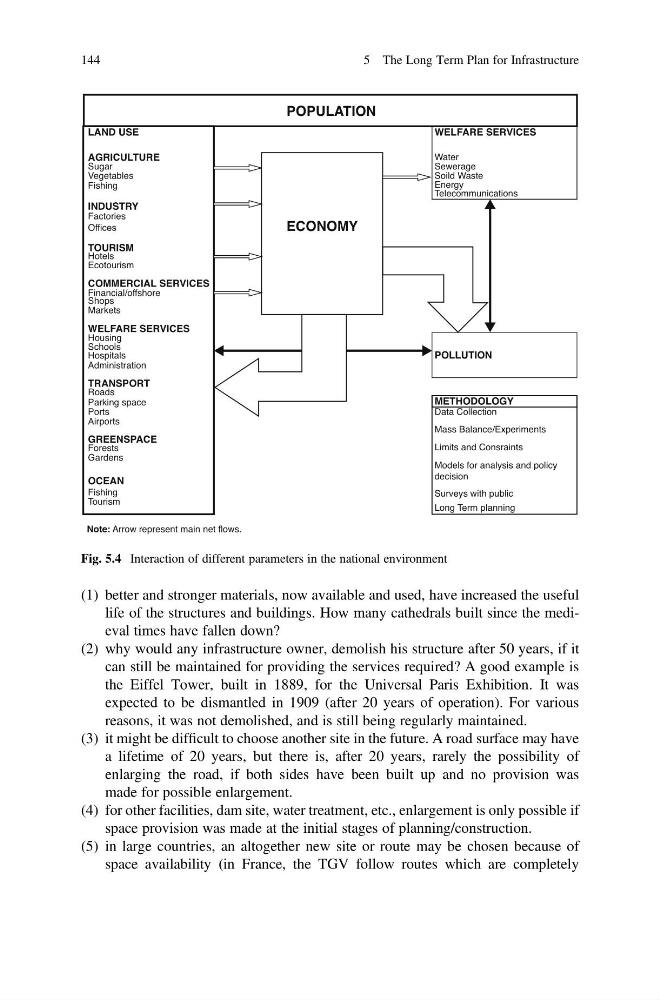
Fig. 5.4 Interaction of different parameters in the national environment
144
5 The Long Term Plan for Infrastructure
life of the structures and buildings. How many cathedrals built since the medieval times have fallen down?
(2) why would any infrastructure owner, demolish his structure after 50 years, if it
can still be maintained for providing the services required? A good example is
the Eiffel Tower, built in 1889, for the Universal Paris Exhibition. It was
expected to be dismantled in 1909 (after 20 years of operation). For various
reasons, it was not demolished, and is still being regularly maintained.
(3) it might be difficult to choose another site in the future. A road surface may have
a lifetime of 20 years, but there is, after 20 years, rarely the possibility of
enlarging the road, if both sides have been built up and no provision was
made for possible enlargement.
(4) for other facilities, dam site, water treatment, etc., enlargement is only possible if
space provision was made at the initial stages of planning/construction.
(5) in large countries, an altogether new site or route may be chosen because of
space availability (in France, the TGV follow routes which are completely
POPULATION
LAND USE
AGRICULTURE
ECONOMY
WELFARE SERVICES
POLLUTION
METHODOLOGY
INDUSTRY
TOURISM
COMMERCIAL SERVICES
WELFARE SERVICES
TRANSPORT
GREENSPACE
OCEAN
Sugar
Vegetables
Water
Sewerage
Soild Waste
Energy
Telecommunications
Data Collection
Mass Balance/Experiments
Limits and Consraints
Models for analysis and policy
decision
Surveys with public
Long Term planning
Note: Arrow represent main net flows.
Fishing
Factories
Hotels
Ecotourism
Financial/offshore
Shops
Markets
Housing
Schools
Hospitals
Administration
Roads
Parking space
Ports
Airports
Forests
Gardens
Fishing
Tourism
Offices
Fig. 5.4 Interaction of different parameters in the national environment
144
5 The Long Term Plan for Infrastructure