

13 Photovoltaics in the Future Energy System
335
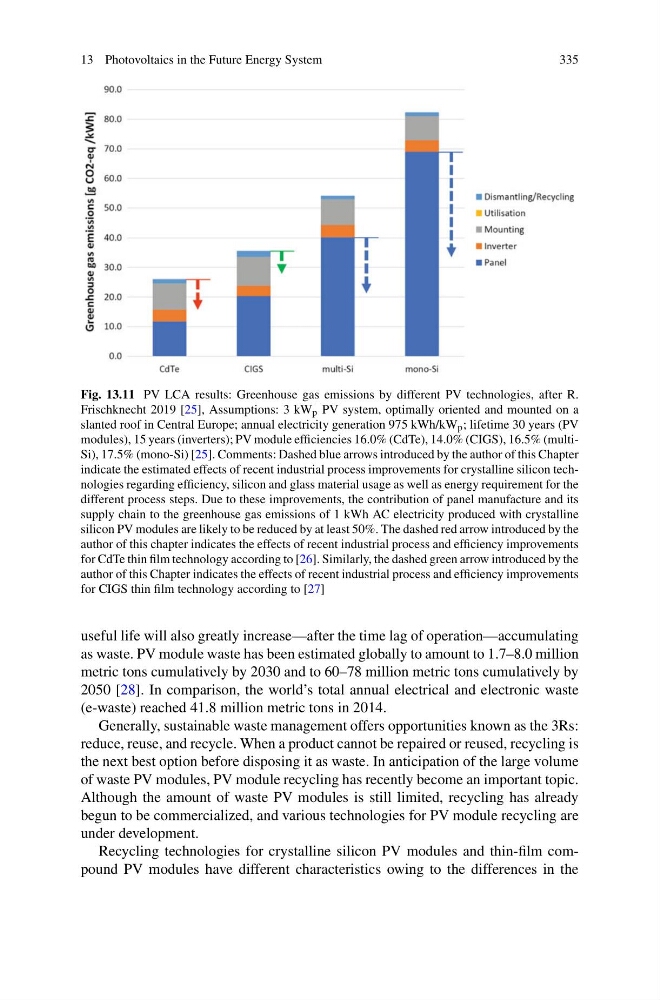
Fig. 13.11 PV LCA results: Greenhouse gas emissions by different PV technologies, after R.
Frischknecht 2019 [25], Assumptions: 3 kW p PV system, optimally oriented and mounted on a
slanted roof in Central Europe; annual electricity generation 975 kWh/kW p ; lifetime 30 years (PV
modules), 15 years (inverters); PV module efficiencies 16.0% (CdTe), 14.0% (CIGS), 16.5% (multiSi), 17.5% (mono-Si) [25]. Comments: Dashed blue arrows introduced by the author of this Chapter
indicate the estimated effects of recent industrial process improvements for crystalline silicon technologies regarding efficiency, silicon and glass material usage as well as energy requirement for the
different process steps. Due to these improvements, the contribution of panel manufacture and its
supply chain to the greenhouse gas emissions of 1 kWh AC electricity produced with crystalline
silicon PV modules are likely to be reduced by at least 50%. The dashed red arrow introduced by the
author of this chapter indicates the effects of recent industrial process and efficiency improvements
for CdTe thin film technology according to [26]. Similarly, the dashed green arrow introduced by the
author of this Chapter indicates the effects of recent industrial process and efficiency improvements
for CIGS thin film technology according to [27]
useful life will also greatly increase—after the time lag of operation—accumulating
as waste. PV module waste has been estimated globally to amount to 1.7–8.0 million
metric tons cumulatively by 2030 and to 60–78 million metric tons cumulatively by
2050 [28]. In comparison, the world’s total annual electrical and electronic waste
(e-waste) reached 41.8 million metric tons in 2014.
Generally, sustainable waste management offers opportunities known as the 3Rs:
reduce, reuse, and recycle. When a product cannot be repaired or reused, recycling is
the next best option before disposing it as waste. In anticipation of the large volume
of waste PV modules, PV module recycling has recently become an important topic.
Although the amount of waste PV modules is still limited, recycling has already
begun to be commercialized, and various technologies for PV module recycling are
under development.
Recycling technologies for crystalline silicon PV modules and thin-film compound PV modules have different characteristics owing to the differences in the
335
Fig. 13.11 PV LCA results: Greenhouse gas emissions by different PV technologies, after R.
Frischknecht 2019 [25], Assumptions: 3 kW p PV system, optimally oriented and mounted on a
slanted roof in Central Europe; annual electricity generation 975 kWh/kW p ; lifetime 30 years (PV
modules), 15 years (inverters); PV module efficiencies 16.0% (CdTe), 14.0% (CIGS), 16.5% (multiSi), 17.5% (mono-Si) [25]. Comments: Dashed blue arrows introduced by the author of this Chapter
indicate the estimated effects of recent industrial process improvements for crystalline silicon technologies regarding efficiency, silicon and glass material usage as well as energy requirement for the
different process steps. Due to these improvements, the contribution of panel manufacture and its
supply chain to the greenhouse gas emissions of 1 kWh AC electricity produced with crystalline
silicon PV modules are likely to be reduced by at least 50%. The dashed red arrow introduced by the
author of this chapter indicates the effects of recent industrial process and efficiency improvements
for CdTe thin film technology according to [26]. Similarly, the dashed green arrow introduced by the
author of this Chapter indicates the effects of recent industrial process and efficiency improvements
for CIGS thin film technology according to [27]
useful life will also greatly increase—after the time lag of operation—accumulating
as waste. PV module waste has been estimated globally to amount to 1.7–8.0 million
metric tons cumulatively by 2030 and to 60–78 million metric tons cumulatively by
2050 [28]. In comparison, the world’s total annual electrical and electronic waste
(e-waste) reached 41.8 million metric tons in 2014.
Generally, sustainable waste management offers opportunities known as the 3Rs:
reduce, reuse, and recycle. When a product cannot be repaired or reused, recycling is
the next best option before disposing it as waste. In anticipation of the large volume
of waste PV modules, PV module recycling has recently become an important topic.
Although the amount of waste PV modules is still limited, recycling has already
begun to be commercialized, and various technologies for PV module recycling are
under development.
Recycling technologies for crystalline silicon PV modules and thin-film compound PV modules have different characteristics owing to the differences in the