

13 Photovoltaics in the Future Energy System
329
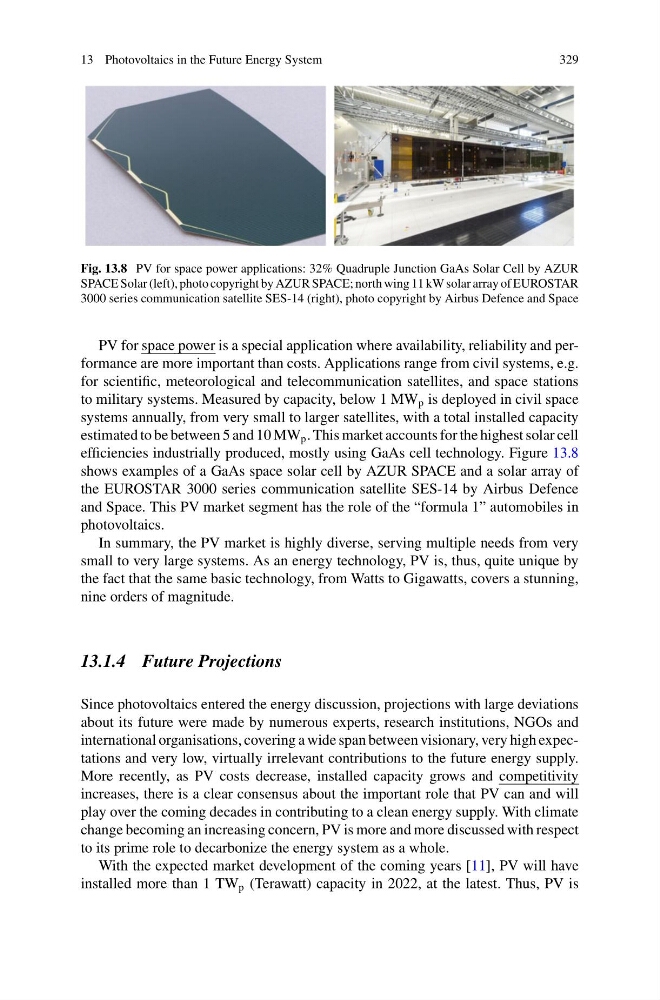
Fig. 13.8 PV for space power applications: 32% Quadruple Junction GaAs Solar Cell by AZUR
SPACE Solar (left), photo copyright by AZUR SPACE; north wing 11 kW solar array of EUROSTAR
3000 series communication satellite SES-14 (right), photo copyright by Airbus Defence and Space
PV for space power is a special application where availability, reliability and performance are more important than costs. Applications range from civil systems, e.g.
for scientific, meteorological and telecommunication satellites, and space stations
to military systems. Measured by capacity, below 1 MW p is deployed in civil space
systems annually, from very small to larger satellites, with a total installed capacity
estimated to be between 5 and 10 MW p . This market accounts for the highest solar cell
efficiencies industrially produced, mostly using GaAs cell technology. Figure 13.8
shows examples of a GaAs space solar cell by AZUR SPACE and a solar array of
the EUROSTAR 3000 series communication satellite SES-14 by Airbus Defence
and Space. This PV market segment has the role of the “formula 1” automobiles in
photovoltaics.
In summary, the PV market is highly diverse, serving multiple needs from very
small to very large systems. As an energy technology, PV is, thus, quite unique by
the fact that the same basic technology, from Watts to Gigawatts, covers a stunning,
nine orders of magnitude.
13.1.4 Future Projections
Since photovoltaics entered the energy discussion, projections with large deviations
about its future were made by numerous experts, research institutions, NGOs and
international organisations, covering a wide span between visionary, very high expectations and very low, virtually irrelevant contributions to the future energy supply.
More recently, as PV costs decrease, installed capacity grows and competitivity
increases, there is a clear consensus about the important role that PV can and will
play over the coming decades in contributing to a clean energy supply. With climate
change becoming an increasing concern, PV is more and more discussed with respect
to its prime role to decarbonize the energy system as a whole.
With the expected market development of the coming years [11], PV will have
installed more than 1 TW p (Terawatt) capacity in 2022, at the latest. Thus, PV is
329
Fig. 13.8 PV for space power applications: 32% Quadruple Junction GaAs Solar Cell by AZUR
SPACE Solar (left), photo copyright by AZUR SPACE; north wing 11 kW solar array of EUROSTAR
3000 series communication satellite SES-14 (right), photo copyright by Airbus Defence and Space
PV for space power is a special application where availability, reliability and performance are more important than costs. Applications range from civil systems, e.g.
for scientific, meteorological and telecommunication satellites, and space stations
to military systems. Measured by capacity, below 1 MW p is deployed in civil space
systems annually, from very small to larger satellites, with a total installed capacity
estimated to be between 5 and 10 MW p . This market accounts for the highest solar cell
efficiencies industrially produced, mostly using GaAs cell technology. Figure 13.8
shows examples of a GaAs space solar cell by AZUR SPACE and a solar array of
the EUROSTAR 3000 series communication satellite SES-14 by Airbus Defence
and Space. This PV market segment has the role of the “formula 1” automobiles in
photovoltaics.
In summary, the PV market is highly diverse, serving multiple needs from very
small to very large systems. As an energy technology, PV is, thus, quite unique by
the fact that the same basic technology, from Watts to Gigawatts, covers a stunning,
nine orders of magnitude.
13.1.4 Future Projections
Since photovoltaics entered the energy discussion, projections with large deviations
about its future were made by numerous experts, research institutions, NGOs and
international organisations, covering a wide span between visionary, very high expectations and very low, virtually irrelevant contributions to the future energy supply.
More recently, as PV costs decrease, installed capacity grows and competitivity
increases, there is a clear consensus about the important role that PV can and will
play over the coming decades in contributing to a clean energy supply. With climate
change becoming an increasing concern, PV is more and more discussed with respect
to its prime role to decarbonize the energy system as a whole.
With the expected market development of the coming years [11], PV will have
installed more than 1 TW p (Terawatt) capacity in 2022, at the latest. Thus, PV is