

10 Module Deployment and Energy Rating
277
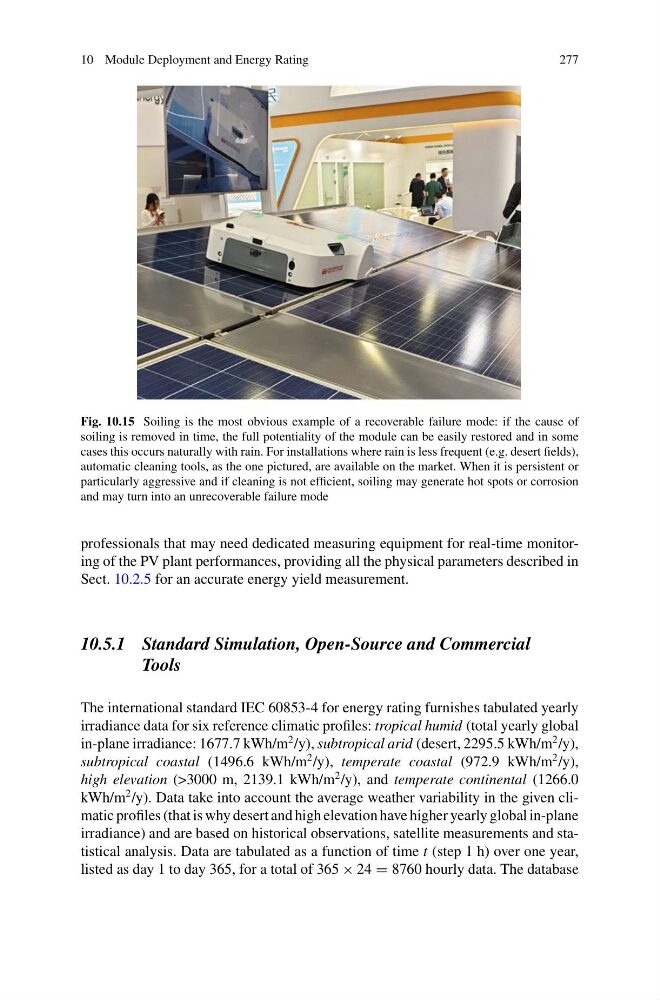
Fig. 10.15 Soiling is the most obvious example of a recoverable failure mode: if the cause of
soiling is removed in time, the full potentiality of the module can be easily restored and in some
cases this occurs naturally with rain. For installations where rain is less frequent (e.g. desert fields),
automatic cleaning tools, as the one pictured, are available on the market. When it is persistent or
particularly aggressive and if cleaning is not efficient, soiling may generate hot spots or corrosion
and may turn into an unrecoverable failure mode
professionals that may need dedicated measuring equipment for real-time monitoring of the PV plant performances, providing all the physical parameters described in
Sect. 10.2.5 for an accurate energy yield measurement.
10.5.1 Standard Simulation, Open-Source and Commercial
Tools
The international standard IEC 60853-4 for energy rating furnishes tabulated yearly
irradiance data for six reference climatic profiles: tropical humid (total yearly global
in-plane irradiance: 1677.7 kWh/m
2 /y), subtropical arid (desert, 2295.5 kWh/m
2 /y),
subtropical coastal (1496.6 kWh/m
2 /y), temperate coastal (972.9 kWh/m
2 /y),
high elevation (>3000 m, 2139.1 kWh/m
2 /y), and temperate continental (1266.0
kWh/m
2 /y). Data take into account the average weather variability in the given climatic profiles (that is why desert and high elevation have higher yearly global in-plane
irradiance) and are based on historical observations, satellite measurements and statistical analysis. Data are tabulated as a function of time t (step 1 h) over one year,
listed as day 1 to day 365, for a total of 365 × 24 = 8760 hourly data. The database
277
Fig. 10.15 Soiling is the most obvious example of a recoverable failure mode: if the cause of
soiling is removed in time, the full potentiality of the module can be easily restored and in some
cases this occurs naturally with rain. For installations where rain is less frequent (e.g. desert fields),
automatic cleaning tools, as the one pictured, are available on the market. When it is persistent or
particularly aggressive and if cleaning is not efficient, soiling may generate hot spots or corrosion
and may turn into an unrecoverable failure mode
professionals that may need dedicated measuring equipment for real-time monitoring of the PV plant performances, providing all the physical parameters described in
Sect. 10.2.5 for an accurate energy yield measurement.
10.5.1 Standard Simulation, Open-Source and Commercial
Tools
The international standard IEC 60853-4 for energy rating furnishes tabulated yearly
irradiance data for six reference climatic profiles: tropical humid (total yearly global
in-plane irradiance: 1677.7 kWh/m
2 /y), subtropical arid (desert, 2295.5 kWh/m
2 /y),
subtropical coastal (1496.6 kWh/m
2 /y), temperate coastal (972.9 kWh/m
2 /y),
high elevation (>3000 m, 2139.1 kWh/m
2 /y), and temperate continental (1266.0
kWh/m
2 /y). Data take into account the average weather variability in the given climatic profiles (that is why desert and high elevation have higher yearly global in-plane
irradiance) and are based on historical observations, satellite measurements and statistical analysis. Data are tabulated as a function of time t (step 1 h) over one year,
listed as day 1 to day 365, for a total of 365 × 24 = 8760 hourly data. The database