

106
S. Leu and D. Sontag
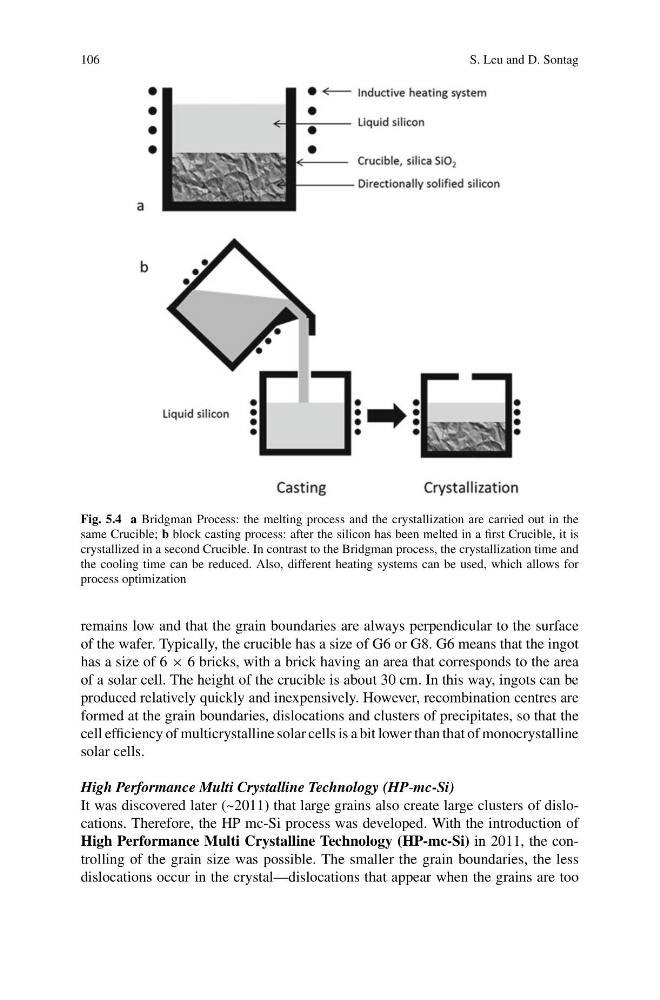
Fig. 5.4 a Bridgman Process: the melting process and the crystallization are carried out in the
same Crucible; b block casting process: after the silicon has been melted in a first Crucible, it is
crystallized in a second Crucible. In contrast to the Bridgman process, the crystallization time and
the cooling time can be reduced. Also, different heating systems can be used, which allows for
process optimization
remains low and that the grain boundaries are always perpendicular to the surface
of the wafer. Typically, the crucible has a size of G6 or G8. G6 means that the ingot
has a size of 6 × 6 bricks, with a brick having an area that corresponds to the area
of a solar cell. The height of the crucible is about 30 cm. In this way, ingots can be
produced relatively quickly and inexpensively. However, recombination centres are
formed at the grain boundaries, dislocations and clusters of precipitates, so that the
cell efficiency of multicrystalline solar cells is a bit lower than that of monocrystalline
solar cells.
High Performance Multi Crystalline Technology (HP-mc-Si)
It was discovered later (~2011) that large grains also create large clusters of dislocations. Therefore, the HP mc-Si process was developed. With the introduction of
High Performance Multi Crystalline Technology (HP-mc-Si) in 2011, the controlling of the grain size was possible. The smaller the grain boundaries, the less
dislocations occur in the crystal—dislocations that appear when the grains are too
S. Leu and D. Sontag
Fig. 5.4 a Bridgman Process: the melting process and the crystallization are carried out in the
same Crucible; b block casting process: after the silicon has been melted in a first Crucible, it is
crystallized in a second Crucible. In contrast to the Bridgman process, the crystallization time and
the cooling time can be reduced. Also, different heating systems can be used, which allows for
process optimization
remains low and that the grain boundaries are always perpendicular to the surface
of the wafer. Typically, the crucible has a size of G6 or G8. G6 means that the ingot
has a size of 6 × 6 bricks, with a brick having an area that corresponds to the area
of a solar cell. The height of the crucible is about 30 cm. In this way, ingots can be
produced relatively quickly and inexpensively. However, recombination centres are
formed at the grain boundaries, dislocations and clusters of precipitates, so that the
cell efficiency of multicrystalline solar cells is a bit lower than that of monocrystalline
solar cells.
High Performance Multi Crystalline Technology (HP-mc-Si)
It was discovered later (~2011) that large grains also create large clusters of dislocations. Therefore, the HP mc-Si process was developed. With the introduction of
High Performance Multi Crystalline Technology (HP-mc-Si) in 2011, the controlling of the grain size was possible. The smaller the grain boundaries, the less
dislocations occur in the crystal—dislocations that appear when the grains are too