

Topics in Current Chemistry (2020) 378:13
1 3
Electrostatic or the Coulomb interaction between IONPs and negatively charged
DNA is the main functioning principle associated with DNA isolation. Modification
with cationic materials is fundamental to the preparation of such systems. The use
of positively charge nanoparticles in DNA immobilization seems to be a very common alternative in non-viral gene delivery systems due to the effectiveness and ease
for automation of such nanoparticles [92]. In this regard, many different materials,
such as cationic lipids or ionic liquids, proteins, and polycations, have been intensively studied [27, 29]. For example, Pandit et al. reported the functionalization of
iron oxide microparticles with chitosan polymer for DNA purification [93]. In their
article, the authors reported the capture of DNA at a pH optimal for PCR, enabling
direct amplification from the microparticles. Classical adsorbents, such as silica and
alkoxysilanes, have also been studied for use in DNA isolation [94, 95]. The advantages of these adsorbents are related to their biocompatibility, chemical stability,
and nucleic acid affinity. Taking into consideration the same electrostatic principle,
aminosilane-coated MNPs interact with the polyanionic DNA molecule due to the
presence of phosphate groups in DNA and positive functional groups on the surface
of nanoparticles. Generally, a silica coating is achieved through the sol–gel reaction
(also known as the Stöber process), in which silica is synthesized via the hydrolysis and condensation of silicon orthoester [Si(OR) 4 ], such as tetraethyl orthosilane
(TEOS) and tetramethyl orthosilane (TMOS)] [50, 96]. A summary of the most
important interactions of DNA with the surface of MNPs is given in Fig. 4.
Since nitrogen-containing bases in DNA can strongly coordinate to the surface of Fe 3 O 4 [97], the preparation of nanoparticles by coprecipitation onto DNA
molecules is also considered to be a bioconjugation methodology. This procedure
allows the design of one-dimensional (1D) nanostructured architectures due to the
templating features of DNA. In this context, Byrne et al. studied the coprecipitation
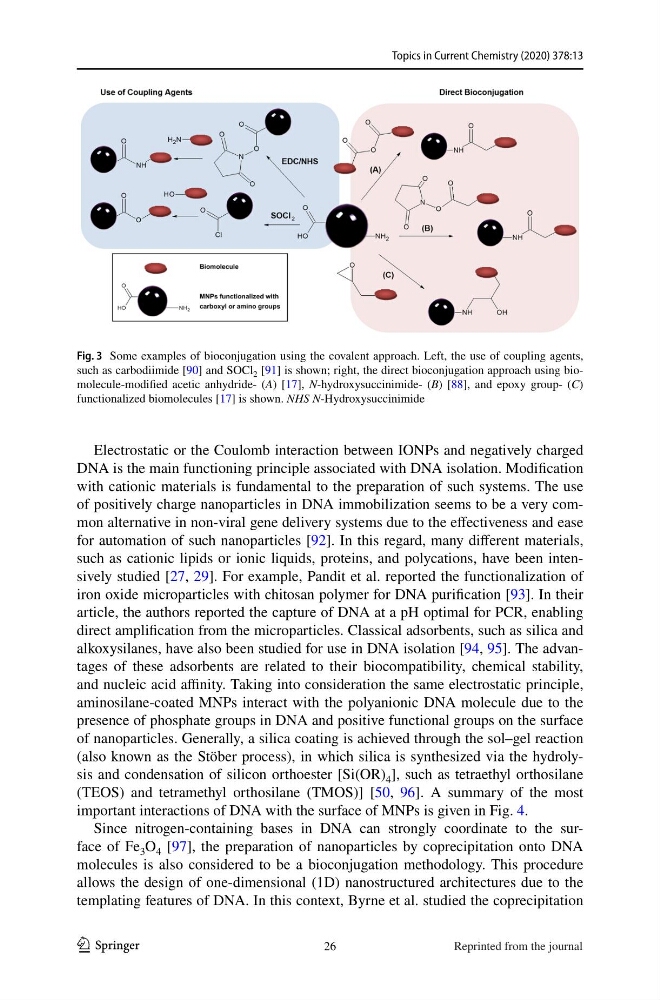
Fig. 3 Some examples of bioconjugation using the covalent approach. Left, the use of coupling agents,
such as carbodiimide [90] and SOCl 2 [91] is shown; right, the direct bioconjugation approach using biomolecule-modified acetic anhydride- (A) [17], N-hydroxysuccinimide- (B) [88], and epoxy group- (C)
functionalized biomolecules [17] is shown. NHS N-Hydroxysuccinimide
26
Reprinted from the journal
1 3
Electrostatic or the Coulomb interaction between IONPs and negatively charged
DNA is the main functioning principle associated with DNA isolation. Modification
with cationic materials is fundamental to the preparation of such systems. The use
of positively charge nanoparticles in DNA immobilization seems to be a very common alternative in non-viral gene delivery systems due to the effectiveness and ease
for automation of such nanoparticles [92]. In this regard, many different materials,
such as cationic lipids or ionic liquids, proteins, and polycations, have been intensively studied [27, 29]. For example, Pandit et al. reported the functionalization of
iron oxide microparticles with chitosan polymer for DNA purification [93]. In their
article, the authors reported the capture of DNA at a pH optimal for PCR, enabling
direct amplification from the microparticles. Classical adsorbents, such as silica and
alkoxysilanes, have also been studied for use in DNA isolation [94, 95]. The advantages of these adsorbents are related to their biocompatibility, chemical stability,
and nucleic acid affinity. Taking into consideration the same electrostatic principle,
aminosilane-coated MNPs interact with the polyanionic DNA molecule due to the
presence of phosphate groups in DNA and positive functional groups on the surface
of nanoparticles. Generally, a silica coating is achieved through the sol–gel reaction
(also known as the Stöber process), in which silica is synthesized via the hydrolysis and condensation of silicon orthoester [Si(OR) 4 ], such as tetraethyl orthosilane
(TEOS) and tetramethyl orthosilane (TMOS)] [50, 96]. A summary of the most
important interactions of DNA with the surface of MNPs is given in Fig. 4.
Since nitrogen-containing bases in DNA can strongly coordinate to the surface of Fe 3 O 4 [97], the preparation of nanoparticles by coprecipitation onto DNA
molecules is also considered to be a bioconjugation methodology. This procedure
allows the design of one-dimensional (1D) nanostructured architectures due to the
templating features of DNA. In this context, Byrne et al. studied the coprecipitation
Fig. 3 Some examples of bioconjugation using the covalent approach. Left, the use of coupling agents,
such as carbodiimide [90] and SOCl 2 [91] is shown; right, the direct bioconjugation approach using biomolecule-modified acetic anhydride- (A) [17], N-hydroxysuccinimide- (B) [88], and epoxy group- (C)
functionalized biomolecules [17] is shown. NHS N-Hydroxysuccinimide
26
Reprinted from the journal