

1 3
Topics in Current Chemistry (2020) 378:12
Overall, it becomes clear that the conjugation of NPs with macromolecules is
extensive. Several possibilities have been explored, including polymers, surfactants,
organic ligands, biological ligands, amino acids, peptides, DNA strains, antibodies, aptamers, and proteins, with multiple inorganic NPs, aiming for a wide range
of applications as depicted in Fig. 8. Among these multiple applications, we have
selected those related to bioelectrochemistry to illustrate the use of the nanobioconjugation strategies described so far in practical cases.
6 Nanobioconjugates and their Electrochemical Applications
In general, metal NPs have excellent conductivity and catalytic properties,
which make them suitable for acting as “electronic wires” to enhance electron
transfer between redox centers in proteins and electrode surfaces [202]. Electrodes modified with NPs show electrochemical responses that depend on the
size of the NPs, the space between the particles and the particle density [203,
204]. Furthermore, the molecular components of NPs have a strong influence
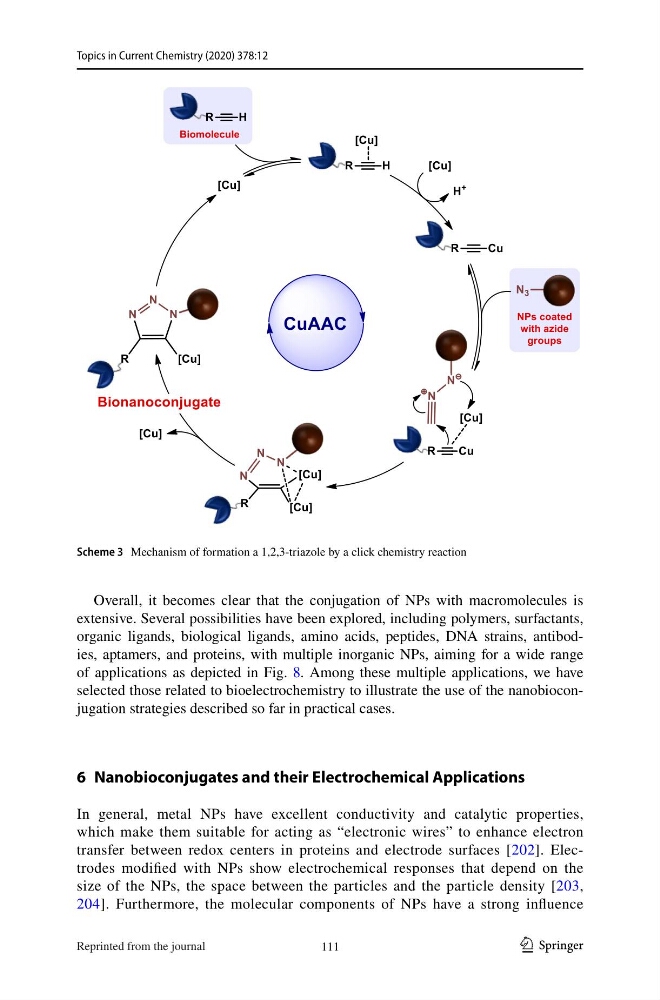
Scheme 3 Mechanism of formation a 1,2,3-triazole by a click chemistry reaction
111
Reprinted from the journal
Topics in Current Chemistry (2020) 378:12
Overall, it becomes clear that the conjugation of NPs with macromolecules is
extensive. Several possibilities have been explored, including polymers, surfactants,
organic ligands, biological ligands, amino acids, peptides, DNA strains, antibodies, aptamers, and proteins, with multiple inorganic NPs, aiming for a wide range
of applications as depicted in Fig. 8. Among these multiple applications, we have
selected those related to bioelectrochemistry to illustrate the use of the nanobioconjugation strategies described so far in practical cases.
6 Nanobioconjugates and their Electrochemical Applications
In general, metal NPs have excellent conductivity and catalytic properties,
which make them suitable for acting as “electronic wires” to enhance electron
transfer between redox centers in proteins and electrode surfaces [202]. Electrodes modified with NPs show electrochemical responses that depend on the
size of the NPs, the space between the particles and the particle density [203,
204]. Furthermore, the molecular components of NPs have a strong influence
Scheme 3 Mechanism of formation a 1,2,3-triazole by a click chemistry reaction
111
Reprinted from the journal