

Machine Learning Predictions of Adsorption Energies …
139
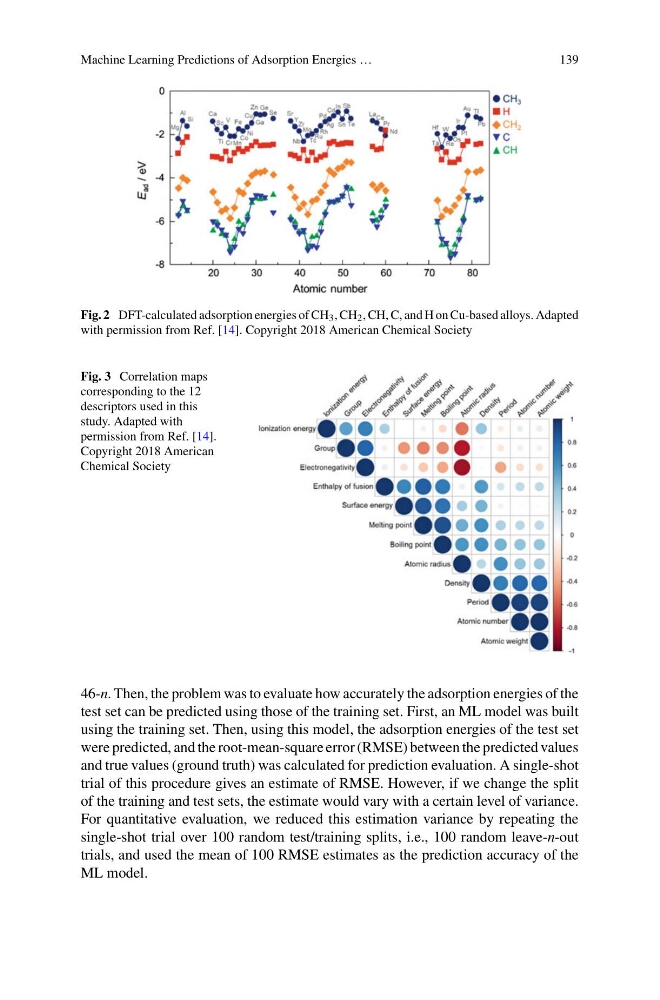
Fig. 2 DFT-calculated adsorption energies of CH 3 , CH 2 , CH, C, and H on Cu-based alloys. Adapted
with permission from Ref. [14]. Copyright 2018 American Chemical Society
Fig. 3 Correlation maps
corresponding to the 12
descriptors used in this
study. Adapted with
permission from Ref. [14].
Copyright 2018 American
Chemical Society
46-n. Then, the problem was to evaluate how accurately the adsorption energies of the
test set can be predicted using those of the training set. First, an ML model was built
using the training set. Then, using this model, the adsorption energies of the test set
were predicted, and the root-mean-square error (RMSE) between the predicted values
and true values (ground truth) was calculated for prediction evaluation. A single-shot
trial of this procedure gives an estimate of RMSE. However, if we change the split
of the training and test sets, the estimate would vary with a certain level of variance.
For quantitative evaluation, we reduced this estimation variance by repeating the
single-shot trial over 100 random test/training splits, i.e., 100 random leave-n-out
trials, and used the mean of 100 RMSE estimates as the prediction accuracy of the
ML model.
139
Fig. 2 DFT-calculated adsorption energies of CH 3 , CH 2 , CH, C, and H on Cu-based alloys. Adapted
with permission from Ref. [14]. Copyright 2018 American Chemical Society
Fig. 3 Correlation maps
corresponding to the 12
descriptors used in this
study. Adapted with
permission from Ref. [14].
Copyright 2018 American
Chemical Society
46-n. Then, the problem was to evaluate how accurately the adsorption energies of the
test set can be predicted using those of the training set. First, an ML model was built
using the training set. Then, using this model, the adsorption energies of the test set
were predicted, and the root-mean-square error (RMSE) between the predicted values
and true values (ground truth) was calculated for prediction evaluation. A single-shot
trial of this procedure gives an estimate of RMSE. However, if we change the split
of the training and test sets, the estimate would vary with a certain level of variance.
For quantitative evaluation, we reduced this estimation variance by repeating the
single-shot trial over 100 random test/training splits, i.e., 100 random leave-n-out
trials, and used the mean of 100 RMSE estimates as the prediction accuracy of the
ML model.