

22.3 Numerical Reproduction of Phonon Relaxation
435
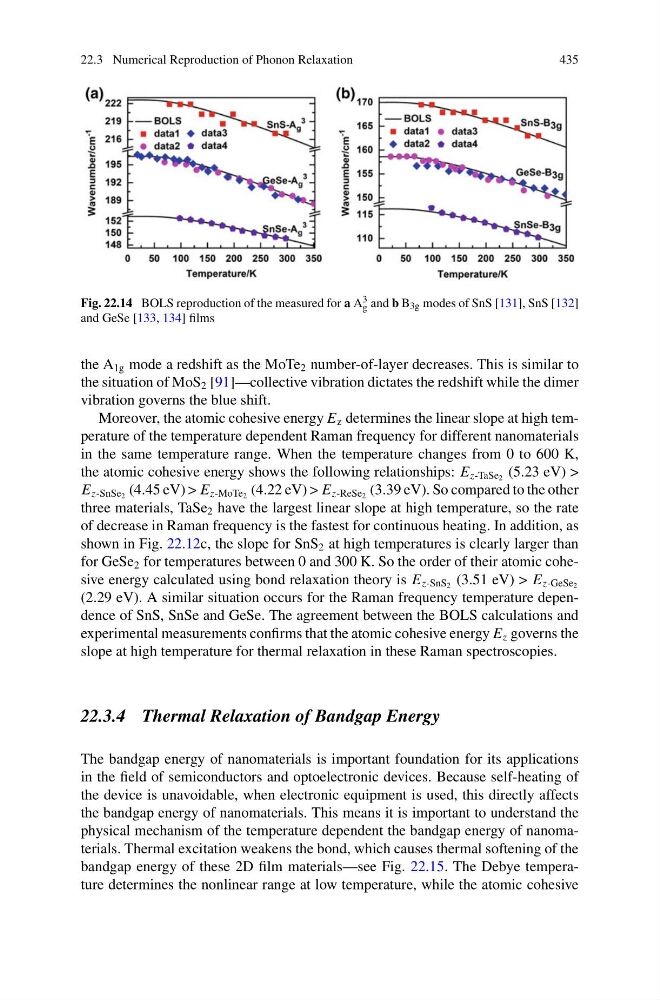
Fig. 22.14 BOLS reproduction of the measured for a A 3
g and b B 3g modes of SnS [131], SnS [132]
and GeSe [133, 134] films
the A 1g mode a redshift as the MoTe 2 number-of-layer decreases. This is similar to
the situation of MoS 2 [91]—collective vibration dictates the redshift while the dimer
vibration governs the blue shift.
Moreover, the atomic cohesive energy E z determines the linear slope at high temperature of the temperature dependent Raman frequency for different nanomaterials
in the same temperature range. When the temperature changes from 0 to 600 K,
the atomic cohesive energy shows the following relationships: E z-TaSe 2 (5.23 eV) >
E z-SnSe 2 (4.45 eV) > E z-MoTe 2 (4.22 eV) > E z-ReSe 2 (3.39 eV). So compared to the other
three materials, TaSe 2 have the largest linear slope at high temperature, so the rate
of decrease in Raman frequency is the fastest for continuous heating. In addition, as
shown in Fig. 22.12c, the slope for SnS 2 at high temperatures is clearly larger than
for GeSe 2 for temperatures between 0 and 300 K. So the order of their atomic cohesive energy calculated using bond relaxation theory is E z-SnS 2 (3.51 eV) > E z-GeSe 2
(2.29 eV). A similar situation occurs for the Raman frequency temperature dependence of SnS, SnSe and GeSe. The agreement between the BOLS calculations and
experimental measurements confirms that the atomic cohesive energy E z governs the
slope at high temperature for thermal relaxation in these Raman spectroscopies.
22.3.4 Thermal Relaxation of Bandgap Energy
The bandgap energy of nanomaterials is important foundation for its applications
in the field of semiconductors and optoelectronic devices. Because self-heating of
the device is unavoidable, when electronic equipment is used, this directly affects
the bandgap energy of nanomaterials. This means it is important to understand the
physical mechanism of the temperature dependent the bandgap energy of nanomaterials. Thermal excitation weakens the bond, which causes thermal softening of the
bandgap energy of these 2D film materials—see Fig. 22.15. The Debye temperature determines the nonlinear range at low temperature, while the atomic cohesive
435
Fig. 22.14 BOLS reproduction of the measured for a A 3
g and b B 3g modes of SnS [131], SnS [132]
and GeSe [133, 134] films
the A 1g mode a redshift as the MoTe 2 number-of-layer decreases. This is similar to
the situation of MoS 2 [91]—collective vibration dictates the redshift while the dimer
vibration governs the blue shift.
Moreover, the atomic cohesive energy E z determines the linear slope at high temperature of the temperature dependent Raman frequency for different nanomaterials
in the same temperature range. When the temperature changes from 0 to 600 K,
the atomic cohesive energy shows the following relationships: E z-TaSe 2 (5.23 eV) >
E z-SnSe 2 (4.45 eV) > E z-MoTe 2 (4.22 eV) > E z-ReSe 2 (3.39 eV). So compared to the other
three materials, TaSe 2 have the largest linear slope at high temperature, so the rate
of decrease in Raman frequency is the fastest for continuous heating. In addition, as
shown in Fig. 22.12c, the slope for SnS 2 at high temperatures is clearly larger than
for GeSe 2 for temperatures between 0 and 300 K. So the order of their atomic cohesive energy calculated using bond relaxation theory is E z-SnS 2 (3.51 eV) > E z-GeSe 2
(2.29 eV). A similar situation occurs for the Raman frequency temperature dependence of SnS, SnSe and GeSe. The agreement between the BOLS calculations and
experimental measurements confirms that the atomic cohesive energy E z governs the
slope at high temperature for thermal relaxation in these Raman spectroscopies.
22.3.4 Thermal Relaxation of Bandgap Energy
The bandgap energy of nanomaterials is important foundation for its applications
in the field of semiconductors and optoelectronic devices. Because self-heating of
the device is unavoidable, when electronic equipment is used, this directly affects
the bandgap energy of nanomaterials. This means it is important to understand the
physical mechanism of the temperature dependent the bandgap energy of nanomaterials. Thermal excitation weakens the bond, which causes thermal softening of the
bandgap energy of these 2D film materials—see Fig. 22.15. The Debye temperature determines the nonlinear range at low temperature, while the atomic cohesive