

the structure of the excited state. Photocrystallographic experiments can be
characterised into three types depending on the lifetime of the excited state species.
2.1 Steady-State and Pseudo-Steady-State Methodologies
At longer timescales, from milliseconds upwards, “steady-state” or “pseudo-steadystate” experiments can be carried out using standard single-crystal X-ray diffraction
methods [8, 18, 23] with monochromated X-ray radiation. The steady-state methodology is used typically to study metastable excited states, those with lifetimes of
hours up to infinity, if the excited state is generated and maintained at the appropriate
low temperature [24]. The metastable state is generated, at a given temperature, by
irradiating the sample for a period long enough to maximise the conversion from the
ground state. The irradiation is then stopped, and a standard single-crystal X-ray data
collection is performed. Under these experimental conditions, there are no concerns
about sample heating from the irradiation source since this has been switched off
prior to the start of the data collection. This process is illustrated in Fig. 3a where the
ground state, unexcited structure is collected first (in order to provide a benchmark
against which changes in the photogenerated excited state can be compared), then
the excited state is generated with light irradiation and finally the structure is
redetermined using X-rays, the light source having been turned off. Pseudo-steadystate methodology is used to study samples with slightly shorter excited state
lifetimes, usually in the range of milliseconds to minutes. In these experiments the
Hours
• Population dynamics of isomerisation & dimerisation in crystals
Minutes
•Population dynamics of somerisation & dimerisation in crystals
Milliseconds
•Population dynamics of linkage isomerism
Microseconds
• Triplet states & luminescence
Nanoseconds
• Triplet states & luminescence
• Singlet states, fluorescence & electron transfer
Picoseconds
• Triplet states & luminescence
• Singlet states, fluorescence & electron transfer
• Electron transfer dynamics
Femtoseconds
•Initial stages of chemical reactions
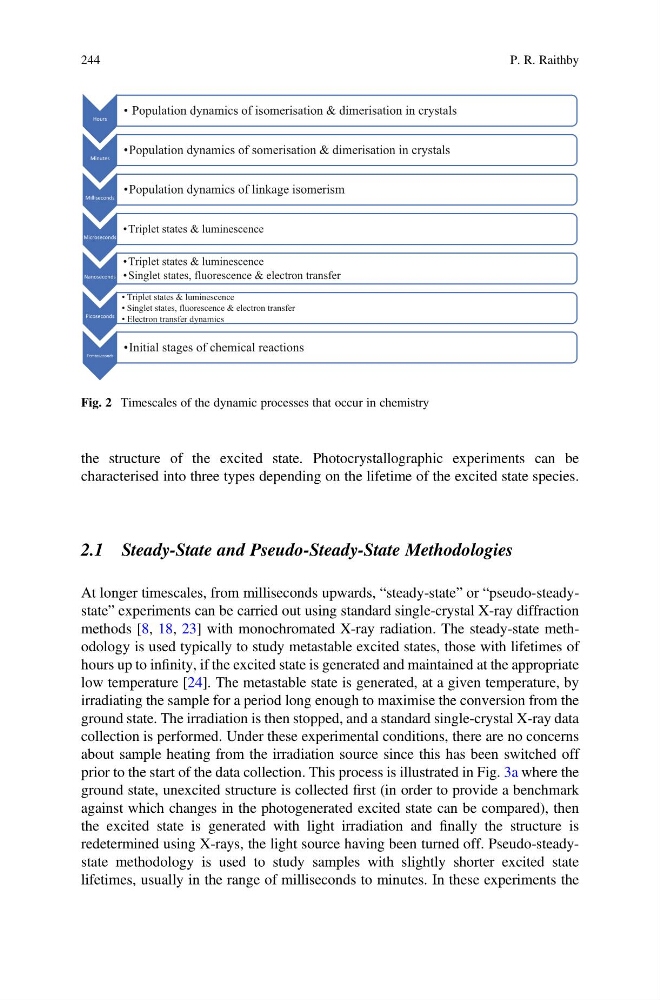
Fig. 2 Timescales of the dynamic processes that occur in chemistry
244
P. R. Raithby
characterised into three types depending on the lifetime of the excited state species.
2.1 Steady-State and Pseudo-Steady-State Methodologies
At longer timescales, from milliseconds upwards, “steady-state” or “pseudo-steadystate” experiments can be carried out using standard single-crystal X-ray diffraction
methods [8, 18, 23] with monochromated X-ray radiation. The steady-state methodology is used typically to study metastable excited states, those with lifetimes of
hours up to infinity, if the excited state is generated and maintained at the appropriate
low temperature [24]. The metastable state is generated, at a given temperature, by
irradiating the sample for a period long enough to maximise the conversion from the
ground state. The irradiation is then stopped, and a standard single-crystal X-ray data
collection is performed. Under these experimental conditions, there are no concerns
about sample heating from the irradiation source since this has been switched off
prior to the start of the data collection. This process is illustrated in Fig. 3a where the
ground state, unexcited structure is collected first (in order to provide a benchmark
against which changes in the photogenerated excited state can be compared), then
the excited state is generated with light irradiation and finally the structure is
redetermined using X-rays, the light source having been turned off. Pseudo-steadystate methodology is used to study samples with slightly shorter excited state
lifetimes, usually in the range of milliseconds to minutes. In these experiments the
Hours
• Population dynamics of isomerisation & dimerisation in crystals
Minutes
•Population dynamics of somerisation & dimerisation in crystals
Milliseconds
•Population dynamics of linkage isomerism
Microseconds
• Triplet states & luminescence
Nanoseconds
• Triplet states & luminescence
• Singlet states, fluorescence & electron transfer
Picoseconds
• Triplet states & luminescence
• Singlet states, fluorescence & electron transfer
• Electron transfer dynamics
Femtoseconds
•Initial stages of chemical reactions
Fig. 2 Timescales of the dynamic processes that occur in chemistry
244
P. R. Raithby