

obtained must be considered carefully beforehand. The photoactivated “excited
state” (ES) must exist for longer than the time required for the data collection,
although it can be maintained by repeatedly or continuously pumping light into
the system. The experiment and the chemical process that is being studied must be
brought on to a common timescale for the experiment to be successful. This can be
achieved either by slowing the photoreaction down to the timeframe of the crystallographic experiment or speeding up the experiment to match the lifetime of the
excited state species. The photoreaction can be slowed down by effectively using
trapping strategies, e.g. chemical- or cryo-trapping methods, which involve a sudden
change in the reaction conditions in order to “freeze” the reactant in a transient state
for a period of time long enough to permit the analysis. While there are some
advantages to this approach, the trapping process may change the natural progress
of the solid-state reaction. To be sure of observing the true reaction pathway, it may
be advisable to adopt the second strategy and speed up the data collection methodology so that the photoinduced process can be followed in real time.
In summary, the shorter the lifetime of the photoexcited species, the more
challenging is the photocrystallographic experiment that is required to characterise
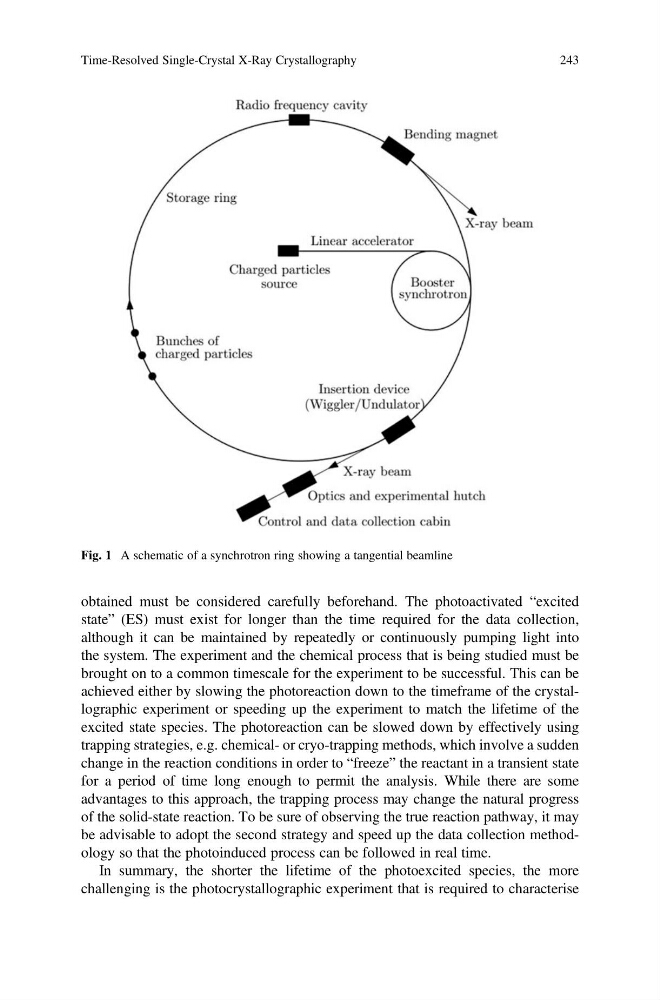
Fig. 1 A schematic of a synchrotron ring showing a tangential beamline
Time-Resolved Single-Crystal X-Ray Crystallography
243
state” (ES) must exist for longer than the time required for the data collection,
although it can be maintained by repeatedly or continuously pumping light into
the system. The experiment and the chemical process that is being studied must be
brought on to a common timescale for the experiment to be successful. This can be
achieved either by slowing the photoreaction down to the timeframe of the crystallographic experiment or speeding up the experiment to match the lifetime of the
excited state species. The photoreaction can be slowed down by effectively using
trapping strategies, e.g. chemical- or cryo-trapping methods, which involve a sudden
change in the reaction conditions in order to “freeze” the reactant in a transient state
for a period of time long enough to permit the analysis. While there are some
advantages to this approach, the trapping process may change the natural progress
of the solid-state reaction. To be sure of observing the true reaction pathway, it may
be advisable to adopt the second strategy and speed up the data collection methodology so that the photoinduced process can be followed in real time.
In summary, the shorter the lifetime of the photoexcited species, the more
challenging is the photocrystallographic experiment that is required to characterise
Fig. 1 A schematic of a synchrotron ring showing a tangential beamline
Time-Resolved Single-Crystal X-Ray Crystallography
243