

Topics in Current Chemistry (2019) 377:2
1 3
for different reactor types are shown in Table 1 [22]. The small channel dimensions
of continuous flow reactors provide a high reactor surface area to volume ratio, ena‑
bling the generated heat to be dissipated quickly and allowing precise control of the
reaction temperature.
2.3 Using Diluted O 2
The main challenge associated with the adoption of aerobic oxidation reactions in
the pharmaceutical and fine chemical industry is the concern over safety due to the
high risk of fires and explosions when flammable organic solvents and O 2 are used
in combination [24]. The combination of oxygen, organic solvent as a fuel and an
ignition source (from a spark, flame, static electricity or heat) results in a potentially
flammable mixture, because it satisfies the flammability triangle and thus the condi‑
tions for combustion to occur. A common strategy applied in batch manufacturing is
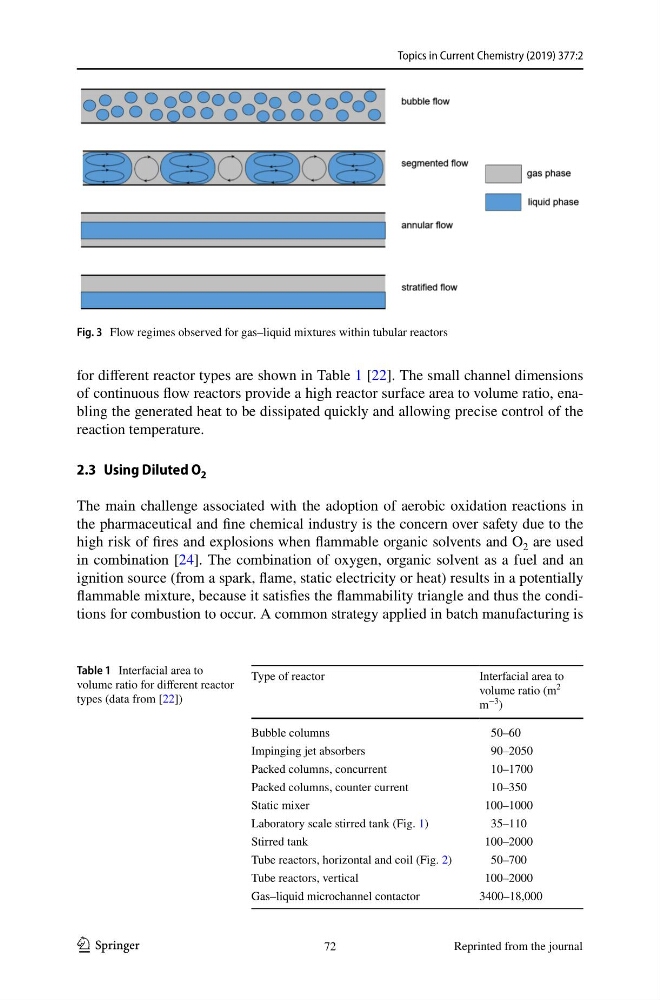
Fig. 3 Flow regimes observed for gas–liquid mixtures within tubular reactors
Table 1 Interfacial area to
volume ratio for different reactor
types (data from [22])
Type of reactor
Interfacial area to
volume ratio (m
2
m
−3
)
Bubble columns
50–60
Impinging jet absorbers
90–2050
Packed columns, concurrent
10–1700
Packed columns, counter current
10–350
Static mixer
100–1000
Laboratory scale stirred tank (Fig. 1)
35–110
Stirred tank
100–2000
Tube reactors, horizontal and coil (Fig. 2)
50–700
Tube reactors, vertical
100–2000
Gas–liquid microchannel contactor
3400–18,000
72
Reprinted from the journal
1 3
for different reactor types are shown in Table 1 [22]. The small channel dimensions
of continuous flow reactors provide a high reactor surface area to volume ratio, ena‑
bling the generated heat to be dissipated quickly and allowing precise control of the
reaction temperature.
2.3 Using Diluted O 2
The main challenge associated with the adoption of aerobic oxidation reactions in
the pharmaceutical and fine chemical industry is the concern over safety due to the
high risk of fires and explosions when flammable organic solvents and O 2 are used
in combination [24]. The combination of oxygen, organic solvent as a fuel and an
ignition source (from a spark, flame, static electricity or heat) results in a potentially
flammable mixture, because it satisfies the flammability triangle and thus the condi‑
tions for combustion to occur. A common strategy applied in batch manufacturing is
Fig. 3 Flow regimes observed for gas–liquid mixtures within tubular reactors
Table 1 Interfacial area to
volume ratio for different reactor
types (data from [22])
Type of reactor
Interfacial area to
volume ratio (m
2
m
−3
)
Bubble columns
50–60
Impinging jet absorbers
90–2050
Packed columns, concurrent
10–1700
Packed columns, counter current
10–350
Static mixer
100–1000
Laboratory scale stirred tank (Fig. 1)
35–110
Stirred tank
100–2000
Tube reactors, horizontal and coil (Fig. 2)
50–700
Tube reactors, vertical
100–2000
Gas–liquid microchannel contactor
3400–18,000
72
Reprinted from the journal