

Topics in Current Chemistry (2019) 377:1
1 3
2.1.2 Alcohols
The continuous flow conversion of biomass‑derived molecules into common alco‑
holic solvents is well documented in the literature. Hutchings et al. reported a
straightforward and efficient process for the transformation of glycerol (3) into
methanol. Water was used both as a solvent for the glycerol feedstock solution and
as a hydrogen source for the reaction. Cheap and widely available oxides such as
MgO, CaO, and CeO 2 were assessed as heterogeneous catalysts, and the best results
were obtained with ceria (quantitative glycerol conversion, 65% selectivity toward
methanol) at 340 °C under atmospheric pressure. Most notably, similar results were
obtained when the continuous reactor was operated with crude or refined glycerol
[27].
Another literature report described the preparation of propanols from glycerol (3).
The optimized process consisted of reacting an aqueous solution of 3 with hydro‑
gen over a Pt/TiPO 4 heterogeneous catalyst at 220 °C under atmospheric pressure.
Glycerol was quantitatively converted into a 9:1 mixture of 1‑ and 2‑propanol with
a combined selectivity of 97%. The catalyst maintained its activity for 15 h time‑
on‑stream; longer operating times led to catalyst deactivation [28]. Similarly, Zhu
et al. obtained the selective conversion of 1,2‑ and 1,3‑propanediols into 1‑propanol
(14) using a fixed‑bed continuous reactor packed with a mesoporous copper–ceria
catalyst (Fig. 3). A moderate temperature (180 °C) and a high H 2 pressure (50 bar)
enabled the preparation of n‑propanol in > 90% yield [29].
The progressive transition from a petrobased to a biobased chemical industry
has triggered the emergence of new classes of solvents that would otherwise have
been too expensive or difficult to produce from fossil resources. Typical examples
include solvents derived from furfural (6) and HMF (7), such as 2‑methyltetrahy‑
drofuran (see Sect. 2.1.3) and tetrahydrofurfuryl alcohol (16). The main challenge in
the development of continuous flow processes for the reduction of 6 into 16 is that
the catalyst and operating conditions must ensure selectivity for the reduction of the
alkene and aldehyde moieties without triggering decarbonylation, hydrogenolysis,
or ring‑opening to give products such as furan, 2‑methylfuran (18), and 1,5‑pentan‑
ediol. In a recent example, Guan and colleagues devised a two‑step continuous flow
procedure for the preparation of tetrahydrofurfuryl alcohol from furfural (Fig. 4).
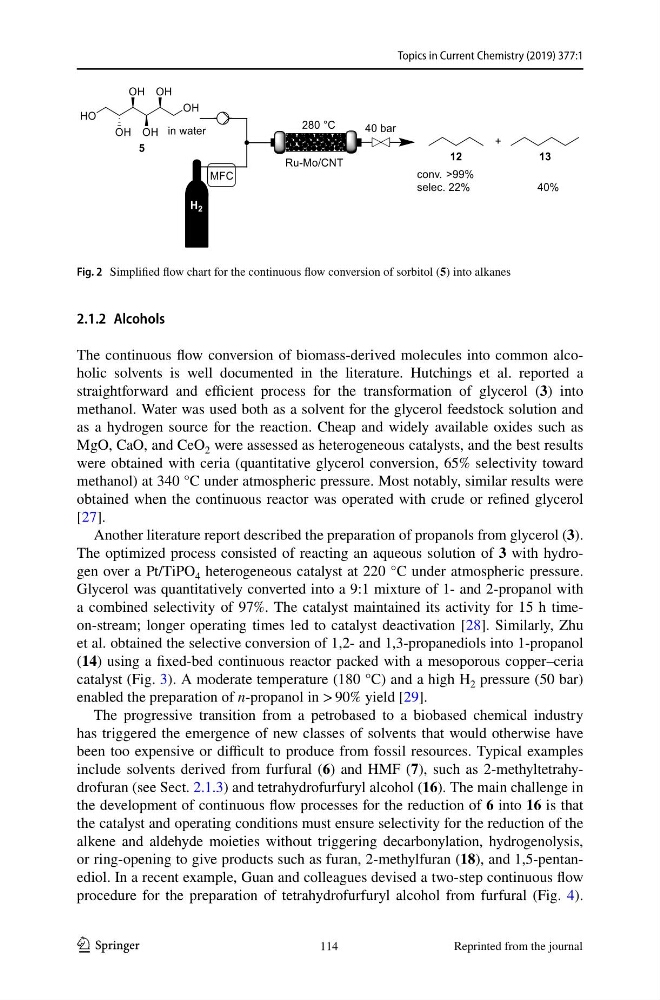
Fig. 2 Simplified flow chart for the continuous flow conversion of sorbitol (5) into alkanes
114
Reprinted from the journal
1 3
2.1.2 Alcohols
The continuous flow conversion of biomass‑derived molecules into common alco‑
holic solvents is well documented in the literature. Hutchings et al. reported a
straightforward and efficient process for the transformation of glycerol (3) into
methanol. Water was used both as a solvent for the glycerol feedstock solution and
as a hydrogen source for the reaction. Cheap and widely available oxides such as
MgO, CaO, and CeO 2 were assessed as heterogeneous catalysts, and the best results
were obtained with ceria (quantitative glycerol conversion, 65% selectivity toward
methanol) at 340 °C under atmospheric pressure. Most notably, similar results were
obtained when the continuous reactor was operated with crude or refined glycerol
[27].
Another literature report described the preparation of propanols from glycerol (3).
The optimized process consisted of reacting an aqueous solution of 3 with hydro‑
gen over a Pt/TiPO 4 heterogeneous catalyst at 220 °C under atmospheric pressure.
Glycerol was quantitatively converted into a 9:1 mixture of 1‑ and 2‑propanol with
a combined selectivity of 97%. The catalyst maintained its activity for 15 h time‑
on‑stream; longer operating times led to catalyst deactivation [28]. Similarly, Zhu
et al. obtained the selective conversion of 1,2‑ and 1,3‑propanediols into 1‑propanol
(14) using a fixed‑bed continuous reactor packed with a mesoporous copper–ceria
catalyst (Fig. 3). A moderate temperature (180 °C) and a high H 2 pressure (50 bar)
enabled the preparation of n‑propanol in > 90% yield [29].
The progressive transition from a petrobased to a biobased chemical industry
has triggered the emergence of new classes of solvents that would otherwise have
been too expensive or difficult to produce from fossil resources. Typical examples
include solvents derived from furfural (6) and HMF (7), such as 2‑methyltetrahy‑
drofuran (see Sect. 2.1.3) and tetrahydrofurfuryl alcohol (16). The main challenge in
the development of continuous flow processes for the reduction of 6 into 16 is that
the catalyst and operating conditions must ensure selectivity for the reduction of the
alkene and aldehyde moieties without triggering decarbonylation, hydrogenolysis,
or ring‑opening to give products such as furan, 2‑methylfuran (18), and 1,5‑pentan‑
ediol. In a recent example, Guan and colleagues devised a two‑step continuous flow
procedure for the preparation of tetrahydrofurfuryl alcohol from furfural (Fig. 4).
Fig. 2 Simplified flow chart for the continuous flow conversion of sorbitol (5) into alkanes
114
Reprinted from the journal