

Topics in Current Chemistry (2020) 378:16
1 3
be obtained following treatment with cerium(IV) ammonium nitrate (CAN). In this
instance, trans-(PPh 3 ) 2 PdCl 2 was the most effective Lewis acid catalyst but nickel
and platinum complexes were also effective catalysts for this reaction. This observation represents a significant milestone in the later development of tertiary amine/
transition metal cooperative catalysis. Mechanistic studies on this reaction revealed
several significant distinctions from the earlier reactions using Sc(OTf) 3 as the Lewis
acid; no evidence, spectroscopic or computational, could be found for activation of
R
BzQD
O
Cl
Cl
O
N
O
Ar
[Sc III ]
Cl
Cl
O
N
O
Ar
[Sc II ]
R
BzQD
O
N
O
Cl
Cl
Ar
O
R
Cl
O
OMe
R
N
O
Cl
Cl
Ar
O
HO
BzQD (10 mol%)
Sc(OTf) 3 (10 mol%)
i Pr 2 NEt (1.0 equiv.)
THF, – 78 °C;
then, MeOH
BzQD:
OMe
Me
N
O
Cl
Cl
Ar
O
HO
91%
>99% ee
OMe
N
O
Cl
Cl
Ar
O
HO
84%
>99% ee
OMe
N
O
Cl
Cl
Ar
O
HO
92%
>99% ee
Me
Me
Cl
Cl
N
O
Ar
R
O
O
via:
[Sc III ]
R
Cl
O
Cl
Cl
N
O
Ar
R
O
O
N
O
Cl
Cl
Ar
O
OMe
Cl
Cl
N
O
Ar
OH
OMe
O
R
Selected Examples:
Proposed Mechanism:
R
O
Base
Ar: (4-NO 2 )C 6 H 4
8 Examples with Sc(OTf) 3
BzQD
MeOH
N
BzO
N
OMe
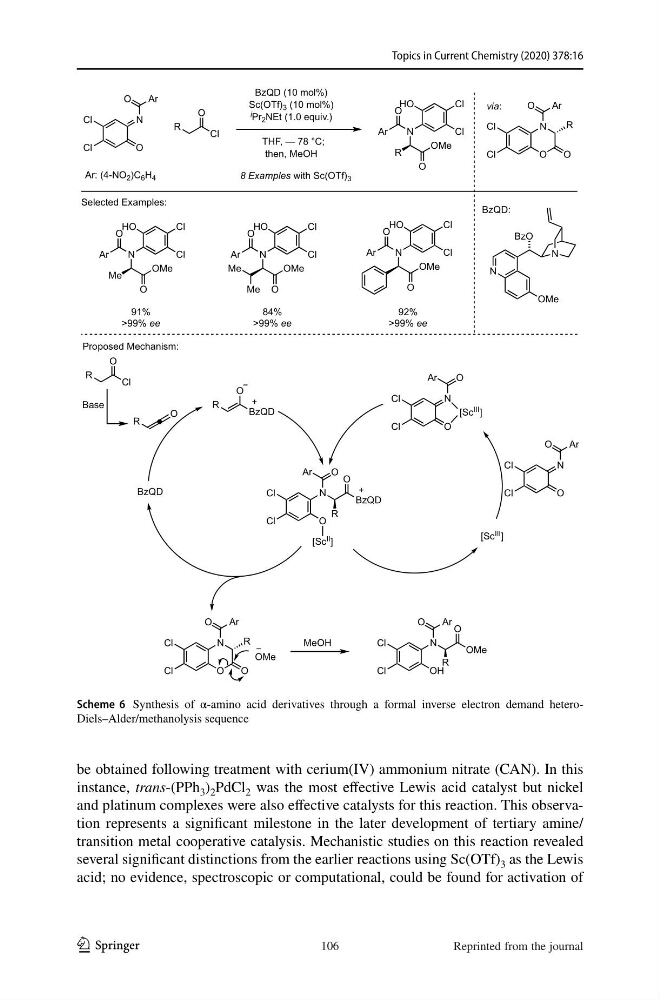
Scheme 6 Synthesis of α-amino acid derivatives through a formal inverse electron demand heteroDiels–Alder/methanolysis sequence
Reprinted from the journal
106
1 3
be obtained following treatment with cerium(IV) ammonium nitrate (CAN). In this
instance, trans-(PPh 3 ) 2 PdCl 2 was the most effective Lewis acid catalyst but nickel
and platinum complexes were also effective catalysts for this reaction. This observation represents a significant milestone in the later development of tertiary amine/
transition metal cooperative catalysis. Mechanistic studies on this reaction revealed
several significant distinctions from the earlier reactions using Sc(OTf) 3 as the Lewis
acid; no evidence, spectroscopic or computational, could be found for activation of
R
BzQD
O
Cl
Cl
O
N
O
Ar
[Sc III ]
Cl
Cl
O
N
O
Ar
[Sc II ]
R
BzQD
O
N
O
Cl
Cl
Ar
O
R
Cl
O
OMe
R
N
O
Cl
Cl
Ar
O
HO
BzQD (10 mol%)
Sc(OTf) 3 (10 mol%)
i Pr 2 NEt (1.0 equiv.)
THF, – 78 °C;
then, MeOH
BzQD:
OMe
Me
N
O
Cl
Cl
Ar
O
HO
91%
>99% ee
OMe
N
O
Cl
Cl
Ar
O
HO
84%
>99% ee
OMe
N
O
Cl
Cl
Ar
O
HO
92%
>99% ee
Me
Me
Cl
Cl
N
O
Ar
R
O
O
via:
[Sc III ]
R
Cl
O
Cl
Cl
N
O
Ar
R
O
O
N
O
Cl
Cl
Ar
O
OMe
Cl
Cl
N
O
Ar
OH
OMe
O
R
Selected Examples:
Proposed Mechanism:
R
O
Base
Ar: (4-NO 2 )C 6 H 4
8 Examples with Sc(OTf) 3
BzQD
MeOH
N
BzO
N
OMe
Scheme 6 Synthesis of α-amino acid derivatives through a formal inverse electron demand heteroDiels–Alder/methanolysis sequence
Reprinted from the journal
106