

1 3
Topics in Current Chemistry (2020) 378:16
Driven by the pharmaceutical importance of unnatural amino acids, Lectka
et al. sought to extend their combined tertiary amine Lewis base/Lewis acid catalyst system to this class of compounds (Scheme 6) [13]. Using this strategy, orthobenzoquinone imines react with acyl chlorides to provide highly enantioenriched
1,4-benzoxazinone products, and subsequent methanolysis provides amino acid
methyl esters. Lectka proposed a cooperative mechanistic scenario where the Lewis
base catalyst (BzQD) produces a C1-ammonium enolate and the Lewis acid catalyst
activates the o-benzoquinone imine. These respective species then engage in a stepwise nucleophilic attack—cyclization sequence or a highly asynchronous inverseelectron-demand hetero-Diels–Alder reaction, which gives 1,4-benzoxazinone products. In this process, Sc(OTf) 3 was the optimal Lewis acid. Using these conditions,
eight products were obtained in high yields (82–91%) and with excellent enantioselectivities (> 99%). In addition, and further highlighting the dramatic effect of this
dual catalytic system, control experiments conducted in the absence of Lewis acid
resulted in products that retained the high levels of enantioenrichment but in significantly poorer yield. It should be noted that the dichlorophenol moiety in the products can be removed under oxidative conditions to provide the corresponding N-acyl
products.
Following this, Lectka et al. attempted to use a similar strategy to prepare
α-hydroxylated esters, via the reaction of acyl chlorides with o-chloranil (Scheme 7)
[14]. This process furnished enantioenriched benzodioxinones, which could be
opened with various nucleophiles. Thereafter, the α-hydroxylated products could
Cl
O
OAc
H
R
N
SPTh
N
O
SPTh
AcO
R
TMSQD•HCl (15 mol%)
Sc(HMDS) 3 (15 mol%)
i Pr 2 NEt (2.2 equiv.)
CH 2 Cl 2 , –10 - 10 °C
8 Examples
63%
13:1 d.r.
98% ee
55%
12:1 d.r.
97% ee
36%
14:1 d.r.
94% ee
46%
20:1 d.r.
95% ee
S
O
O
S
SPTh:
N
O
SPTh
AcO
R
N
O
AcO
R
RuCl 3 (20 mol%)
NaIO 4 (14 equiv.)
MeCN/CCl 4 ,
pH 7 Buffer, r.t.
8 Examples
oxidative deprotection of SPTh
40–55%
no erosion of ee
60%
13:1 d.r.
98% ee
Selected Examples:
N
O
SPTh
AcO
N
O
SPTh
AcO
N
O
SPTh
AcO
N
O
SPTh
AcO
N
O
SPTh
AcO
Me
Br
CN
Cl
Product Deprotection:
H
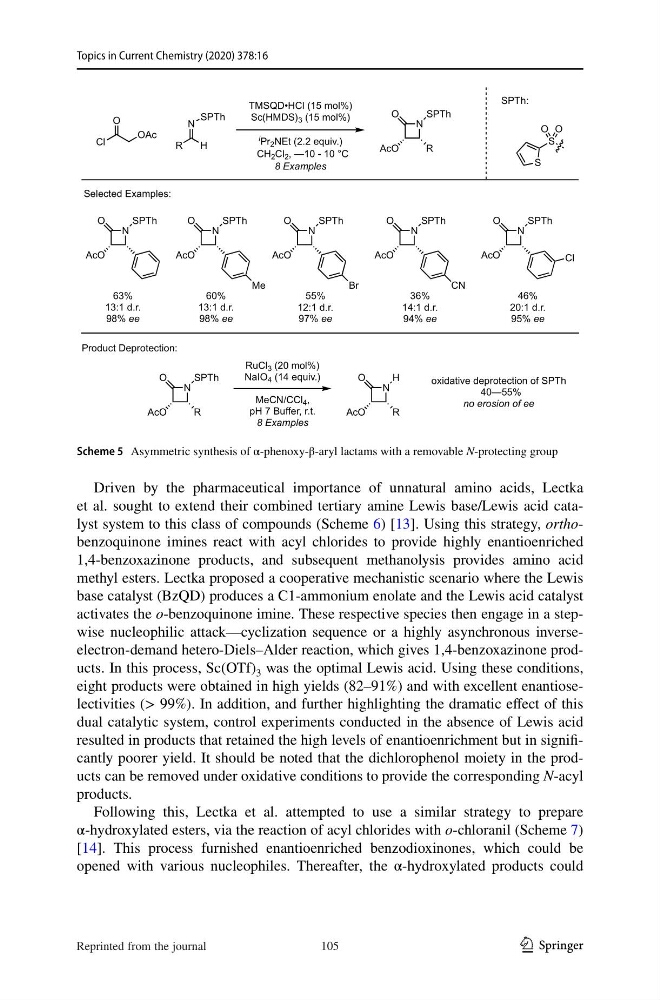
Scheme 5 Asymmetric synthesis of α-phenoxy-β-aryl lactams with a removable N-protecting group
Reprinted from the journal
105
Topics in Current Chemistry (2020) 378:16
Driven by the pharmaceutical importance of unnatural amino acids, Lectka
et al. sought to extend their combined tertiary amine Lewis base/Lewis acid catalyst system to this class of compounds (Scheme 6) [13]. Using this strategy, orthobenzoquinone imines react with acyl chlorides to provide highly enantioenriched
1,4-benzoxazinone products, and subsequent methanolysis provides amino acid
methyl esters. Lectka proposed a cooperative mechanistic scenario where the Lewis
base catalyst (BzQD) produces a C1-ammonium enolate and the Lewis acid catalyst
activates the o-benzoquinone imine. These respective species then engage in a stepwise nucleophilic attack—cyclization sequence or a highly asynchronous inverseelectron-demand hetero-Diels–Alder reaction, which gives 1,4-benzoxazinone products. In this process, Sc(OTf) 3 was the optimal Lewis acid. Using these conditions,
eight products were obtained in high yields (82–91%) and with excellent enantioselectivities (> 99%). In addition, and further highlighting the dramatic effect of this
dual catalytic system, control experiments conducted in the absence of Lewis acid
resulted in products that retained the high levels of enantioenrichment but in significantly poorer yield. It should be noted that the dichlorophenol moiety in the products can be removed under oxidative conditions to provide the corresponding N-acyl
products.
Following this, Lectka et al. attempted to use a similar strategy to prepare
α-hydroxylated esters, via the reaction of acyl chlorides with o-chloranil (Scheme 7)
[14]. This process furnished enantioenriched benzodioxinones, which could be
opened with various nucleophiles. Thereafter, the α-hydroxylated products could
Cl
O
OAc
H
R
N
SPTh
N
O
SPTh
AcO
R
TMSQD•HCl (15 mol%)
Sc(HMDS) 3 (15 mol%)
i Pr 2 NEt (2.2 equiv.)
CH 2 Cl 2 , –10 - 10 °C
8 Examples
63%
13:1 d.r.
98% ee
55%
12:1 d.r.
97% ee
36%
14:1 d.r.
94% ee
46%
20:1 d.r.
95% ee
S
O
O
S
SPTh:
N
O
SPTh
AcO
R
N
O
AcO
R
RuCl 3 (20 mol%)
NaIO 4 (14 equiv.)
MeCN/CCl 4 ,
pH 7 Buffer, r.t.
8 Examples
oxidative deprotection of SPTh
40–55%
no erosion of ee
60%
13:1 d.r.
98% ee
Selected Examples:
N
O
SPTh
AcO
N
O
SPTh
AcO
N
O
SPTh
AcO
N
O
SPTh
AcO
N
O
SPTh
AcO
Me
Br
CN
Cl
Product Deprotection:
H
Scheme 5 Asymmetric synthesis of α-phenoxy-β-aryl lactams with a removable N-protecting group
Reprinted from the journal
105