

To address the alternative explanation, we must look first at the evidence for slow
moving dust particles in the coma.
4.11 Slow (Large) Moving Particles in the Coma
4.11.1 Observations and Significance of Slow-Moving
Particles
Prior to the EPOXI mission at 103P/Hartley 2, it was widely assumed that gas drag
accelerated most particles and that most of these particles escaped the gravitational
influence of the nucleus. The discovery of >10
4 chunks of material in the inner coma
where 10 to 20% of the chunks were moving at less than their local escape velocity
(A’Hearn et al. 2011) started to change this thinking (Fig. 4.51). When Rosetta
reached 67P, the evidence of airfall deposits on the nucleus prompted a complete
re-evalution. It was shown (Thomas et al. 2015a) that individual particles could be
seen in single images (see Figs. 2.80 and 4.52). The lack of smearing in the images of
these particles within the exposure times used for the camera system led to the
conclusion that many particles near the nucleus were travelling at speeds close or
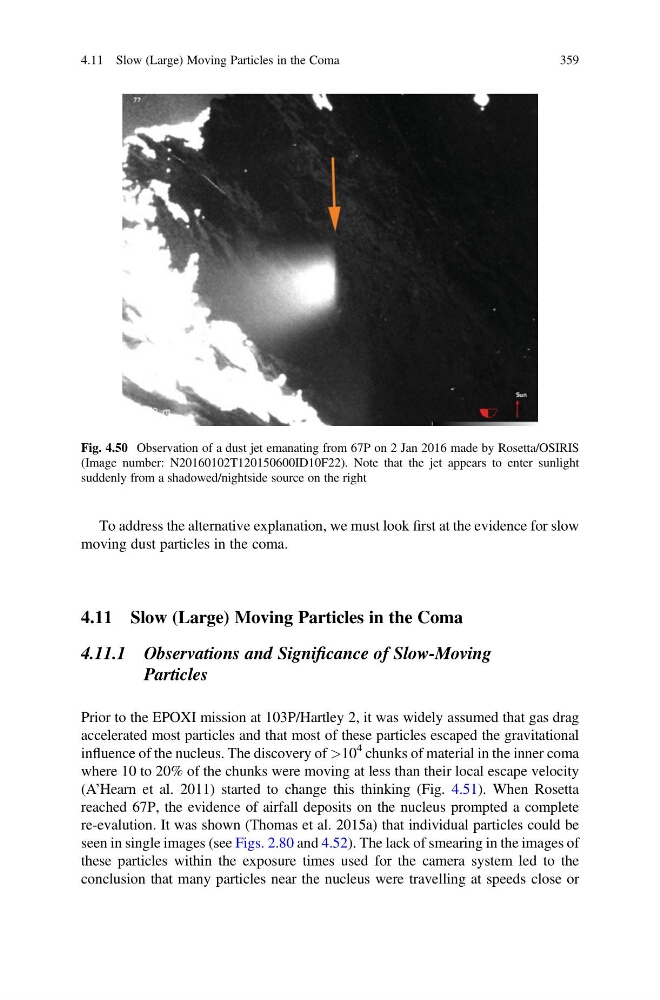
Fig. 4.50 Observation of a dust jet emanating from 67P on 2 Jan 2016 made by Rosetta/OSIRIS
(Image number: N20160102T120150600ID10F22). Note that the jet appears to enter sunlight
suddenly from a shadowed/nightside source on the right
4.11 Slow (Large) Moving Particles in the Coma
359
moving dust particles in the coma.
4.11 Slow (Large) Moving Particles in the Coma
4.11.1 Observations and Significance of Slow-Moving
Particles
Prior to the EPOXI mission at 103P/Hartley 2, it was widely assumed that gas drag
accelerated most particles and that most of these particles escaped the gravitational
influence of the nucleus. The discovery of >10
4 chunks of material in the inner coma
where 10 to 20% of the chunks were moving at less than their local escape velocity
(A’Hearn et al. 2011) started to change this thinking (Fig. 4.51). When Rosetta
reached 67P, the evidence of airfall deposits on the nucleus prompted a complete
re-evalution. It was shown (Thomas et al. 2015a) that individual particles could be
seen in single images (see Figs. 2.80 and 4.52). The lack of smearing in the images of
these particles within the exposure times used for the camera system led to the
conclusion that many particles near the nucleus were travelling at speeds close or
Fig. 4.50 Observation of a dust jet emanating from 67P on 2 Jan 2016 made by Rosetta/OSIRIS
(Image number: N20160102T120150600ID10F22). Note that the jet appears to enter sunlight
suddenly from a shadowed/nightside source on the right
4.11 Slow (Large) Moving Particles in the Coma
359