

inevitably, led to a more detailed view of local surface textures. This high resolution
has allowed an attempt to classify surface textures and the relationships between
them on the nucleus.
In a regional classification the surface is divided into distinctive coherent regions
based on clear and major morphological and/or topographical boundaries. This is
essential in the case of small irregularly-shaped bodies as these objects generally
lack the well-established geographical reference system needed both to describe the
orientation of observations and to map various features (El-Maarry et al. 2015a). For
example, the neck region of 67P (Fig. 2.2) is a particularly challenging cartographic
problem because of the ambiguity arising if simple longitude/latitude reference
systems are used.
A regional classification should be kept separate from geological mapping where
units that display similar structural and stratigraphic position as well as a common
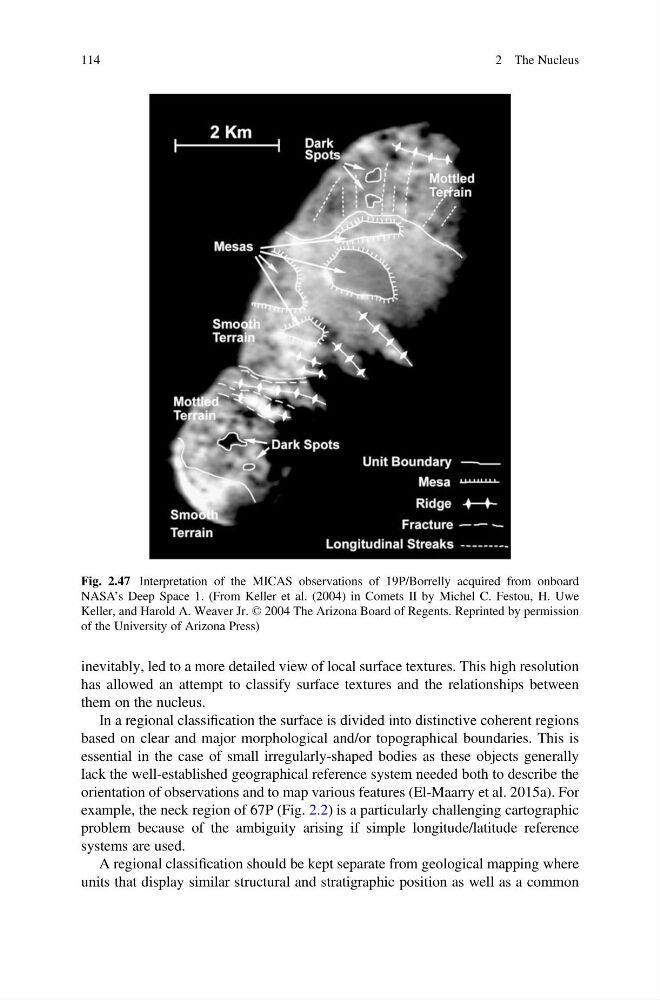
Fig. 2.47 Interpretation of the MICAS observations of 19P/Borrelly acquired from onboard
NASA’s Deep Space 1. (From Keller et al. (2004) in Comets II by Michel C. Festou, H. Uwe
Keller, and Harold A. Weaver Jr. © 2004 The Arizona Board of Regents. Reprinted by permission
of the University of Arizona Press)
114
2 The Nucleus
has allowed an attempt to classify surface textures and the relationships between
them on the nucleus.
In a regional classification the surface is divided into distinctive coherent regions
based on clear and major morphological and/or topographical boundaries. This is
essential in the case of small irregularly-shaped bodies as these objects generally
lack the well-established geographical reference system needed both to describe the
orientation of observations and to map various features (El-Maarry et al. 2015a). For
example, the neck region of 67P (Fig. 2.2) is a particularly challenging cartographic
problem because of the ambiguity arising if simple longitude/latitude reference
systems are used.
A regional classification should be kept separate from geological mapping where
units that display similar structural and stratigraphic position as well as a common
Fig. 2.47 Interpretation of the MICAS observations of 19P/Borrelly acquired from onboard
NASA’s Deep Space 1. (From Keller et al. (2004) in Comets II by Michel C. Festou, H. Uwe
Keller, and Harold A. Weaver Jr. © 2004 The Arizona Board of Regents. Reprinted by permission
of the University of Arizona Press)
114
2 The Nucleus