

2. Mammals: bats (Cynopterus brachyotis, Cynopterus sphinx, Rhinolophus affinis,
Rhinolophus pusillus), squirrels (Tupaia glis, Callosciurus flavimanus,
Callosciurus prevostii), monkeys (Macaca fascicularis), langur (Presbytis
obscura), and wild cat (Felis planiceps), etc.
3. Reptiles: snakes (Xenelaphis hexagonotus, Enhydris plumbea), turtle (Hieremys
grandis, Siebenrockiella crassicollis), and crocodiles (Crocodylus porosus, an
endangered species).
27.3.3 Exploitation and Utilization
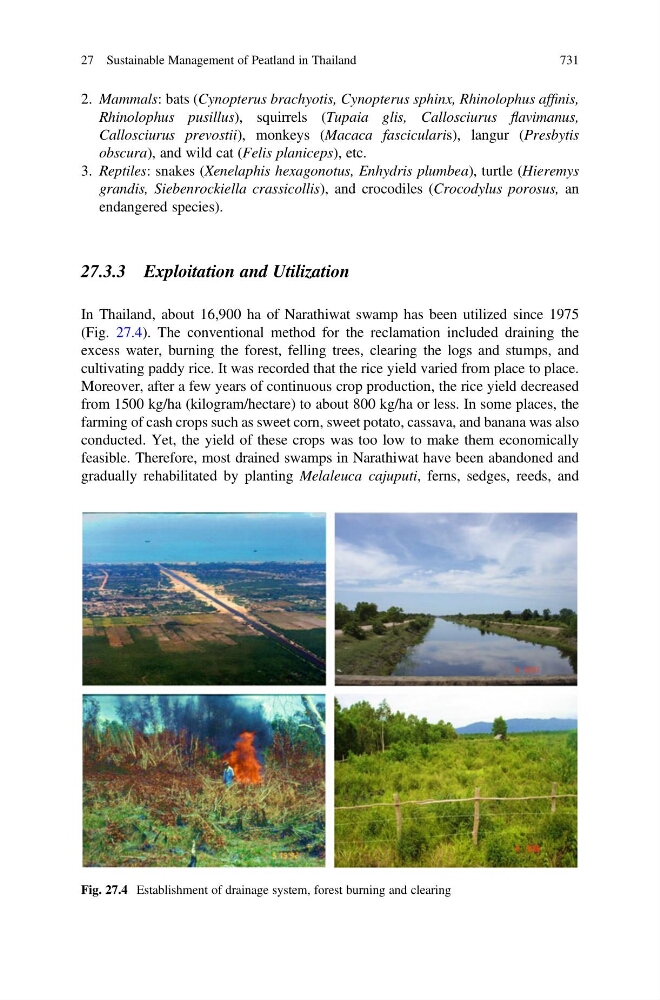
In Thailand, about 16,900 ha of Narathiwat swamp has been utilized since 1975
(Fig. 27.4). The conventional method for the reclamation included draining the
excess water, burning the forest, felling trees, clearing the logs and stumps, and
cultivating paddy rice. It was recorded that the rice yield varied from place to place.
Moreover, after a few years of continuous crop production, the rice yield decreased
from 1500 kg/ha (kilogram/hectare) to about 800 kg/ha or less. In some places, the
farming of cash crops such as sweet corn, sweet potato, cassava, and banana was also
conducted. Yet, the yield of these crops was too low to make them economically
feasible. Therefore, most drained swamps in Narathiwat have been abandoned and
gradually rehabilitated by planting Melaleuca cajuputi, ferns, sedges, reeds, and
Fig. 27.4 Establishment of drainage system, forest burning and clearing
27 Sustainable Management of Peatland in Thailand
731