

soil swamps. Species restricted to PSFs include Ramin (Gonystylus bancanus),
swamp Jelutung (Dyera polyphylla), Shorea platycarpa, Shorea uliginosa,
Calophyllum lowei and Pandanus vinaceus. Local communities living within or
around peatland areas often derive considerable benefits from the goods and services
provided by the forest. Non-timber forest products (NTFPs) such as fish, pandanus
leaves, palas leaves, fruits, medicinal plants, ornamental plants support and contribute significantly to the local livelihood and socio-economic.
The PSFs are not uniform. Dome structure in peat swamps relates concentric
ecological zones of different forest types. Anderson (1961) undertook detailed
vegetation study of the tropical peat swamp in Sarawak and described a series of
concentric rings of different forest types up the slopes of the peat domes. The PSF
structure changes from the edge of the swamp to the centre characterised by an
uneven-canopied high forest (mixed peat swamp forest), similar to lowland dipterocarp forest, to zones of lower height, decreased tree girth, thicker leaves and less
species richness (Padang Alan Forest) towards the centre of the swamp (Anderson
1964; Whitmore 1984) as shown in Fig. 26.3.
The PSFs feature some of the highest freshwater biodiversity of any habitat in the
world. The PSFs are found to have a high diversity of mammals with 123 species
recorded in PSFs in Southeast Asia of which six species are strongly associated with
the PSFs, while 45% of the mammals are considered threatened with International
Union for Conservation of Nature (IUCN) Red List of Threatened Species (Posa
et al. 2011). This habitat provides home for a wide range of wildlife including the
largest remaining populations of orangutan. It is also inhabited by other rare and
endangered animals such as tiger, sun bear, panther and tapir. The endangered
freshwater crocodile or False Gharial is also endemic to peatlands in Malaysia,
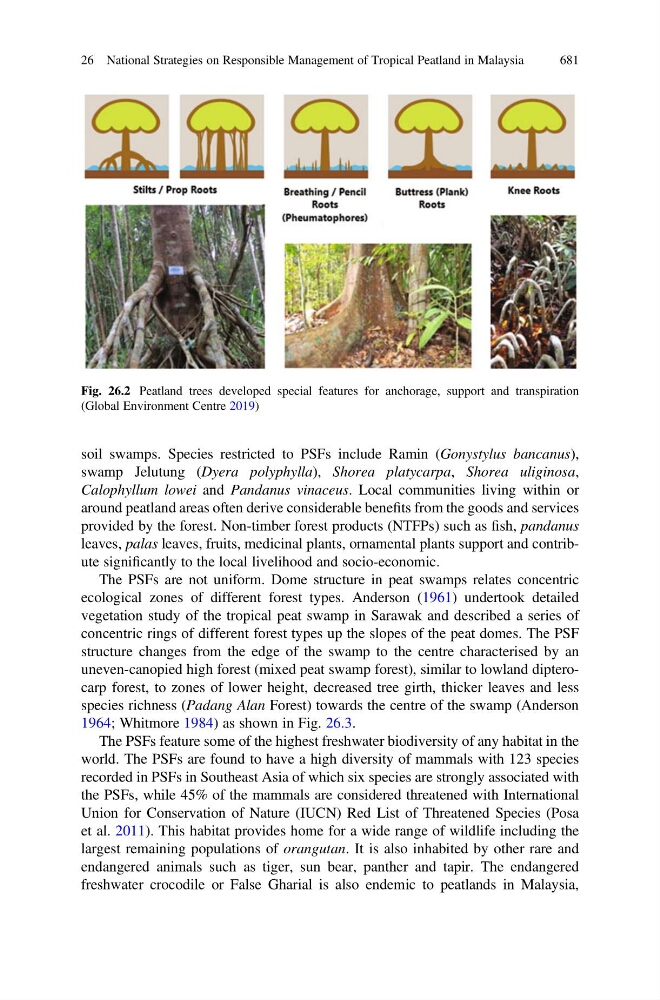
Fig. 26.2 Peatland trees developed special features for anchorage, support and transpiration
(Global Environment Centre 2019)
26 National Strategies on Responsible Management of Tropical Peatland in Malaysia
681