

released gradually over a long period. Intact peat swamps can contribute to
maintaining the GWL in rivers that run through them during dry season.
Peatlands are the most important ecosystem for carbon storage to regulate global
climate by absorbing carbon dioxide from the atmosphere. A healthy peat swamp is
able to accumulate atmospheric carbon, therefore contribute to global scale climate
change mitigation. Peatlands globally cover 400 million hectares (ha) and store more
than 550 giga (billion) tonnes of carbon (GtC) or 30% of all global soil carbon
(Parish et al. 2008). This is approximately 60% more than the carbon stored in the
living biomass of all the world’s forests combined (Pan et al. 2011). Tropical
peatlands cover about 60 million ha and store about 89 GtC with an estimated
68.5 GtC in Southeast Asia (Page et al. 2011; Parish et al. 2019b).
Peatland ecosystem exhibits special ecological characteristics and gives shelter to
unique plant and animal life. Forests formed on peat soils are called peat swamp
forests (PSFs). Survival in the swamps is complicated; therefore, ecology has
evolved and adapted to acidic environment, scarce nutrients and waterlogged conditions (Fig. 26.2). Trees in PSFs tend to develop buttresses and stilt roots to provide
stability and anchorage in waterlogged condition. Because of the long periods of
high water level, many of the tree species have pneumatophores, protruding roots
above the water surface which function as breathing roots.
PSFs have a relatively high diversity of tree species, many of which are restricted
and becoming rare to this habitat. Giesen et al. (2018) identified more than 1300
plant species in swamp forests in Southeast Asia of which 45 higher plant species
restricted to lowland PSFs and another 75 found only in PSFs and riparian/mineral
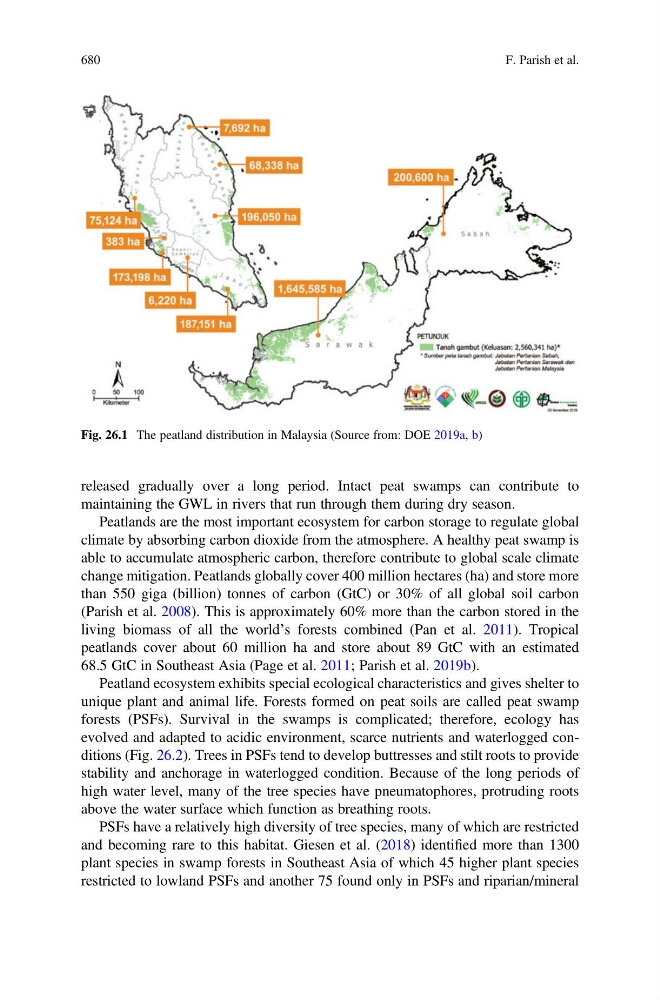
Fig. 26.1 The peatland distribution in Malaysia (Source from: DOE 2019a, b)
680
F. Parish et al.