

in hollow spots under waterlogged conditions in the rainy season. In this location,
the length of waterlogged period was approximately 2 months with the maximum
flooding height of 30 cm (Santosa and Ariani 2020). According to Giesen (2004), the
hummock–hollow topography of tropical peat swamp forest is lost and flooding
becomes severe upon degradation. Furthermore, disturbances and degradation further lead to peat subsidence that results in deep and prolonged flooding in the wet
season (Hooijer et al. 2012).
Waterlogged condition in the RePeat area affects the growth and development of
the plants. Shorea balangeran planted in inundated condition forms a swollen stem
base (Fig. 21.11) and adventitious roots (Fig. 21.12) as morphological adaptation.
The formation of hypertrophic lenticel is a common anatomical change in various
perennial tree species in waterlogged conditions (Kozlowski 1997). The hypertrophic growth constitutes the swollen tissue at the stem base and is believed to be the
result of cell division and radial cell enlargement. This phenomenon has been long
related to the presence of auxin (IAA) and the production of ethylene (Kozlowski
1997; Shimamura et al. 2010).
Another morphological adaptation to waterlogged conditions is the growth and
development of adventive roots (Fig. 21.12). The adventive roots develop and
replace the function of the main roots (Malik et al. 2001; Bailey-Serres et al. 2012;
Voesenek and Bailey-Serres 2013). In flooding conditions, the oxygen concentration
is low, which affects the plant metabolism. Acclimatization by plants to hypoxia and
anoxia conditions propagates adventitious roots (Licausi 2011; Bailey-Serres et al.
2012; Voesenek and Bailey-Serres 2013; Armstrong et al. 2019). Meanwhile,
300
7
6
5
4
3
2
1
0
250
200
Height (cm)
Canopy width (cm)
diameter (cm)
70
60
50
40
30
20
10
0
180
160
140
120
100
80
60
0
40
20
Survival (%)
150
100
50
0
9
1 9
Age (month)
29
9
19
Age (month)
29
9
Age (month)
29
9
19
Age (month)
29
a
b
c
d
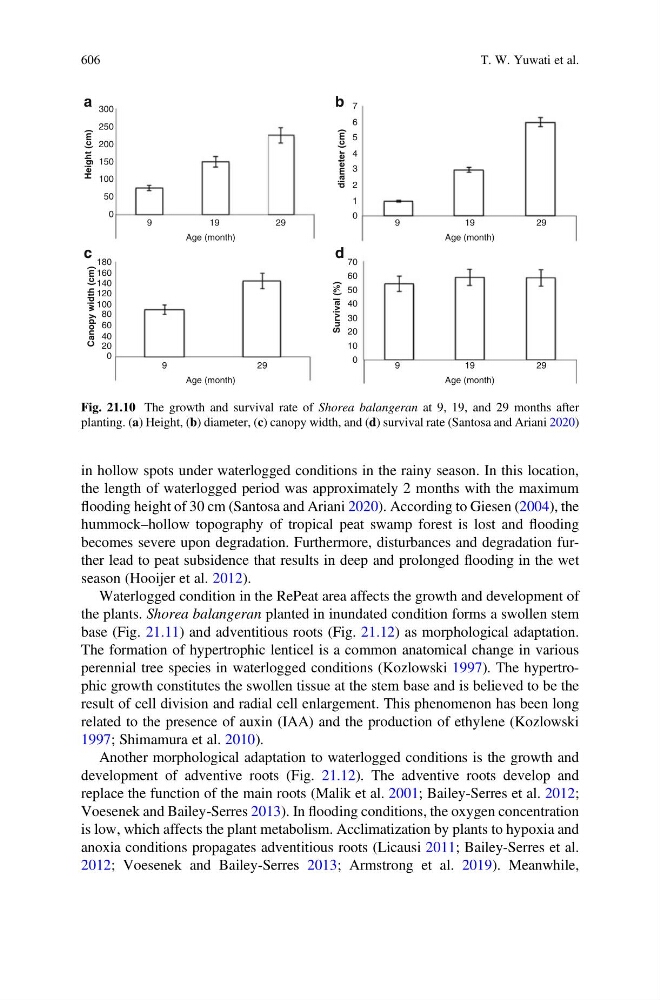
Fig. 21.10 The growth and survival rate of Shorea balangeran at 9, 19, and 29 months after
planting. (a) Height, (b) diameter, (c) canopy width, and (d) survival rate (Santosa and Ariani 2020)
606
T. W. Yuwati et al.
the length of waterlogged period was approximately 2 months with the maximum
flooding height of 30 cm (Santosa and Ariani 2020). According to Giesen (2004), the
hummock–hollow topography of tropical peat swamp forest is lost and flooding
becomes severe upon degradation. Furthermore, disturbances and degradation further lead to peat subsidence that results in deep and prolonged flooding in the wet
season (Hooijer et al. 2012).
Waterlogged condition in the RePeat area affects the growth and development of
the plants. Shorea balangeran planted in inundated condition forms a swollen stem
base (Fig. 21.11) and adventitious roots (Fig. 21.12) as morphological adaptation.
The formation of hypertrophic lenticel is a common anatomical change in various
perennial tree species in waterlogged conditions (Kozlowski 1997). The hypertrophic growth constitutes the swollen tissue at the stem base and is believed to be the
result of cell division and radial cell enlargement. This phenomenon has been long
related to the presence of auxin (IAA) and the production of ethylene (Kozlowski
1997; Shimamura et al. 2010).
Another morphological adaptation to waterlogged conditions is the growth and
development of adventive roots (Fig. 21.12). The adventive roots develop and
replace the function of the main roots (Malik et al. 2001; Bailey-Serres et al. 2012;
Voesenek and Bailey-Serres 2013). In flooding conditions, the oxygen concentration
is low, which affects the plant metabolism. Acclimatization by plants to hypoxia and
anoxia conditions propagates adventitious roots (Licausi 2011; Bailey-Serres et al.
2012; Voesenek and Bailey-Serres 2013; Armstrong et al. 2019). Meanwhile,
300
7
6
5
4
3
2
1
0
250
200
Height (cm)
Canopy width (cm)
diameter (cm)
70
60
50
40
30
20
10
0
180
160
140
120
100
80
60
0
40
20
Survival (%)
150
100
50
0
9
1 9
Age (month)
29
9
19
Age (month)
29
9
Age (month)
29
9
19
Age (month)
29
a
b
c
d
Fig. 21.10 The growth and survival rate of Shorea balangeran at 9, 19, and 29 months after
planting. (a) Height, (b) diameter, (c) canopy width, and (d) survival rate (Santosa and Ariani 2020)
606
T. W. Yuwati et al.