

21.4 Rehabilitation with Shorea balangeran
The revegetated burnt peatland area in KHDTK Tumbang Nusa is called the
Rehabilitation of Peatland (RePeat) area. The peatland was severely burnt in 2015,
rendering it to be an open area. There were several dead trees standing or falling.
Shrubs were not found in this area. There was a 1 km canal adjacent to the area,
which has been blocked. As part of the peatland reforestation, the seedlings of
Shorea balangeran were planted in December 2015 in the planting distance of
3 m  3 m. The planting area was inundated for 2 months in the rainy season. At
the age of 29 months after planting, the survival rate of Shorea balangeran was 58%
(Santosa and Ariani, 2020). This survival rate was lower than Shorea balangeran
planted in the different sites of KHDTK Tumbang Nusa, which has survival rate of
67% (Santosa et al. 2012). This may be caused by different conditions of the two
sites; the RePeat area was restored 2 months after burning, with an open canopy, and
inundated during the rainy season (Santosa and Ariani 2020), while the other sites
were restored 2 years after burning. The height, diameter, canopy width, and survival
rate of Shorea balangeran seedlings at 9, 19, and 29 months after planting are
presented in Fig. 21.10.
According to Santosa and Ariani (2020), the survival rate of Shorea balangeran
(n ¼ 588) varied based on the distance of the plant from the canal. The highest and
lowest survival rate were 71% and 31%, respectively. The highest and lowest
survival rate occurred to the seedlings planted on the distance of 11 m and 20 m,
respectively. Figure 21.10 (d) showed that there is no clear relationship between the
survival rate and distance to the canal. The mortality of Shorea balangeran was high
-70.0
-60.0
-50.0
-40.0
-30.0
-20.0
-10.0
0.0
10.0
20.0
30.0
1
2
3
4
5
6
Water level (cm)
Point of observaƟon
Sep-18
Okt 2018
Nov 2018
Des 18
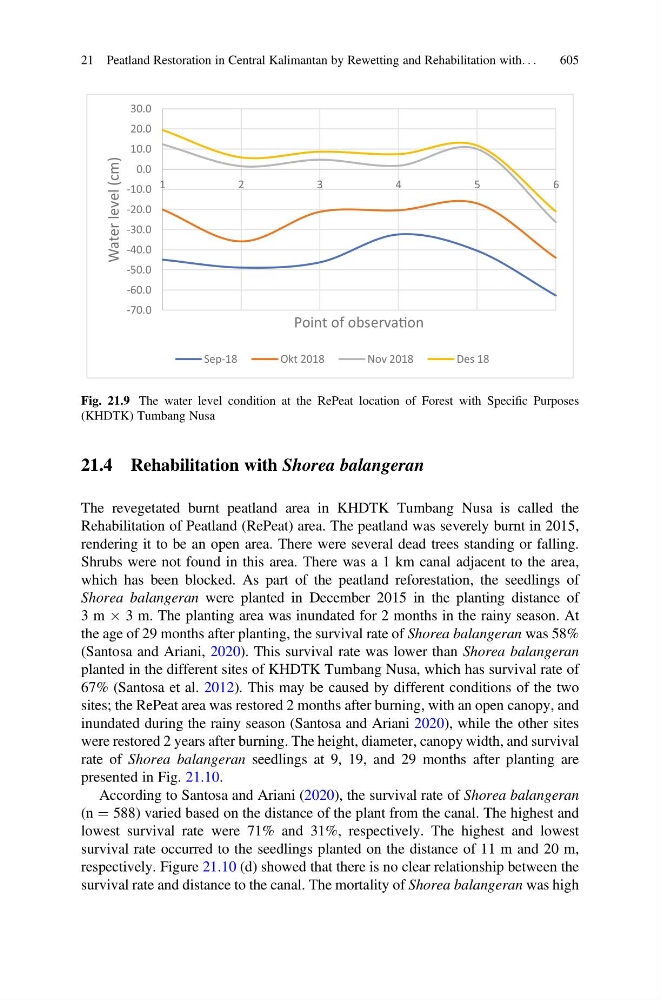
Fig. 21.9 The water level condition at the RePeat location of Forest with Specific Purposes
(KHDTK) Tumbang Nusa
21 Peatland Restoration in Central Kalimantan by Rewetting and Rehabilitation with. . .
605
The revegetated burnt peatland area in KHDTK Tumbang Nusa is called the
Rehabilitation of Peatland (RePeat) area. The peatland was severely burnt in 2015,
rendering it to be an open area. There were several dead trees standing or falling.
Shrubs were not found in this area. There was a 1 km canal adjacent to the area,
which has been blocked. As part of the peatland reforestation, the seedlings of
Shorea balangeran were planted in December 2015 in the planting distance of
3 m  3 m. The planting area was inundated for 2 months in the rainy season. At
the age of 29 months after planting, the survival rate of Shorea balangeran was 58%
(Santosa and Ariani, 2020). This survival rate was lower than Shorea balangeran
planted in the different sites of KHDTK Tumbang Nusa, which has survival rate of
67% (Santosa et al. 2012). This may be caused by different conditions of the two
sites; the RePeat area was restored 2 months after burning, with an open canopy, and
inundated during the rainy season (Santosa and Ariani 2020), while the other sites
were restored 2 years after burning. The height, diameter, canopy width, and survival
rate of Shorea balangeran seedlings at 9, 19, and 29 months after planting are
presented in Fig. 21.10.
According to Santosa and Ariani (2020), the survival rate of Shorea balangeran
(n ¼ 588) varied based on the distance of the plant from the canal. The highest and
lowest survival rate were 71% and 31%, respectively. The highest and lowest
survival rate occurred to the seedlings planted on the distance of 11 m and 20 m,
respectively. Figure 21.10 (d) showed that there is no clear relationship between the
survival rate and distance to the canal. The mortality of Shorea balangeran was high
-70.0
-60.0
-50.0
-40.0
-30.0
-20.0
-10.0
0.0
10.0
20.0
30.0
1
2
3
4
5
6
Water level (cm)
Point of observaƟon
Sep-18
Okt 2018
Nov 2018
Des 18
Fig. 21.9 The water level condition at the RePeat location of Forest with Specific Purposes
(KHDTK) Tumbang Nusa
21 Peatland Restoration in Central Kalimantan by Rewetting and Rehabilitation with. . .
605