

ecosystems have drawn attention as high-carbon reservoir ecosystems that store a
high amount of carbon with high uncertainty.
Recently, carbon in coastal ecosystems and marine carbon has been referred to as
blue carbon. According to this formulation, well-conserved carbon in peatlands/
wetlands is referred to as gold carbon, and similarly, carbon in permafrost (primarily
in the form of methane) is known as silver carbon. Because these three color carbons
are defined as “high-carbon reservoirs,” three color carbons indicate “carbon sequestration.” Three color carbon ecosystems are covered and protected by “forest.” If
“forest” in the three color carbon area was developed by a plan and program on
deforestation and forest degradation, the three color carbons turn into “red carbon,”
which indicates a “carbon negative” state. However, if the three color carbons are
conserved, rehabilitated, and restored by afforestation, reforestation, and agroforestry, “forest” has the function of “carbon negative,” from which “forest” carbon is
referred to in this work as “green carbon” (Fig. 5.19).
3D-Photogrametry
CAD (Computer
Aided Design)
Program
3D-Mapping
3D geo-Model
Micro-Satellite
DDM
(Digital Direct
Manufacturing)
3D- Printing
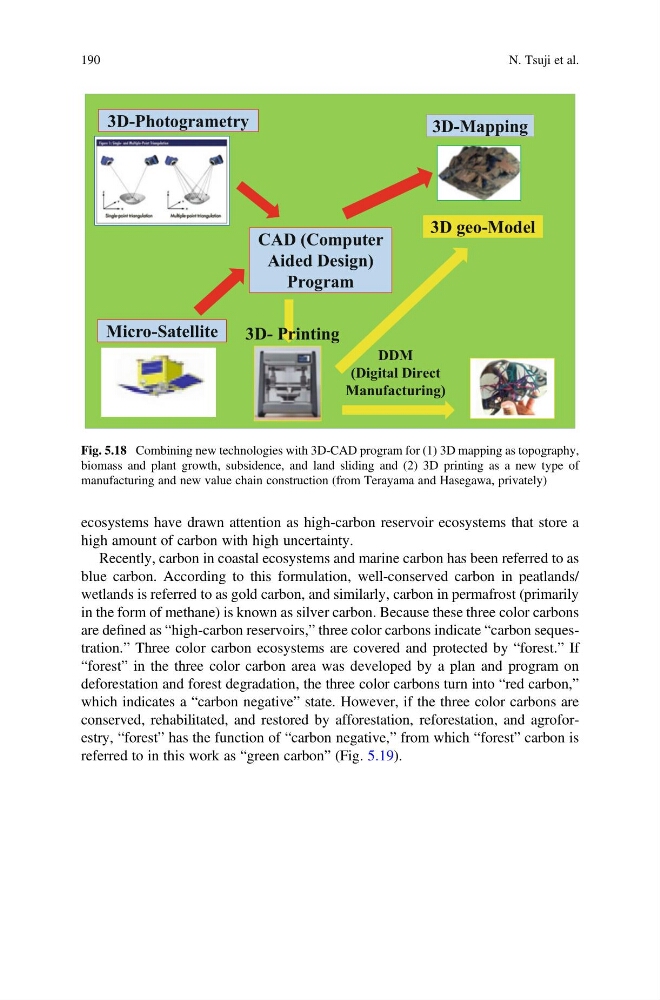
Fig. 5.18 Combining new technologies with 3D-CAD program for (1) 3D mapping as topography,
biomass and plant growth, subsidence, and land sliding and (2) 3D printing as a new type of
manufacturing and new value chain construction (from Terayama and Hasegawa, privately)
190
N. Tsuji et al.
high amount of carbon with high uncertainty.
Recently, carbon in coastal ecosystems and marine carbon has been referred to as
blue carbon. According to this formulation, well-conserved carbon in peatlands/
wetlands is referred to as gold carbon, and similarly, carbon in permafrost (primarily
in the form of methane) is known as silver carbon. Because these three color carbons
are defined as “high-carbon reservoirs,” three color carbons indicate “carbon sequestration.” Three color carbon ecosystems are covered and protected by “forest.” If
“forest” in the three color carbon area was developed by a plan and program on
deforestation and forest degradation, the three color carbons turn into “red carbon,”
which indicates a “carbon negative” state. However, if the three color carbons are
conserved, rehabilitated, and restored by afforestation, reforestation, and agroforestry, “forest” has the function of “carbon negative,” from which “forest” carbon is
referred to in this work as “green carbon” (Fig. 5.19).
3D-Photogrametry
CAD (Computer
Aided Design)
Program
3D-Mapping
3D geo-Model
Micro-Satellite
DDM
(Digital Direct
Manufacturing)
3D- Printing
Fig. 5.18 Combining new technologies with 3D-CAD program for (1) 3D mapping as topography,
biomass and plant growth, subsidence, and land sliding and (2) 3D printing as a new type of
manufacturing and new value chain construction (from Terayama and Hasegawa, privately)
190
N. Tsuji et al.