

7 Relativistic Nucleus-Nucleus Collisions and the QCD Matter Phase Diagram
435
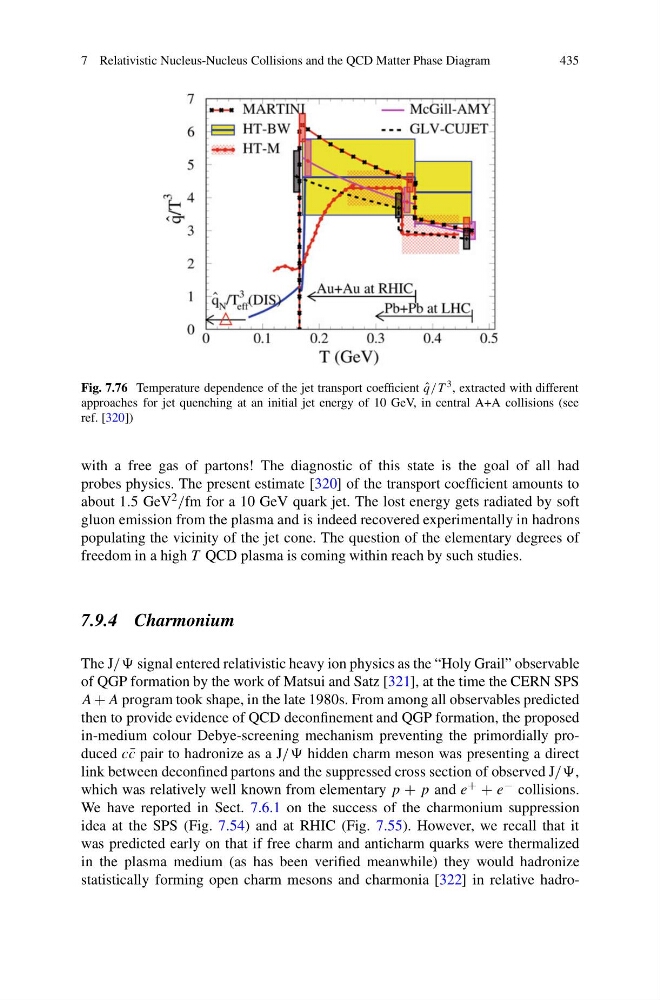
Fig. 7.76 Temperature dependence of the jet transport coefficient ˆ
q/T 3 , extracted with different
approaches for jet quenching at an initial jet energy of 10 GeV, in central A+A collisions (see
ref. [320])
with a free gas of partons! The diagnostic of this state is the goal of all had
probes physics. The present estimate [320] of the transport coefficient amounts to
about 1.5 GeV 2 /fm for a 10 GeV quark jet. The lost energy gets radiated by soft
gluon emission from the plasma and is indeed recovered experimentally in hadrons
populating the vicinity of the jet cone. The question of the elementary degrees of
freedom in a high T QCD plasma is coming within reach by such studies.
7.9.4 Charmonium
The J// signal entered relativistic heavy ion physics as the “Holy Grail” observable
of QGP formation by the work of Matsui and Satz [321], at the time the CERN SPS
A + A program took shape, in the late 1980s. From among all observables predicted
then to provide evidence of QCD deconfinement and QGP formation, the proposed
in-medium colour Debye-screening mechanism preventing the primordially produced c ¯
c pair to hadronize as a J// hidden charm meson was presenting a direct
link between deconfined partons and the suppressed cross section of observed J//,
which was relatively well known from elementary p + p and e + + e − collisions.
We have reported in Sect. 7.6.1 on the success of the charmonium suppression
idea at the SPS (Fig. 7.54) and at RHIC (Fig. 7.55). However, we recall that it
was predicted early on that if free charm and anticharm quarks were thermalized
in the plasma medium (as has been verified meanwhile) they would hadronize
statistically forming open charm mesons and charmonia [322] in relative hadro-
435
Fig. 7.76 Temperature dependence of the jet transport coefficient ˆ
q/T 3 , extracted with different
approaches for jet quenching at an initial jet energy of 10 GeV, in central A+A collisions (see
ref. [320])
with a free gas of partons! The diagnostic of this state is the goal of all had
probes physics. The present estimate [320] of the transport coefficient amounts to
about 1.5 GeV 2 /fm for a 10 GeV quark jet. The lost energy gets radiated by soft
gluon emission from the plasma and is indeed recovered experimentally in hadrons
populating the vicinity of the jet cone. The question of the elementary degrees of
freedom in a high T QCD plasma is coming within reach by such studies.
7.9.4 Charmonium
The J// signal entered relativistic heavy ion physics as the “Holy Grail” observable
of QGP formation by the work of Matsui and Satz [321], at the time the CERN SPS
A + A program took shape, in the late 1980s. From among all observables predicted
then to provide evidence of QCD deconfinement and QGP formation, the proposed
in-medium colour Debye-screening mechanism preventing the primordially produced c ¯
c pair to hadronize as a J// hidden charm meson was presenting a direct
link between deconfined partons and the suppressed cross section of observed J//,
which was relatively well known from elementary p + p and e + + e − collisions.
We have reported in Sect. 7.6.1 on the success of the charmonium suppression
idea at the SPS (Fig. 7.54) and at RHIC (Fig. 7.55). However, we recall that it
was predicted early on that if free charm and anticharm quarks were thermalized
in the plasma medium (as has been verified meanwhile) they would hadronize
statistically forming open charm mesons and charmonia [322] in relative hadro-