

2.3 Optimisation of the Synthetic Sequence
35
O
H
O
O
H
O
H
H
H
B
LA
O
H
LA
–
– B
–
– LA
+
O
H
H
H
≡
B
H
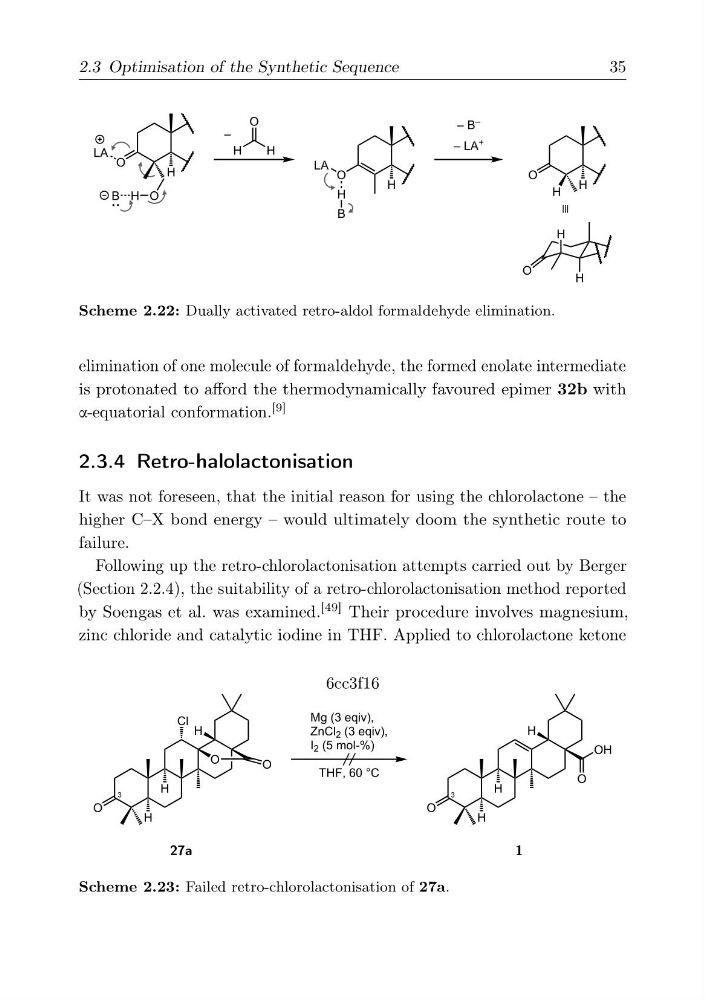
Scheme 2.22: Dually activated retro-aldol formaldehyde elimination.
elimination of one molecule of formaldehyde, the formed enolate intermediate
is protonated to afford the thermodynamically favoured epimer 32b with
α-equatorial conformation.
[9]
2.3.4 Retro-halolactonisation
It was not foreseen, that the initial reason for using the chlorolactone – the
higher C–X bond energy – would ultimately doom the synthetic route to
failure.
Following up the retro-chlorolactonisation attempts carried out by Berger
(Section 2.2.4), the suitability of a retro-chlorolactonisation method reported
by Soengas et al. was examined.
[49] Their procedure involves magnesium,
zinc chloride and catalytic iodine in THF. Applied to chlorolactone ketone
6cc3f16
Mg (3 eqiv),
ZnCl 2 (3 eqiv),
I 2 (5 mol-%)
O
H
H
OH
O
H
O
H
H
O
H
O
Cl
3
3
THF, 60 °C
27a
1
Scheme 2.23: Failed retro-chlorolactonisation of 27a.
35
O
H
O
O
H
O
H
H
H
B
LA
O
H
LA
–
– B
–
– LA
+
O
H
H
H
≡
B
H
Scheme 2.22: Dually activated retro-aldol formaldehyde elimination.
elimination of one molecule of formaldehyde, the formed enolate intermediate
is protonated to afford the thermodynamically favoured epimer 32b with
α-equatorial conformation.
[9]
2.3.4 Retro-halolactonisation
It was not foreseen, that the initial reason for using the chlorolactone – the
higher C–X bond energy – would ultimately doom the synthetic route to
failure.
Following up the retro-chlorolactonisation attempts carried out by Berger
(Section 2.2.4), the suitability of a retro-chlorolactonisation method reported
by Soengas et al. was examined.
[49] Their procedure involves magnesium,
zinc chloride and catalytic iodine in THF. Applied to chlorolactone ketone
6cc3f16
Mg (3 eqiv),
ZnCl 2 (3 eqiv),
I 2 (5 mol-%)
O
H
H
OH
O
H
O
H
H
O
H
O
Cl
3
3
THF, 60 °C
27a
1
Scheme 2.23: Failed retro-chlorolactonisation of 27a.