

36
2 Results and Discussion
AcOH, 40 °C
(95 %)
(4)
O
H
H
OH
O
H
HO
O
H
H
O
H
HO
O
Br
Zn (30 equiv)
8b
1
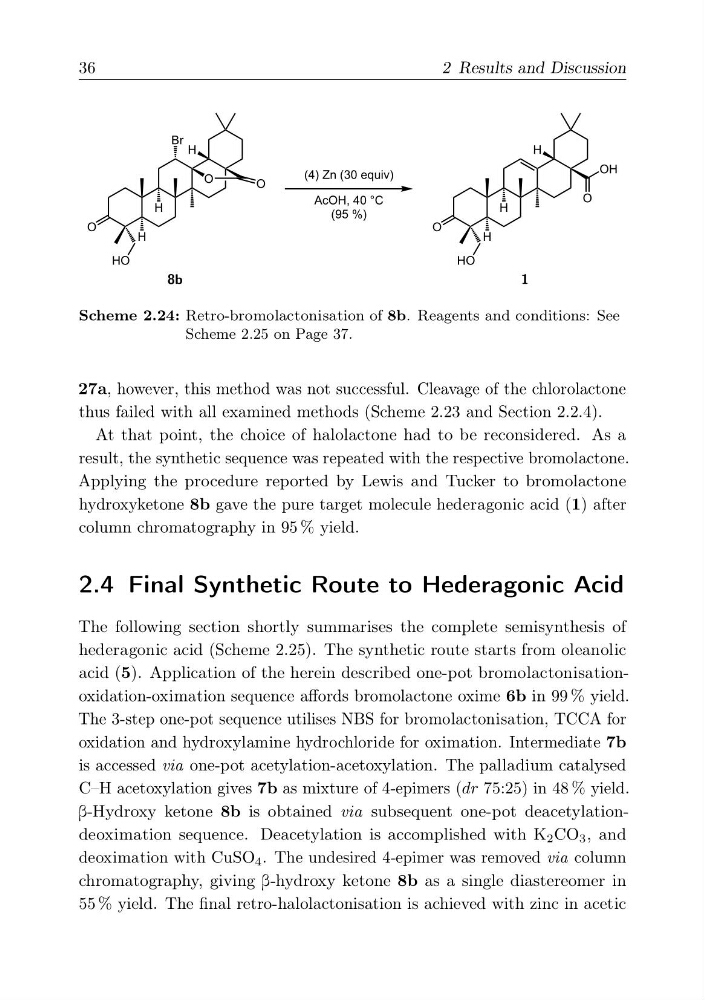
Scheme 2.24: Retro-bromolactonisation of 8b. Reagents and conditions: See
Scheme 2.25 on Page 37.
27a, however, this method was not successful. Cleavage of the chlorolactone
thus failed with all examined methods (Scheme 2.23 and Section 2.2.4).
At that point, the choice of halolactone had to be reconsidered. As a
result, the synthetic sequence was repeated with the respective bromolactone.
Applying the procedure reported by Lewis and Tucker to bromolactone
hydroxyketone 8b gave the pure target molecule hederagonic acid (1) after
column chromatography in 95 % yield.
2.4 Final Synthetic Route to Hederagonic Acid
The following section shortly summarises the complete semisynthesis of
hederagonic acid (Scheme 2.25). The synthetic route starts from oleanolic
acid (5). Application of the herein described one-pot bromolactonisationoxidation-oximation sequence affords bromolactone oxime 6b in 99 % yield.
The 3-step one-pot sequence utilises NBS for bromolactonisation, TCCA for
oxidation and hydroxylamine hydrochloride for oximation. Intermediate 7b
is accessed via one-pot acetylation-acetoxylation. The palladium catalysed
C–H acetoxylation gives 7b as mixture of 4-epimers (dr 75:25) in 48 % yield.
β-Hydroxy ketone 8b is obtained via subsequent one-pot deacetylationdeoximation sequence. Deacetylation is accomplished with K 2 CO 3 , and
deoximation with CuSO 4 . The undesired 4-epimer was removed via column
chromatography, giving β-hydroxy ketone 8b as a single diastereomer in
55 % yield. The final retro-halolactonisation is achieved with zinc in acetic
2 Results and Discussion
AcOH, 40 °C
(95 %)
(4)
O
H
H
OH
O
H
HO
O
H
H
O
H
HO
O
Br
Zn (30 equiv)
8b
1
Scheme 2.24: Retro-bromolactonisation of 8b. Reagents and conditions: See
Scheme 2.25 on Page 37.
27a, however, this method was not successful. Cleavage of the chlorolactone
thus failed with all examined methods (Scheme 2.23 and Section 2.2.4).
At that point, the choice of halolactone had to be reconsidered. As a
result, the synthetic sequence was repeated with the respective bromolactone.
Applying the procedure reported by Lewis and Tucker to bromolactone
hydroxyketone 8b gave the pure target molecule hederagonic acid (1) after
column chromatography in 95 % yield.
2.4 Final Synthetic Route to Hederagonic Acid
The following section shortly summarises the complete semisynthesis of
hederagonic acid (Scheme 2.25). The synthetic route starts from oleanolic
acid (5). Application of the herein described one-pot bromolactonisationoxidation-oximation sequence affords bromolactone oxime 6b in 99 % yield.
The 3-step one-pot sequence utilises NBS for bromolactonisation, TCCA for
oxidation and hydroxylamine hydrochloride for oximation. Intermediate 7b
is accessed via one-pot acetylation-acetoxylation. The palladium catalysed
C–H acetoxylation gives 7b as mixture of 4-epimers (dr 75:25) in 48 % yield.
β-Hydroxy ketone 8b is obtained via subsequent one-pot deacetylationdeoximation sequence. Deacetylation is accomplished with K 2 CO 3 , and
deoximation with CuSO 4 . The undesired 4-epimer was removed via column
chromatography, giving β-hydroxy ketone 8b as a single diastereomer in
55 % yield. The final retro-halolactonisation is achieved with zinc in acetic