

26
2 Results and Discussion
HO
H
H
OH
O
H
H
H
O
H
Br
O
Pyridine (15.2 equiv)
DCM, 20 °C
(99 %)
HON
NBS (1.05 equiv)
TCCA (0.8 equiv),
then i-PrOH
(0.8 equiv)
NH 2 OH · HCl
(3.2 equiv)
(1a)
(b)
(c)
5
6 b
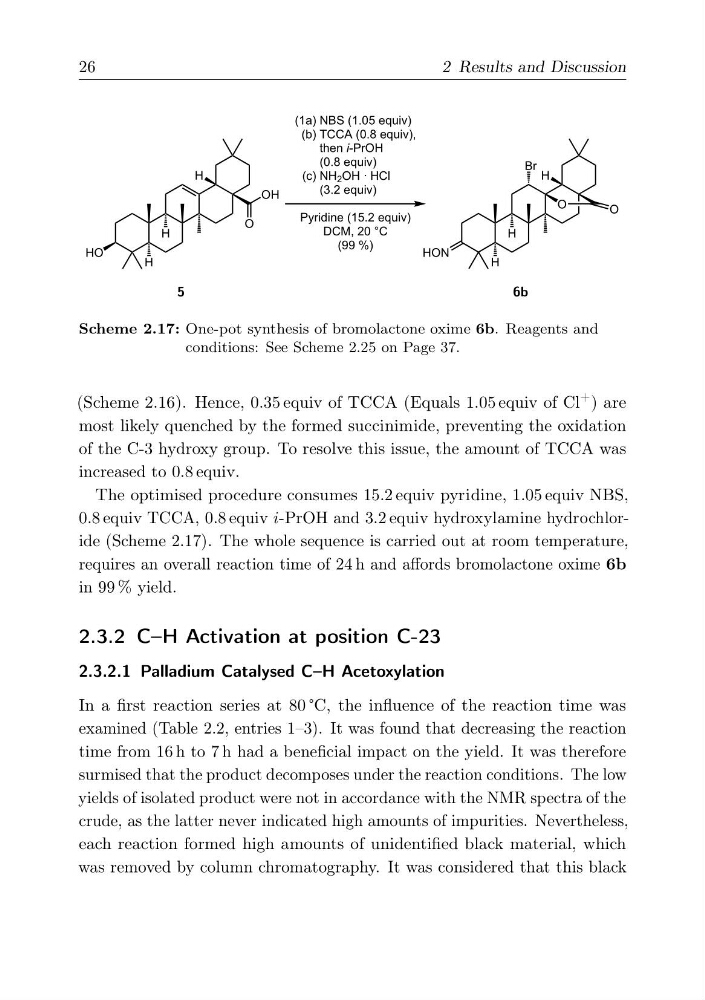
Scheme 2.17: One-pot synthesis of bromolactone oxime 6b. Reagents and
conditions: See Scheme 2.25 on Page 37.
(Scheme 2.16). Hence, 0.35 equiv of TCCA (Equals 1.05 equiv of Cl
+ ) are
most likely quenched by the formed succinimide, preventing the oxidation
of the C-3 hydroxy group. To resolve this issue, the amount of TCCA was
increased to 0.8 equiv.
The optimised procedure consumes 15.2 equiv pyridine, 1.05 equiv NBS,
0.8 equiv TCCA, 0.8 equiv i-PrOH and 3.2 equiv hydroxylamine hydrochloride (Scheme 2.17). The whole sequence is carried out at room temperature,
requires an overall reaction time of 24 h and affords bromolactone oxime 6b
in 99 % yield.
2.3.2 C–H Activation at position C-23
2.3.2.1 Palladium Catalysed C–H Acetoxylation
In a first reaction series at 80 °C, the influence of the reaction time was
examined (Table 2.2, entries 1–3). It was found that decreasing the reaction
time from 16 h to 7 h had a beneficial impact on the yield. It was therefore
surmised that the product decomposes under the reaction conditions. The low
yields of isolated product were not in accordance with the NMR spectra of the
crude, as the latter never indicated high amounts of impurities. Nevertheless,
each reaction formed high amounts of unidentified black material, which
was removed by column chromatography. It was considered that this black
2 Results and Discussion
HO
H
H
OH
O
H
H
H
O
H
Br
O
Pyridine (15.2 equiv)
DCM, 20 °C
(99 %)
HON
NBS (1.05 equiv)
TCCA (0.8 equiv),
then i-PrOH
(0.8 equiv)
NH 2 OH · HCl
(3.2 equiv)
(1a)
(b)
(c)
5
6 b
Scheme 2.17: One-pot synthesis of bromolactone oxime 6b. Reagents and
conditions: See Scheme 2.25 on Page 37.
(Scheme 2.16). Hence, 0.35 equiv of TCCA (Equals 1.05 equiv of Cl
+ ) are
most likely quenched by the formed succinimide, preventing the oxidation
of the C-3 hydroxy group. To resolve this issue, the amount of TCCA was
increased to 0.8 equiv.
The optimised procedure consumes 15.2 equiv pyridine, 1.05 equiv NBS,
0.8 equiv TCCA, 0.8 equiv i-PrOH and 3.2 equiv hydroxylamine hydrochloride (Scheme 2.17). The whole sequence is carried out at room temperature,
requires an overall reaction time of 24 h and affords bromolactone oxime 6b
in 99 % yield.
2.3.2 C–H Activation at position C-23
2.3.2.1 Palladium Catalysed C–H Acetoxylation
In a first reaction series at 80 °C, the influence of the reaction time was
examined (Table 2.2, entries 1–3). It was found that decreasing the reaction
time from 16 h to 7 h had a beneficial impact on the yield. It was therefore
surmised that the product decomposes under the reaction conditions. The low
yields of isolated product were not in accordance with the NMR spectra of the
crude, as the latter never indicated high amounts of impurities. Nevertheless,
each reaction formed high amounts of unidentified black material, which
was removed by column chromatography. It was considered that this black